
A feeding guide for Maine Coons should not start with a fixed cup number. Maine Coons are large, slow-developing cats with different activity levels, body frames, neuter status, and appetite patterns. The right feeding plan depends on life stage, body condition, food calories, meal timing, and whether the cat is actually maintaining a healthy shape.
For owners who need measured feeding instead of open bowls, a smart automatic cat feeder with app control can help keep meals consistent. The feeder does not decide the diet. It protects the routine after the diet is chosen.
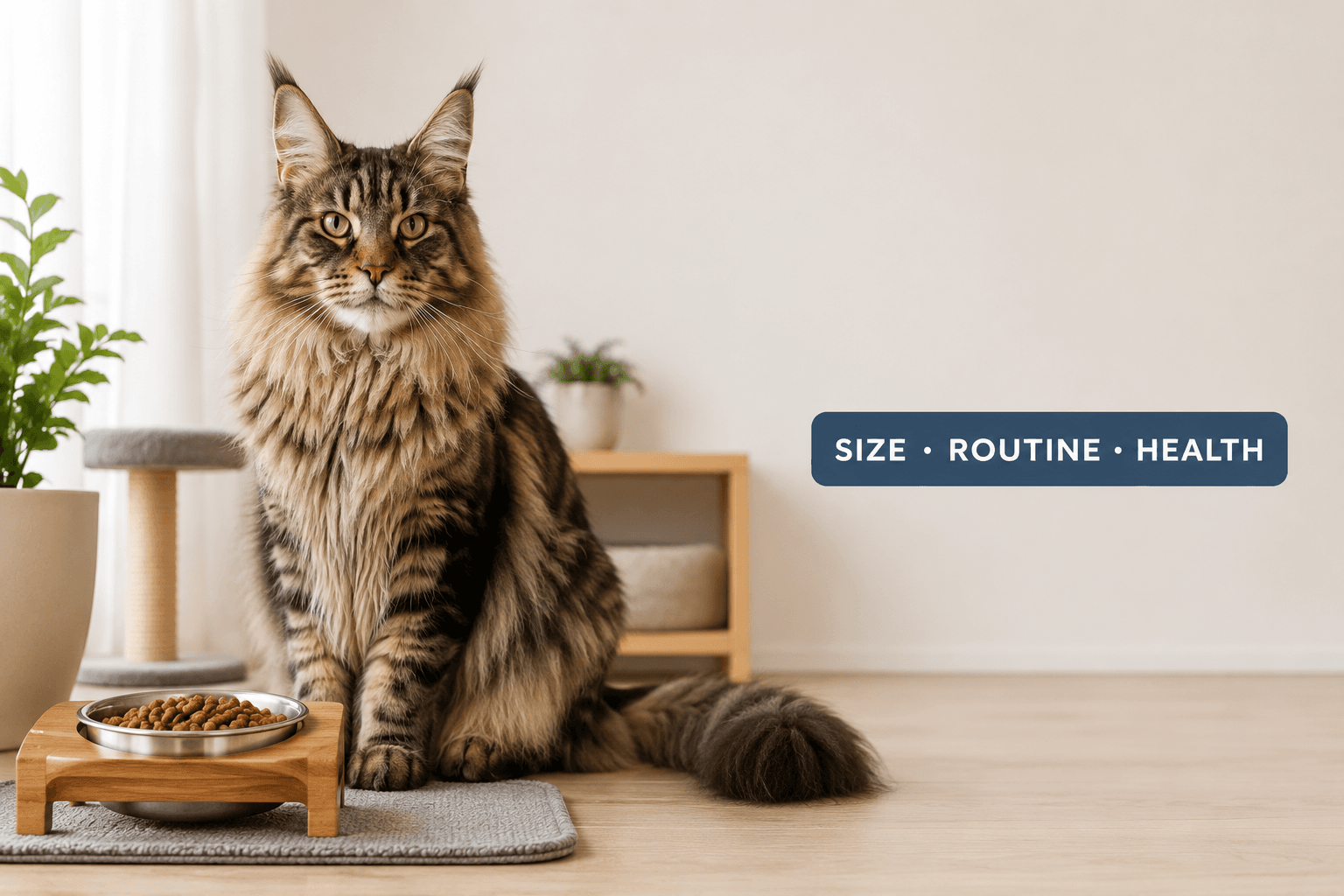
Direct Answer: feeding guide for Maine Coons
A feeding guide for Maine Coons should use body condition, life stage, and measured portions instead of guessing by breed size alone. Maine Coon kittens need growth-focused meals, adults need calorie control that protects lean mass, and seniors need closer monitoring for weight change, appetite change, and mobility. The safest routine is measured meals, regular weigh-ins, body-condition checks, clean water access, and veterinary guidance when weight changes quickly.
Why This Happens
The feeding mistake with Maine Coons is simple: owners see a big cat and assume the cat always needs more food. That can lead to oversized portions, open feeding, and slow weight gain that hides under long fur. A Maine Coon can be naturally large and still become overweight.
A feeding guide for Maine Coons must separate frame size from fat gain. Large bones, long body length, and a heavy coat do not prove that extra calories are needed. The better test is body condition: ribs should be feelable without heavy pressure, the waist should still exist, and the belly should not become a permanent food-storage signal.
This is why feeding should be individualized. The WSAVA Global Nutrition Guidelines emphasize nutrition plans tailored to the individual pet, while AAFCO helps standardize pet food labeling and nutrient adequacy statements. Use those principles before trusting any single online portion number.
What To Do
Use seven practical rules. First, choose a complete and balanced cat food for the correct life stage. Second, read the calorie content, not only the feeding chart. Third, divide food into measured meals instead of leaving unlimited food out all day. Fourth, weigh the cat regularly. Fifth, check body condition under the coat with your hands. Sixth, adjust slowly instead of making dramatic portion changes. Seventh, use a schedule that the whole household follows.
A feeding guide for Maine Coons should connect food amount with routine control. A fixed scientific pet feeding schedule prevents random scoops, double feeding, and emotional top-ups. This matters more in large cats because small daily overfeeding becomes meaningful over time.
For owners who work long hours, an automatic feeder can help protect meal timing. The goal is not to feed more. The goal is to feed the right amount at predictable times. SmartPetTools explains this routine logic in automatic pet feeder for work.
Maine Coon Kitten Feeding
Maine Coon kittens need a growth diet, not a reduced adult diet. During growth, the mistake is not only underfeeding. The opposite mistake also exists: owners may allow unlimited food for too long, then struggle when the cat becomes a large adult with a permanent grazing habit.
Feed kittens in multiple measured meals and track growth trend rather than forcing one fixed number. If the kitten is thin, lethargic, vomiting, or growing unevenly, the answer is not random extra food. The answer is a veterinary check and a review of diet, parasite status, digestion, and total intake.
For young cats, a feeding guide for Maine Coons should be flexible but not chaotic. Growth needs structure. Use the food label as a starting point, then adjust based on body condition and veterinary advice.
Adult Maine Coon Feeding
Adult Maine Coons need portion control because large size can make overeating look normal. A big cat does not need an unlimited bowl. It needs a measured daily amount that keeps weight stable and body condition healthy.
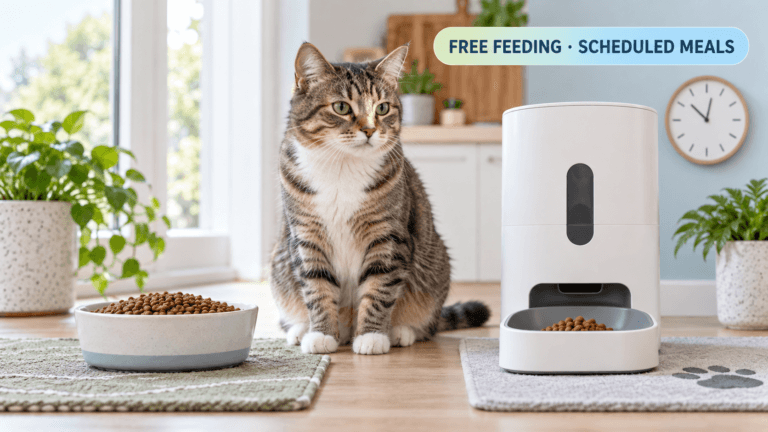
For many adult cats, two to four meals per day works better than one large meal. Smaller meals reduce pressure behavior and help the owner see whether appetite is changing. A cat feeder can support this routine by dividing the daily amount into timed portions.
The strongest adult rule is consistency. Measure the food. Track the weight. Watch the waist. Do not add food because the cat is large, dramatic, or good at asking.
Senior Maine Coon Feeding
Senior Maine Coons need closer observation because appetite, weight, digestion, dental comfort, and mobility can change. Weight loss in an older cat should not be celebrated automatically. It can signal health problems. Weight gain can also happen when activity drops but portions stay the same.
For senior cats, the feeding routine should include regular weigh-ins, easier bowl access, clean water, and attention to eating speed. If a senior Maine Coon suddenly eats more, eats less, loses weight, vomits often, or avoids food, use veterinary care instead of adjusting portions blindly.
A feeding guide for Maine Coons should treat senior feeding as monitoring, not just maintenance.
The Feeding Loop Behind This Problem
The feeding loop starts when the cat asks for food, the owner reacts, food appears, and the cat remembers which behavior worked. Maine Coons can be socially intense, vocal, and persistent. That does not always mean true hunger. It can mean the cat has learned that pressure produces food.
Measured feeding breaks this loop. Food should arrive because the schedule says it is time, not because the cat stared at the bowl or followed the owner into the kitchen. That is one reason a smart feeder can be useful for Maine Coons: it moves food delivery away from the owner’s emotional response.
This same behavior pattern appears in cats that seem hungry after eating. SmartPetTools covers the broader issue in why is my cat always hungry even after eating.
The Emotional Trigger Owners Miss
The emotional trigger is size guilt. Owners see a large cat and worry that a normal measured portion looks too small. Long fur makes this worse because it hides body shape and makes the cat look bigger than it is. The owner adds a little more food, then repeats the pattern every day.
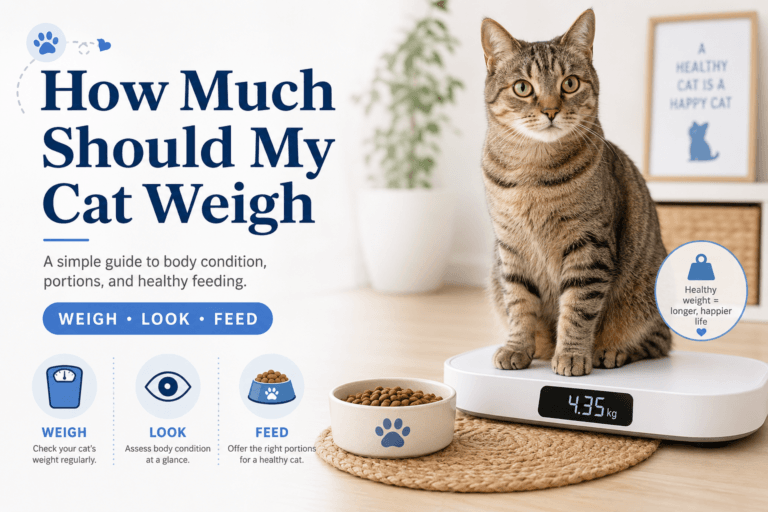
A feeding guide for Maine Coons should remove that guesswork. Use a scale, a measuring cup or gram scale, a body-condition check, and a feeding log. Do not use visual bowl fullness as the main decision tool.
The Addiction Mechanism
Food is a fast reward. If a Maine Coon meows, paws, follows, or waits near the food area and then receives food, the behavior becomes useful. If food appears unpredictably, the behavior can become even more persistent.
This is why open feeding and emotional scooping are risky. The cat learns that food access is negotiable. The owner then interprets the learned behavior as hunger and increases food again.
The correction is structured feeding. Use measured portions, scheduled meals, and no reward for pressure behavior. For nutrition basics, owners can review AAFCO pet food label guidance, WSAVA nutrition guidelines, and AVMA nutrition resources.
Common Failure Pattern
A common failure pattern is a young Maine Coon that grows quickly, receives generous portions, and keeps free-feeding into adulthood. The owner sees the cat as “big-boned” and misses slow fat gain. By the time the waist disappears, the cat has a strong habit of eating whenever food is visible.
The fix is not sudden restriction. The fix is measurement. Record the current intake, weigh the cat, check body condition, remove unplanned snacks, and move toward scheduled feeding. If the cat is already overweight, use a veterinary weight-loss plan instead of aggressive home dieting.
Real-World Impact
The real-world impact of a good feeding guide for Maine Coons is better weight control, fewer begging loops, clearer appetite tracking, and less household argument over who fed the cat. Measured feeding also makes health changes easier to spot because appetite and intake are visible.
Weight control matters because large cats already put more load on joints and movement. Extra weight can reduce activity, which then lowers energy use and makes weight gain easier. That loop is slow, but it is common in indoor cats.
Owners focused on weight control can pair this article with cat calorie guide for weight loss, best cat feeder for weight loss, and pet obesity prevention.
Can This Be Fixed?
Yes, most Maine Coon feeding problems can be improved when portions, timing, and owner behavior are controlled together. If the cat is gaining weight, start by measuring the current food instead of guessing. If the cat begs constantly, check whether begging has been rewarded. If the cat is losing weight, do not simply increase food without ruling out medical causes.
A smart feeder can help with timing and portion discipline, but it cannot choose the correct diet, diagnose weight change, or stop extra treats from the household. The owner still controls the plan.
Who Should Walk Away and Who Should Use This
Walk away from open feeding if your Maine Coon is gaining weight, begging constantly, stealing food, or hiding body-shape changes under a heavy coat. Open bowls make intake hard to measure and behavior hard to control.
Use a measured schedule if your cat is indoor-only, neutered, weight-prone, food-driven, or living in a multi-person household. Use a smart feeder when meal timing, portion control, and workday consistency are the main problems.
Mini FAQ
How much should I feed a Maine Coon?
Feed a Maine Coon based on body condition, life stage, food calories, and weight trend, not one fixed cup amount. Start with the food label, measure the portion, weigh the cat regularly, and adjust slowly. Ask a veterinarian for a target weight if the cat is underweight or overweight.
Should Maine Coons eat more than normal cats?
Some Maine Coons need more food because they are larger, but size alone does not justify unlimited feeding. A large lean cat and a large overweight cat need different plans. Use body condition and weight trend to decide.
How often should I feed a Maine Coon?
Most Maine Coons do better with measured meals instead of one large random feeding. Adults often fit two to four meals per day, while kittens usually need more frequent meals. The exact routine should match age, health, and daily schedule.
Is wet food or dry food better for Maine Coons?
Both can work when the food is complete, balanced, and matched to the cat’s needs. Wet food can support hydration and meal satisfaction, while dry food is easier for automatic feeders. Many owners use a controlled mix, but total calories still matter.
Can a smart feeder help a Maine Coon lose weight?
A smart feeder can help weight control by dividing measured food into scheduled portions. It cannot create weight loss if treats, open bowls, and extra hand-feeding continue. Use it as part of a controlled feeding plan.
What is the biggest mistake in a feeding guide for Maine Coons?
The biggest mistake is feeding by breed reputation instead of the individual cat. Maine Coons are large, but each cat still needs a measured plan based on body condition, activity level, age, and health.
For daily control, a smart automatic cat feeder with app control can protect timing and portions when the feeding plan is already clear. The conclusion is direct: a feeding guide for Maine Coons should not make big cats bigger by default. It should keep large cats lean, monitored, and fed by evidence instead of guesswork.