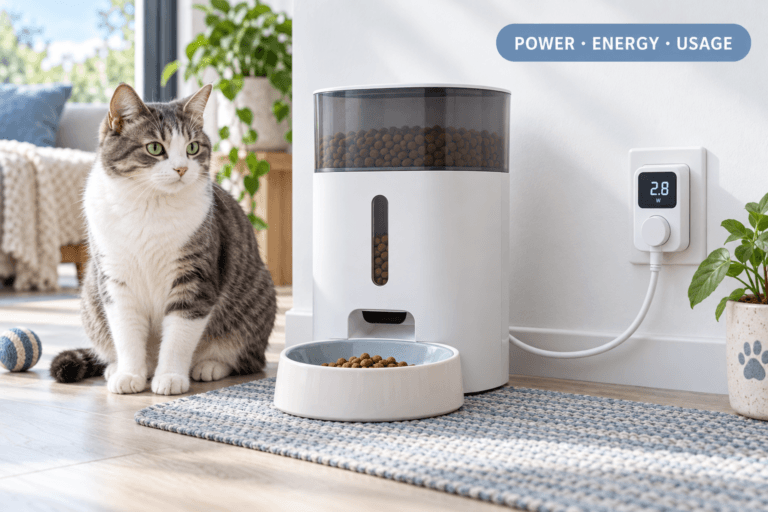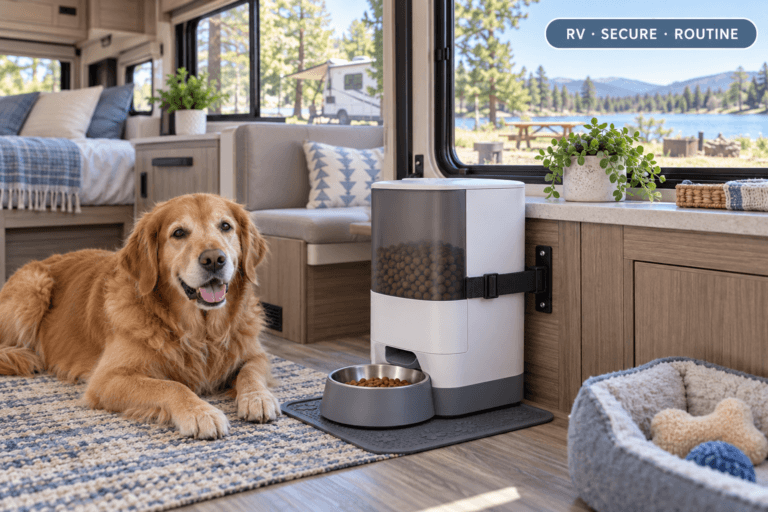

Cat feeder vs pet sitter is not a simple choice between a machine and a person. It is a risk-control decision. A smart cat feeder can protect meal timing and portion control, while a pet sitter can check water, litter, behavior, illness signs, and home safety. The right answer depends on how long you are away, how stable your cat’s routine is, and whether missed meals or lack of supervision is the bigger risk.
For short absences, workdays, and predictable dry-food routines, a smart automatic pet feeder with app control can reduce missed meals and emotional overfeeding. For longer trips, medical cats, anxious cats, or homes with multiple risk points, a sitter or combined plan is usually safer.
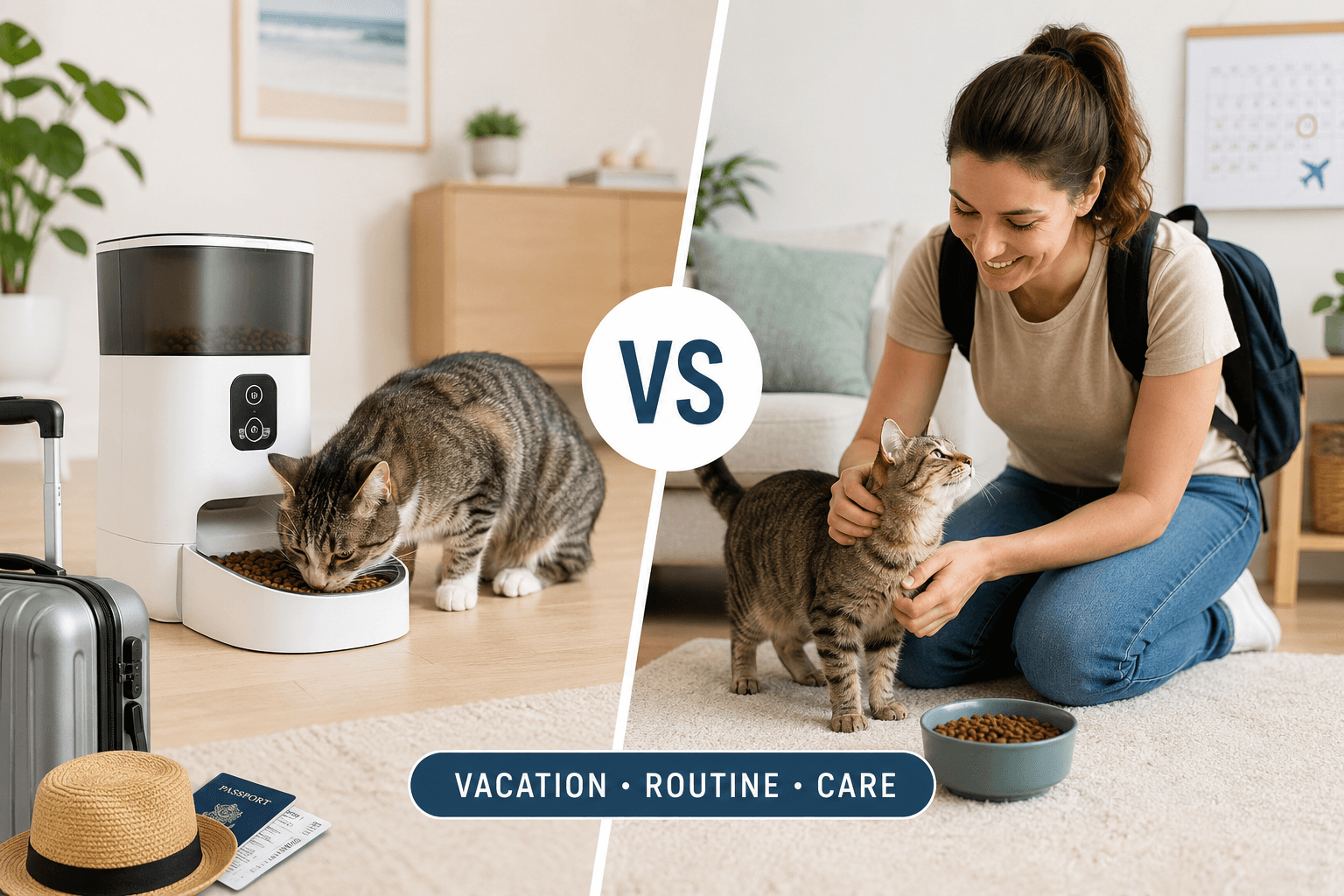
Direct Answer: cat feeder vs pet sitter
Cat feeder vs pet sitter should be decided by absence length, health risk, and supervision need. Use an automatic cat feeder when the main problem is meal timing, portion control, and short-term routine stability. Use a pet sitter when the cat needs medication, fresh wet food, litter monitoring, water checks, illness observation, or human intervention. For vacations, the safest answer is often both: a feeder controls scheduled meals, and a sitter verifies the cat, water, litter, and home environment.
Why This Happens
The mistake many owners make is treating feeding as the whole care system. Feeding matters, but cats also need water access, litter-box function, environmental safety, and observation. A feeder can deliver dry food on time. It cannot notice vomiting, urinary trouble, a closed door, a knocked-over water bowl, heat stress, or a cat hiding unusually.
That is why cat feeder vs pet sitter becomes more serious as the absence gets longer. A one-day work routine may only need scheduled meals. A multi-day vacation needs supervision. The longer the owner is away, the more the problem shifts from “Will food dispense?” to “Will someone know if something is wrong?”
A reliable feeder still has value. SmartPetTools explains the core routine in how to use a smart pet feeder and cat feeder for vacation. The device should support care, not replace every form of care.
What To Do
Start by separating feeding risk from supervision risk. If the cat eats dry food, has no medical issues, and the owner is away for a normal workday, a timed feeder may be enough. If the cat needs medication, eats wet food, has a history of urinary problems, hides under stress, or shares food with another cat, a pet sitter becomes more important.
For short absences, set a fixed scientific pet feeding schedule, test the feeder for several meals while you are home, and measure the actual portion. For longer absences, create a sitter checklist: food level, water bowl, litter box, appetite, behavior, visible stress, feeder status, and emergency contact.
Cat feeder vs pet sitter should not become an either-or argument when the risk is mixed. A strong vacation setup uses the feeder for timing and the sitter for verification. The feeder prevents random feeding. The sitter prevents silent failure.
Simple Decision Rule
Use a feeder-first plan when the absence is short, the cat is healthy, the food is dry, and the routine is already tested. Use a sitter-first plan when the cat has medical needs, eats wet food, is elderly, is anxious, or may need human observation. Use both when you are away for more than a short window and still want scheduled feeding control.
A practical rule is this: the feeder controls meals; the sitter controls uncertainty. If uncertainty is low, the feeder can do more of the work. If uncertainty is high, a person needs to check the cat and the home.
The Feeding Loop Behind This Problem
The feeding loop begins when the cat expects food, the owner feels pressure, and food appears. When the owner is home, begging can trigger extra food. When the owner is away, uncertainty can trigger over-preparation: too much food left out, too many manual instructions, or too many backup bowls.
An automatic feeder helps because it moves food away from emotional reaction and into a schedule. The cat learns that meals come from time, not from begging or owner guilt. A pet sitter helps because a person can verify whether the routine is actually working.
This is the central cat feeder vs pet sitter tradeoff. A feeder is better at consistency. A sitter is better at interpretation. A feeder can dispense the same portion every morning. A sitter can notice that the cat did not eat, acted differently, or avoided the litter box.
The Emotional Trigger Owners Miss
The emotional trigger is guilt. Owners worry that leaving a cat alone is unfair, so they add extra food, ask the sitter to give treats, or leave open bowls “just in case.” That reaction feels protective, but it can weaken the feeding routine and increase overeating.
For many cats, extra food during owner absence becomes a new reward pattern. The cat receives more food not because it needs more, but because the owner is anxious. A feeder can reduce this problem by holding portions steady. A sitter can reduce it only when the instructions are precise and not emotional.
The Addiction Mechanism
Food-seeking behavior strengthens when food appears after pressure, noise, or owner attention. If a cat meows and receives food, the behavior becomes useful. If extra food appears unpredictably, the behavior can become more persistent.
This matters in cat feeder vs pet sitter decisions because sitters often respond to visible begging. A sitter may interpret pressure behavior as hunger and give extra food. A feeder does not respond emotionally, but it also cannot assess health. The best system uses measured feeding and clear instructions so neither the device nor the sitter becomes part of a reward loop.
For nutrition control, owners should connect the feeding plan to reliable guidance such as AVMA pet nutrition guidance and AAFCO pet food label guidance. A vacation plan still needs calorie boundaries.
Common Failure Pattern
A common failure pattern looks like this: the owner buys a feeder one day before travel, fills it fully, leaves extra bowls nearby, and asks a neighbor to “check if needed.” The feeder may work, but the routine is not verified. The cat may eat from open bowls first. The neighbor may add more food because the bowl looks low. The owner returns to a confused feeding pattern and possible overeating.
The correction is simple. Test the feeder before leaving. Remove unnecessary open food. Give the sitter measured instructions. Ask the sitter to check the cat, water, litter, and feeder status instead of improvising meals.
Real-World Impact
The real-world impact of the wrong choice includes missed meals, double feeding, stale food, ignored illness signs, dirty litter, stress behavior, and owner anxiety. A feeder can solve only part of that list. A sitter can solve more of it, but only if the sitter follows a clear routine.
For healthy cats on short dry-food schedules, a feeder can be more consistent than a sitter who arrives at different times. For cats with health concerns, a sitter is safer because observation matters. For vacations, SmartPetTools recommends thinking in layers: feeder, water, litter, sitter check, backup power, and emergency contact.
Owners managing weight should also review cat calorie guide for weight loss and best cat feeder for weight loss. A trip is not a reason to suspend portion control.
Can This Be Fixed?
Yes, most cat feeding risks during absence can be fixed by combining routine control with verification. Test the feeder. Measure portions. Write sitter instructions. Use a water backup. Clean the litter box before leaving. Ask the sitter to report appetite, litter use, behavior, and feeder status.
If the feeder is unreliable, fix the hardware problem before travel. If the sitter overfeeds, fix the instruction problem. If the cat has medical needs, do not rely on a feeder-only plan. The correct cat feeder vs pet sitter answer is the one that controls the specific failure risk in your home.
Who Should Walk Away and Who Should Use This
Walk away from a feeder-only plan if the cat needs medication, eats wet food only, has a medical history, is elderly, is highly anxious, or will be alone for too long without observation. A machine cannot replace health monitoring.
Use an automatic feeder when the cat is healthy, eats dry food, follows a stable schedule, and needs consistent portion timing. Use a pet sitter when human judgment matters. Use both when you want strong feeding control plus care verification. Owners comparing feeder options can start with cat feeders or broader smart feeders.
Mini FAQ
Is a cat feeder better than a pet sitter?
A cat feeder is better for consistent meal timing, but a pet sitter is better for supervision. The feeder controls portions and schedule. The sitter checks water, litter, behavior, illness signs, and home safety. For vacations, both are often safer than either one alone.
Can I leave my cat alone with an automatic feeder?
You can use an automatic feeder for short, tested absences when the cat is healthy and eats dry food. Test the feeder before leaving, confirm the portion size, and make sure water and litter are handled. For longer absences, add a sitter check.
When should I choose a pet sitter instead of a feeder?
Choose a pet sitter when the cat needs medication, wet food, health monitoring, litter observation, or human intervention. A feeder cannot notice illness, stress, urinary problems, vomiting, or a home safety issue.
Is a feeder enough for vacation cat care?
A feeder alone is usually not enough for a longer vacation. It can handle scheduled dry-food meals, but someone should still verify water, litter, behavior, and feeder function. A combined feeder-and-sitter plan is safer.
Can a pet sitter cause overfeeding?
Yes, a pet sitter can overfeed when instructions are vague or the cat begs strongly. Give measured portions, exact feeding times, and a rule against extra treats unless approved. The sitter should check the routine, not improvise it.
What is the biggest mistake in cat feeder vs pet sitter decisions?
The biggest mistake is choosing based on convenience instead of risk. A feeder is convenient, but it cannot observe health. A sitter is flexible, but can feed inconsistently without clear instructions. Match the care plan to the cat’s actual risk profile.
For owners who want routine control during short absences, a smart automatic cat feeder with app control is useful when tested before use. The clear conclusion is this: cat feeder vs pet sitter is not about replacing care with technology. It is about assigning the right task to the right system. Let the feeder handle measured meals. Let the sitter handle uncertainty.