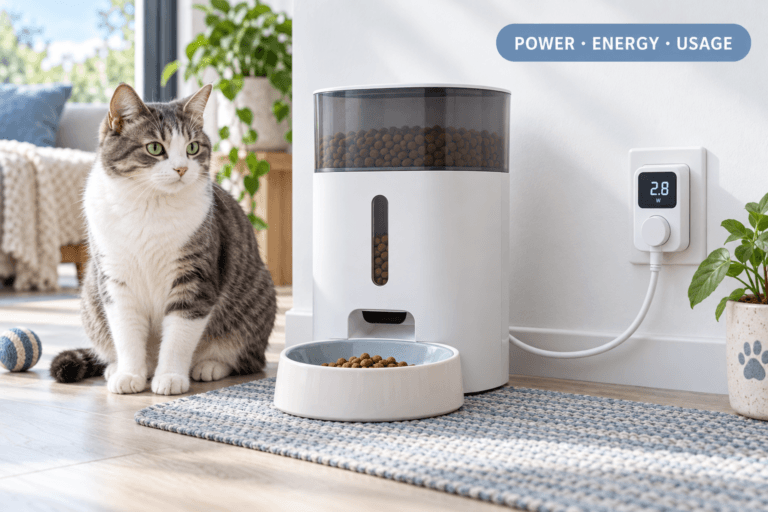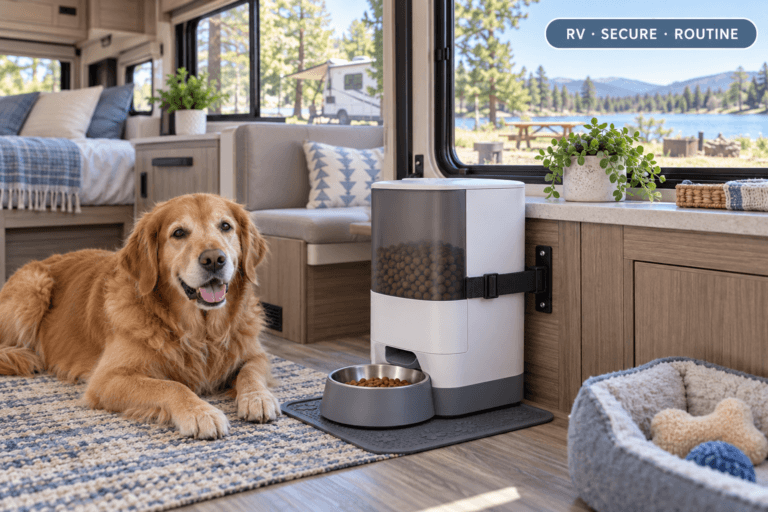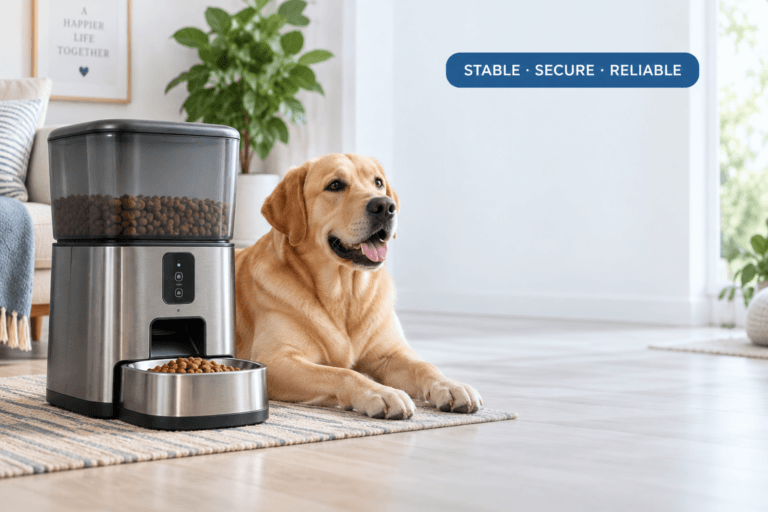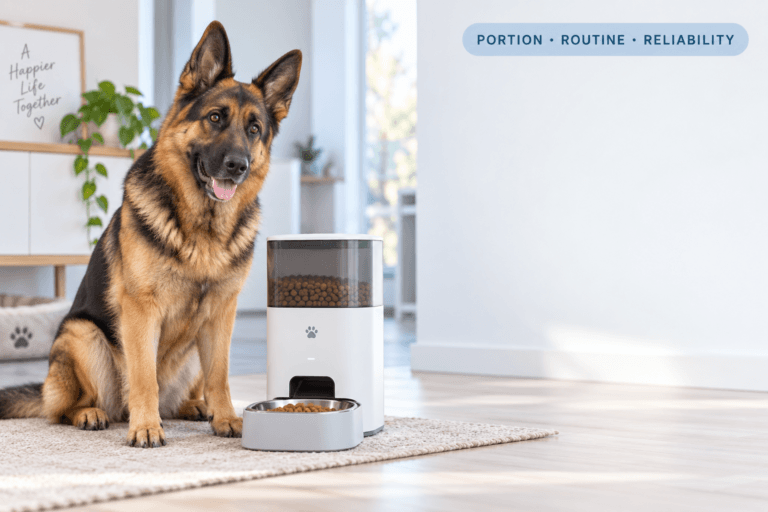

A compact smart pet feeder looks like the obvious choice for a small apartment, bedroom corner, kitchen shelf, or single-pet home. But small size alone does not make a feeder safe or useful. The real question is whether the feeder can hold enough food, dispense accurate portions, stay clean, keep the schedule stable, and avoid turning limited space into a feeding conflict zone.
For owners who need a smaller app-controlled feeder, a 2L smart automatic pet feeder with app control is a practical starting point. The right compact feeder should reduce clutter without weakening the feeding routine.
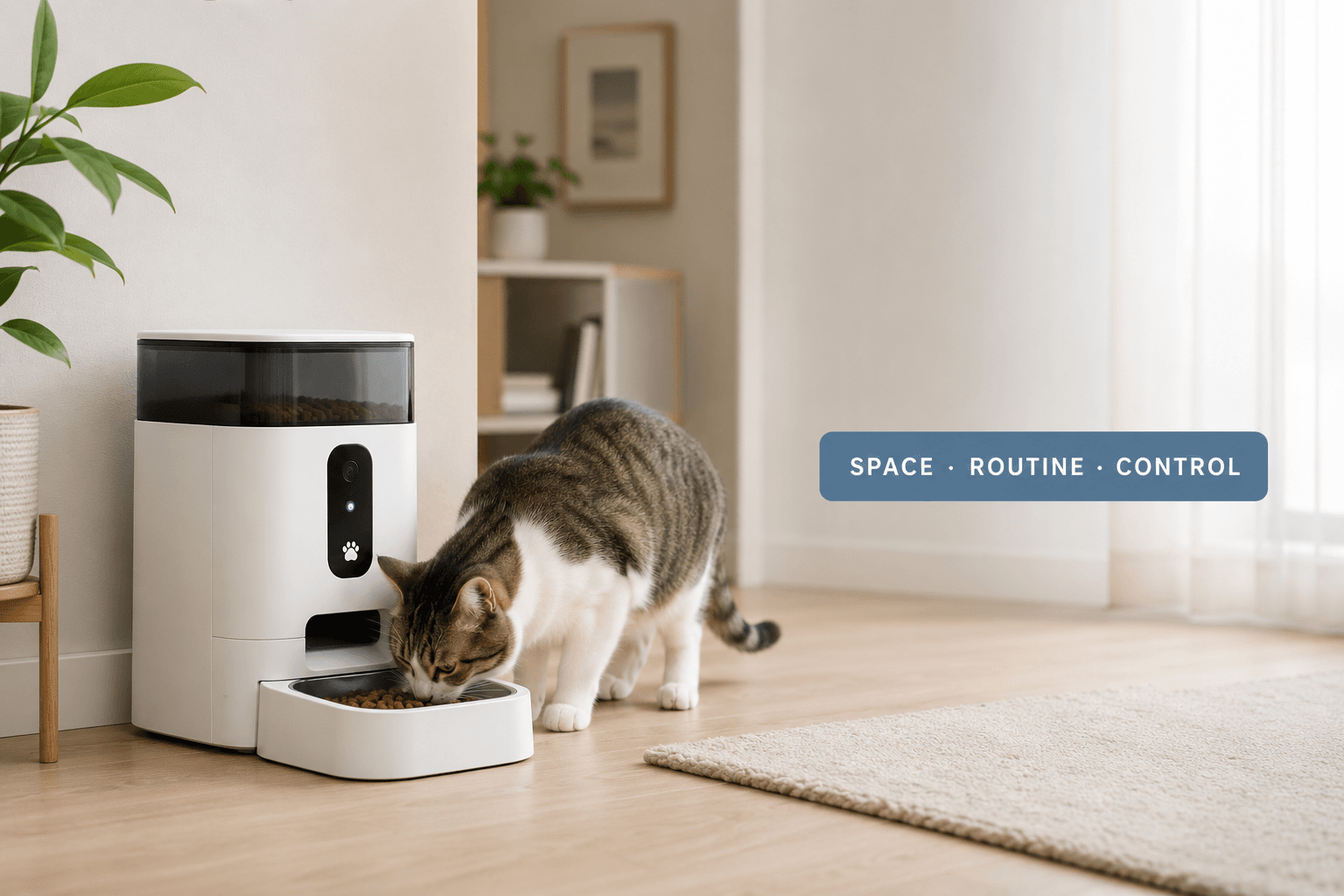
Direct Answer: compact smart pet feeder
A compact smart pet feeder is best for small homes, single cats, small dogs, controlled dry-food routines, and owners who need scheduled feeding without a large device. It is not automatically better because it saves space. The feeder is worth using only when its capacity, portion accuracy, bowl access, cleaning design, WiFi stability, and backup routine match the pet’s daily feeding needs.
Why This Happens
Most compact feeder problems come from a mismatch between size and routine. Owners choose a small feeder because it fits the room, then discover the hopper empties too quickly, the bowl is awkward for the pet, the app setup is unstable, or the feeder must be refilled more often than expected. The device solves a space problem but creates a routine problem.
A compact smart pet feeder works only when the household treats space as one constraint, not the only constraint. The feeder must still support portion control, predictable meal timing, dry-food flow, cleaning access, and owner verification. If the feeder is small but unreliable, the pet does not experience convenience. The pet experiences inconsistent meals.
This is why setup matters. A reliable smart pet feeder setup should confirm food size, portion output, app control, schedule memory, and bowl placement before the feeder becomes part of daily feeding.
What To Do
Use seven checks before choosing a compact feeder. First, confirm the hopper capacity fits your refill rhythm. Second, test whether the feeder dispenses the pet’s actual kibble size. Third, check whether the bowl height and angle are comfortable. Fourth, confirm the app schedule is easy to adjust. Fifth, check whether the food path can be cleaned. Sixth, decide where the feeder will sit without blocking foot traffic. Seventh, define a backup rule for power loss, app failure, or delayed refills.
A compact smart pet feeder should also fit a fixed scientific pet feeding schedule. Small feeders are not designed to excuse random feeding. They are designed to make a controlled routine easier in a smaller physical footprint.
For workday feeding, the feeder should be tested before the owner depends on it. Run several scheduled meals while you are home. Check the bowl after each meal. Measure the actual portion. Confirm the app log. Then use the feeder as part of an automatic pet feeder work routine instead of guessing during the day.
The Feeding Loop Behind This Problem
The feeding loop starts when the pet expects food, the owner feels pressure, and the feeder either supports the schedule or fails to create confidence. In a small home, this loop is more intense because the pet, owner, feeder, and food storage are often in the same room. Begging becomes harder to ignore. Manual feeding becomes easier. Extra snacks become more frequent.
A compact smart pet feeder should break that pressure loop by making meals predictable. The pet should learn that food comes from the schedule, not from staring at the owner in a small kitchen or pawing near the feeder. The smaller the home, the more important the routine boundary becomes.
This is also why open bowls often fail in small spaces. The pet sees food access constantly, the owner sees the pet constantly, and both sides reinforce each other. Scheduled feeding creates separation between attention and food.
The Emotional Trigger Owners Miss
The emotional trigger is convenience guilt. Owners in small homes often choose compact tools to make the space feel cleaner and more manageable. But when the feeder looks small, owners may worry it is not feeding enough. That worry leads to checking, shaking the hopper, adding extra kibble, or overriding the app schedule.
That behavior weakens the feeder. The pet learns that human attention can still change the food outcome. The feeder becomes a suggestion instead of a rule. A compact feeder works best when the owner trusts measured portions more than visual impressions.
The Addiction Mechanism
Food-seeking behavior becomes sticky when food appears after pressure. If a pet meows, barks, paws, or stares and then receives food, the behavior becomes useful. When the reward appears unpredictably, the behavior can become even harder to stop.
A loose compact-feeder routine can create this pattern quickly. The owner sets scheduled meals but adds manual portions because the feeder looks small. The pet receives extra food after pressure. The owner then blames appetite instead of the reinforcement loop.
The correction is measured feeding. Use the app schedule, verify portion output, and keep manual feeding rare. For broader nutrition control, owners can compare daily feeding decisions with AAFCO pet food label guidance and general AVMA pet nutrition guidance. A compact device still needs a serious feeding rule.
Common Failure Pattern
A common failure pattern starts with a small apartment and a feeder placed too close to the owner’s desk or bed. The cat hears every movement. The dog watches every refill. The owner manually dispenses food during calls, late nights, or early mornings. The feeder technically works, but the pet learns that owner activity predicts food.
The fix is simple but strict. Move the feeder to a low-traffic feeding zone. Keep meal times consistent. Refill the hopper away from pressure moments. Avoid manual dispensing unless it is part of a defined test or backup rule.
Real-World Impact
The real-world impact of a good compact smart pet feeder is cleaner space, fewer missed meals, better portion control, and less emotional feeding. The impact of a poor compact feeder is the opposite: constant refilling, portion doubt, app checking, and extra food given outside the schedule.
This matters for weight control. A small feeder can still cause overeating if the owner keeps adding food manually. SmartPetTools explains this wider pattern in pet obesity prevention and pet nutrition routine. The feeder supports the plan, but it does not replace the plan.
Cleaning also matters more in compact designs because food paths and bowls are tighter. Owners comparing hygiene should review clean smart pet feeder routines before relying on a small device for daily feeding.
Can This Be Fixed?
Yes, most compact feeder problems can be fixed when the issue is placement, schedule design, portion testing, or owner override behavior. Move the feeder away from high-pressure areas. Test portions with the actual food. Refill on a schedule. Clean the bowl and chute regularly. Stop using manual feed as a response to begging.
If the feeder capacity is too small for the pet’s daily intake or the household’s refill habits, the fix is not discipline. The fix is a larger feeder. A compact feeder should reduce space friction, not create daily maintenance stress.
Who Should Walk Away and Who Should Use This
Walk away from a compact feeder if you have a large dog, several pets sharing one food source, long travel periods, or a household that cannot refill the hopper reliably. A small device is not the right solution when the feeding demand is large.
Use a compact smart pet feeder if you have one cat, one small dog, a small apartment, a predictable dry-food routine, and a need for app-based scheduling. It is also useful for owners comparing space-saving options inside smart feeders or looking for smaller designs within cat feeders.
Mini FAQ
Is a compact smart pet feeder good for cats?
Yes, a compact smart pet feeder is often a good fit for one cat with a dry-food routine. The key is checking portion accuracy, bowl comfort, hopper capacity, and whether the cat can eat calmly without the feeder becoming a begging trigger.
Is a compact feeder enough for dogs?
It depends on the dog’s size and daily food volume. A compact feeder may work for small dogs, but it is usually too limited for large dogs or dogs that need bigger portions. Match feeder capacity to actual daily intake, not product photos.
What size compact smart feeder should I choose?
Choose the size based on refill frequency and daily portion needs. A smaller hopper is fine when you are home often and feed one pet. Choose a larger feeder if missed refills, travel, or multiple pets are realistic problems.
Can a compact smart feeder prevent overeating?
It can help prevent overeating when portions are measured and manual feeding is limited. The feeder cannot prevent overeating if owners add extra snacks, override the schedule, or leave other food sources open.
Where should I place a compact smart pet feeder?
Place it in a quiet, stable feeding zone away from high-traffic pressure points. Avoid desks, beds, narrow hallways, and areas where the pet can constantly pressure the owner for food.
What is the biggest mistake with a compact smart pet feeder?
The biggest mistake is choosing the smallest feeder without testing the full routine. Small size helps only when capacity, portion output, cleaning access, WiFi stability, and refill habits all support daily feeding.
For small-space feeding, a 2L smart automatic pet feeder with app control can be the right tool when the routine is realistic. The clear conclusion is this: a compact smart pet feeder is effective when it saves space without weakening the schedule, portion control, hygiene routine, or owner discipline.