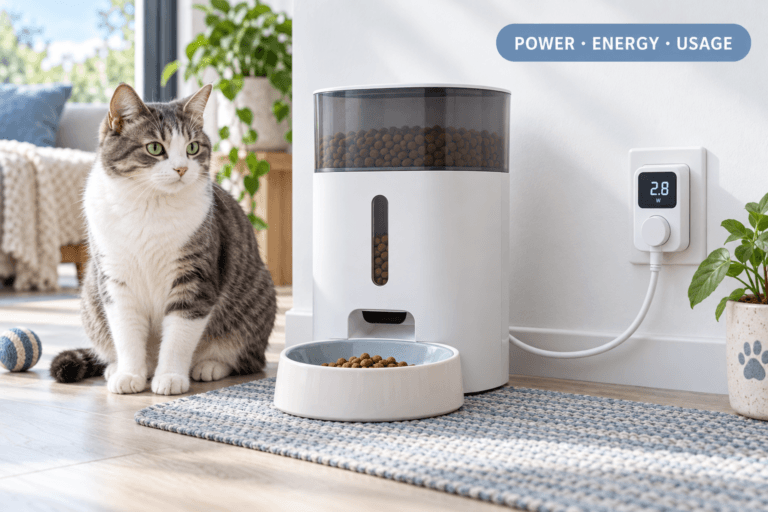

A timed cat feeder for early morning is not just a convenience device for tired owners. It is a boundary tool for cats that have learned to treat dawn noise, pawing, pacing, or face-tapping as a way to force breakfast. The real problem is not that your cat is hungry at 5 a.m. The problem is that the morning feeding system has trained your cat to believe pressure works.
For homes where breakfast timing has already damaged sleep, a 2L smart pet feeder for regular feeding gives the meal a fixed source that is not your body, your alarm, or your reaction. The feeder should become the signal. You should stop being the button your cat presses before sunrise.
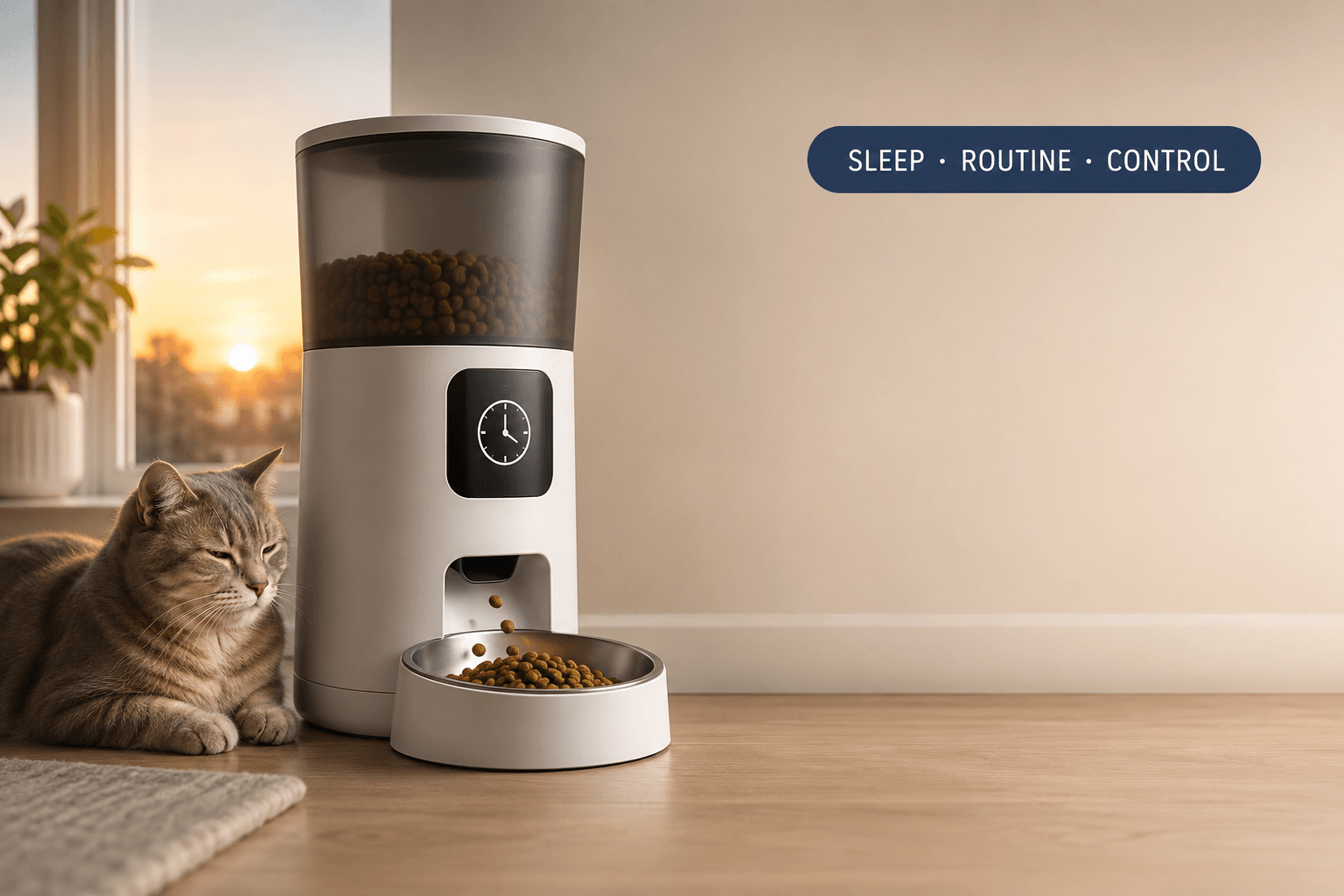
Direct Answer: Timed Cat Feeder for Early Morning
A timed cat feeder for early morning works when it releases a measured breakfast before your cat starts demanding food and keeps that schedule consistent every day. It stops the owner from rewarding dawn begging and moves the reward to a predictable machine-based routine. If breakfast still comes from your hand after enough noise, the behavior stays strong.
Why This Happens
Early morning feeding problems are built through repetition. Your cat wakes, checks the home, makes noise, gets a response, and eventually receives food. That sequence teaches a clear rule: wake the owner, increase pressure, get breakfast. The cat is not being dramatic. The cat is following the pattern that has paid off before.
A timed cat feeder for early morning changes the source of reward. Food arrives from the feeder at a fixed time, not from owner reaction. This matters because cats learn routines through signals: sound, light, movement, bowl location, and food release. If the loudest signal is you getting out of bed, your cat will target you. If the strongest signal is the feeder motor, the pressure shifts away from you.
Owners should connect morning feeding with a broader scientific pet feeding schedule. A single dawn meal cannot fix a chaotic day. The full routine has to tell the same story from breakfast to dinner.
What To Do
Set the feeder to release food before the usual begging window. If your cat starts at 5:10 a.m., set the first meal earlier and keep it stable. Do not wait for the cat to scream and then let the feeder dispense. That turns the feeder into another reward for pressure. The schedule must beat the behavior, not answer it.
The timed cat feeder for early morning should dispense a controlled portion, not a large guilt meal. A heavy dawn feeding can create faster eating, vomiting, weight gain, and stronger food fixation. Use measured meals and keep the rest of the day aligned. For setup discipline, the smart pet feeder setup guide helps owners avoid random settings that create new problems.
Weight control should stay part of the decision. Morning feeding feels like a sleep issue, but extra portions become a body-condition issue. Keep portions consistent with healthy pet weight guidance instead of using food as a payment for silence.
The Feeding Loop Behind This Problem
The feeding loop is simple: cat wakes early, cat signals hunger, owner reacts, food appears, and the cat learns that early pressure produces reward. Once this loop is installed, the behavior grows sharper. The cat starts earlier, gets louder, and tests more actions because past attempts worked.
A timed cat feeder for early morning breaks the loop by removing owner reaction from the reward chain. The cat no longer needs to touch your face, scratch the door, knock objects down, or vocalize beside the bed. Food comes from the same place at the same time, and the cat learns that waiting near the feeder is more effective than waking the household.
If the cat still acts hungry after eating, the issue often sits deeper than calories. The behavior pattern in why cats seem hungry after eating explains why repeated reward can look like constant appetite.
The Emotional Trigger Owners Miss
The emotional trigger is exhaustion. At 5 a.m., owners do not make strategic feeding choices. They make sleep-preservation choices. They get up, scoop food, talk to the cat, open the bedroom door, or give extra kibble just to end the noise. That reaction feels practical in the moment, but it trains tomorrow morning’s problem.
The timed cat feeder for early morning protects the owner from that weak moment. It creates a rule before the emotional pressure begins. The cat receives breakfast without making the owner the source of food. The owner stops negotiating while half-awake. The household becomes calmer because the morning routine no longer depends on human willpower.
Food control should also be paired with water control. Dry-food feeding does not replace hydration planning, especially for indoor cats. Use the pet hydration tips page to support the feeding system with stable water access.
The Addiction Mechanism
The addiction mechanism is reinforcement through successful disruption. If the cat tries five actions and one of them gets food, that action becomes more valuable. If meowing works one day and pawing works the next, the cat learns to test harder. Random owner response makes the behavior more persistent, not less.
A timed cat feeder for early morning removes the random payout. The feeder gives food by clock, not by noise. That creates a cleaner reinforcement loop: wait near the feeding area, hear the dispenser, eat the portion, leave the bowl. This is routine dependency in the useful direction. The cat becomes dependent on the schedule, not on owner irritation.
Do not add side rewards. Do not talk, pet, scoop extra food, or open doors because the cat complains before the feeder time. Those small responses keep the addiction mechanism alive. The feeder only works when the owner stops feeding the behavior around it.
Real-World Impact
The real impact is not only lost sleep. Early morning food pressure can reshape the whole home. Owners become resentful, cats become louder, and meals become emotional events instead of controlled routines. Extra dawn food also raises obesity risk when owners forget to reduce calories later in the day. For cats that already need a leaner plan, a structured cat weight reduction plan works only when every meal is counted.
A timed cat feeder for early morning also helps protect multi-day consistency. The same morning time should hold on weekdays, weekends, holidays, and travel days. Cats do not read calendars. They read patterns. If Saturday breakfast comes two hours later because the owner sleeps in, the cat learns to attack the gap.
Owners who use feeding control as part of weight management should also review pet obesity prevention. Morning peace should not come at the cost of uncontrolled portions.
Can This Be Fixed?
Yes, early morning feeding behavior can be fixed when the food reward stops coming from the owner and starts coming from a stable schedule. The fix requires consistency. A feeder will not erase the habit if the owner still responds to begging with attention, movement, or extra food.
The timed cat feeder for early morning should be tested for portion accuracy, kibble flow, sound level, and location. Place it away from the bedroom so the cat has a reason to leave the sleeping area. Use the same food, same portion, and same timing until the new loop becomes stronger than the old one.
Who Should Walk Away and Who Should Use This
Walk away from this solution if the cat eats wet food only, steals from other pets, knocks devices over, or needs direct supervision at meals. In those cases, a basic timer does not solve the access problem. The home needs separation, monitored feeding, or a different feeder design.
Use a timed cat feeder for early morning if the cat eats dry food reliably, wakes the household for breakfast, follows food sounds, and can eat from a fixed bowl location. For homes with more than one cat, access control becomes more important. The automatic feeder guide for multi-cat households explains why one timed bowl can fail when one cat controls the meal.
Owners comparing device types should start with cat feeders and screen for timing accuracy, portion control, capacity, easy cleaning, and stable placement. Appearance matters less than whether the feeder can enforce a morning rule.
Mini FAQ
Does a timed cat feeder for early morning stop dawn meowing?
Yes, it can stop dawn meowing when food arrives before the begging pattern starts. The reason is that the feeder replaces owner reaction as the reward source. Set the meal earlier than the usual noise window and stop giving food by hand in response to meowing.
What time should I set an early morning cat feeder?
Set it before the cat’s normal begging time. The feeder must prevent the behavior instead of answering it. Use the same time daily until the cat learns that breakfast belongs to the schedule.
Should I give a large breakfast to keep my cat quiet longer?
No, a large breakfast is the wrong fix. Oversized meals reward pressure and can increase vomiting, weight gain, and bowl obsession. Use measured portions and spread calories across the day.
Where should I place the feeder?
Place the feeder away from the bedroom. The goal is to move the cat’s attention from the owner to the feeding station. Keep the bowl location stable so the cat learns where to wait.
Why does my cat wake me even after using a feeder?
The old loop is still being rewarded. If the owner talks, opens doors, gives snacks, or reacts before feeder time, the cat still receives value from waking the household. Remove side rewards and keep the feeder schedule strict.
For a simple breakfast boundary, a regular-feeding smart pet feeder for cats can move the morning reward away from the owner and back into a controlled routine. A timed cat feeder for early morning is the right tool when the real goal is not only feeding the cat, but stopping the feeding loop that turns dawn into a daily negotiation. Use the feeder as the rule, keep portions measured, and make early breakfast predictable enough that your cat no longer needs to wake you to get it.