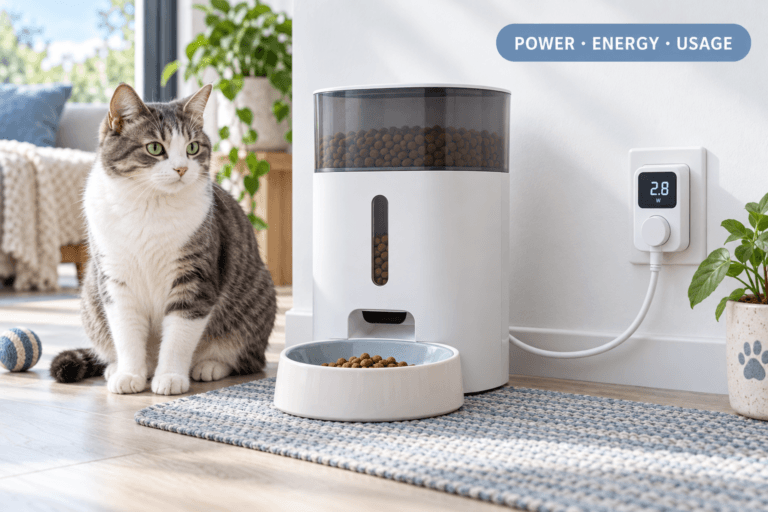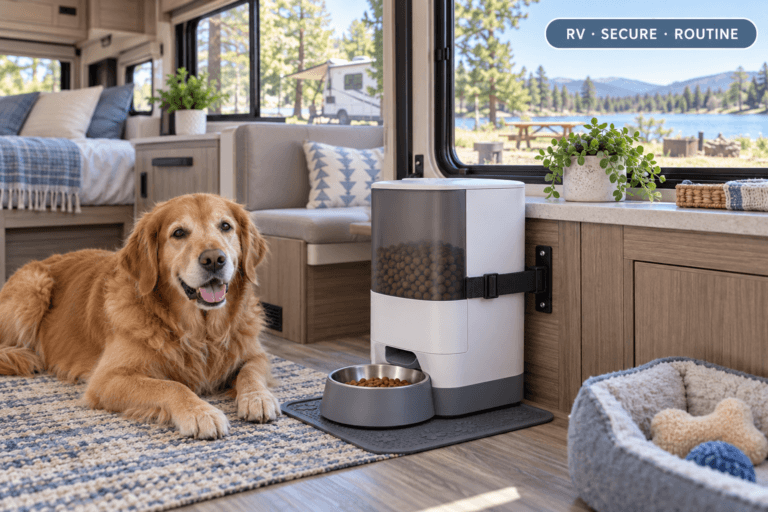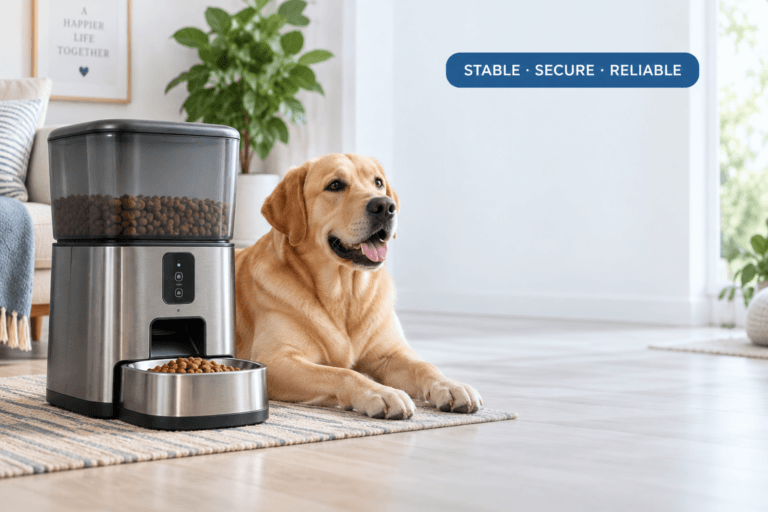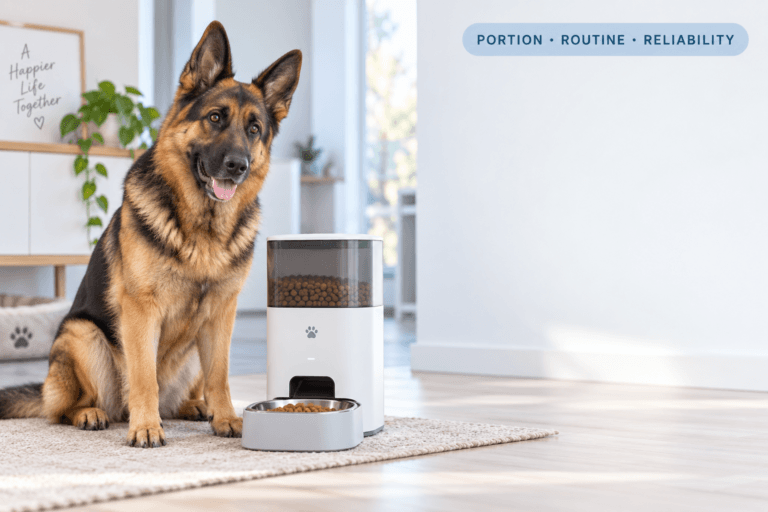

An ant proof pet feeder is not just a special bowl with a clever shape. It is a feeding station designed to block scent trails, reduce food residue, protect dry food, and stop ants from turning every meal into an open invitation. Once ants find pet food, the problem is rarely the bowl alone. The real issue is food odor, crumbs, moisture, placement, and an easy path to the feeding area.
For owners using scheduled dry-food meals, a smart automatic pet feeder with app control can help reduce exposed food time. The feeder controls timing and portion, but the station still needs cleaning, sealed storage, and ant-resistant placement.
Direct Answer: Ant Proof Pet Feeder
The best ant proof pet feeder setup combines a sealed food tank, a clean bowl area, raised or isolated feeder legs, dry-food portion control, and a placement strategy that keeps the feeder away from walls, cracks, moisture, trash, and outdoor ant trails. No feeder stays ant resistant if spilled kibble, wet food residue, and sticky floor marks remain around the bowl.
A strong ant proof pet feeder works by removing the ant reward. Ants follow food scent and repeat successful routes. If the feeder leaks odor, the bowl stays dirty, and food sits exposed all day, ants keep returning. The correction is not one product feature. The correction is a full feeding system: sealed food, measured meals, clean surfaces, and controlled access.
Why Ants Find Pet Feeders
Ants find feeders because pet food creates a strong scent target. Dry kibble drops crumbs. Wet food leaves protein and fat residue. Water bowls create moisture. Outdoor patios, garage corners, laundry rooms, and kitchen baseboards often give ants a direct path from entry points to the food station.
The FDA safe handling guidance for pet food and treats emphasizes clean handling, storage, and washing practices. That same logic applies to ant control. A pet feeder is a food-contact station, so crumbs, moisture, dirty bowls, and unsealed food bags create avoidable hygiene problems.
An ant proof pet feeder fails when the owner focuses only on the bowl while ignoring the path. Ants do not need a full meal sitting in the dish. A few crumbs under the bowl can keep the trail alive. A sticky mat can hold food scent for days. A half-open food bag in the same room can attract ants even when the bowl looks clean.
What To Do First
Start with removal, not repellent. Remove food crumbs, wash the bowl, wipe the floor, clean under the feeder, seal the pet food bag, and move the station away from active ant paths. If the feeder sits against a wall, pull it forward. If the bowl sits on a fabric mat that traps crumbs, replace it with a washable tray.
A practical ant proof pet feeder setup needs five controls: sealed storage, limited exposure, clean surfaces, path interruption, and daily inspection. Sealed storage keeps the main food supply from becoming the attraction. Limited exposure prevents food from sitting out all day. Clean surfaces remove scent. Path interruption makes access harder. Daily inspection catches the trail before it becomes a colony-level routine.
Before changing devices, fix placement. The smart feeder placement guide explains why feeding stations need a dry, level, easy-clean location. Ant control adds one more rule: the feeder should not touch walls, cracks, baseboards, cabinet gaps, outdoor posts, or damp corners where ants already travel.
The Feeding Loop Behind the Ant Problem
The feeding loop starts when food stays available too long. The pet eats part of the meal, leaves crumbs or wet residue, and walks away. Ants find the leftovers. The owner notices ants later, wipes the bowl, then refills it because the pet still needs food. The ants return because the scent trail and food reward were never fully removed.
That loop becomes stronger with free feeding. A full bowl provides constant opportunity. Even if the pet finishes most of the food, the remaining crumbs keep the station attractive. The owner then sees ants and blames the feeder material, but the deeper failure is continuous access plus weak cleaning.
An ant proof pet feeder breaks this loop by reducing exposed food time. Scheduled feeding gives the pet a meal window, then the station is cleaned. For owners who need a structured timing plan, the scientific pet feeding schedule gives a better base than all-day open bowls.
The Emotional Trigger Owners Miss
The emotional trigger is fear of the pet being hungry. Owners see ants in the bowl, throw the food away, and immediately add more food in another location. That feels responsible, but it spreads the scent problem. Now ants have multiple search zones, and the pet has a more chaotic feeding routine.
The better response is controlled replacement. Remove contaminated food, clean the original station completely, inspect the trail, then offer a measured fresh meal in a clean ant-resistant location. Do not scatter backup bowls through the house or yard.
A good ant proof pet feeder routine separates care from overexposure. The pet receives food on time. The food does not sit out as a permanent attractant. The owner protects the meal without turning the home into a buffet for ants.
The Addiction Mechanism
The addiction mechanism is environmental reward. Ants return because the route pays. Every crumb, oil mark, wet-food smear, or unsealed food container confirms that the path is worth repeating. Once a trail is established, casual wiping is not enough. The scent source and the path both need removal.
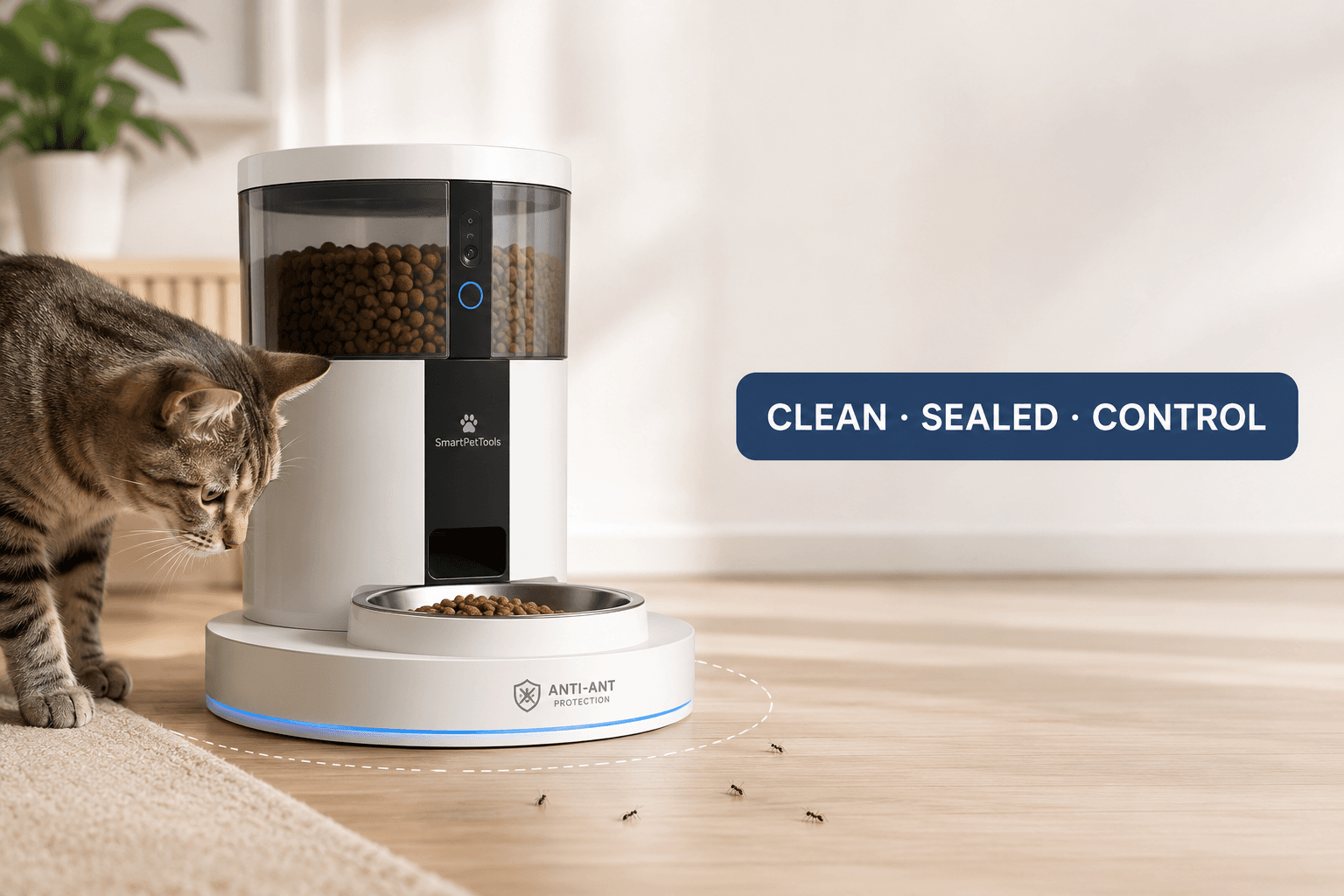
This is why an ant proof pet feeder must control the full station. A feeder with a water moat can still fail if spilled kibble sits outside the moat. A raised feeder can still fail if one leg touches a wall. A smart feeder can still fail if the chute area collects oily crumbs.
The solution is to make the route unrewarding. Clean the bowl after meals. Wipe the tray and floor. Keep the tank lid closed. Store food indoors in a sealed container. Use measured portions so the pet finishes meals instead of leaving a permanent food target.
Best Ant Proof Feeder Features
The best ant proof pet feeder features are not decorative. They solve access and residue. Look for a secure food tank, tight lid, removable bowl, washable tray, stable base, smooth surfaces, raised design, and enough clearance to inspect under the feeder.
Ant-moat designs can help because they create a barrier around bowl access. Raised legs can help when the legs do not touch walls, cords, curtains, or textured mats. Smooth stainless steel bowls can help because they are easier to wash than scratched plastic. The feature only works when the cleaning routine supports it.
For hygiene-focused bowl selection, the stainless steel cat feeder bowl benefits guide is useful for cat owners comparing bowl surfaces. For dogs, choose the same cleaning logic: smooth, removable, washable, and hard for residue to cling to.
Indoor Placement Rules
Indoor ant control starts with distance from entry points. Do not place the feeder beside patio doors, window frames, baseboard cracks, trash cans, compost bins, damp sinks, laundry drains, or food storage bags. These locations already carry scent, moisture, or ant traffic.
A proper ant proof pet feeder station should sit on a hard washable floor or tray. Avoid carpet and cloth mats because they trap crumbs and hold odor. If a mat is necessary, use a smooth waterproof mat that can be lifted and washed daily.
Keep the feeder slightly away from the wall so ants cannot use the wall as a protected route straight to the bowl. Check the legs, cord, underside, chute, bowl rim, and floor edge. Ants use small contact points. A cord touching the wall can act like a bridge.
Outdoor Placement Rules
Outdoor feeding makes ant control harder because heat, moisture, and wildlife increase food exposure risk. An outdoor ant proof pet feeder needs shade, shelter, elevation, and fast cleanup. A feeder placed directly on a patio edge, soil, grass, or damp deck will attract more insects than a protected station.
Use the outdoor controls in outdoor automatic pet feeder before placing food outside. Outdoor bowls should not stay open overnight. Dry food should not sit through rain, humidity, or direct sun. Wet food outside needs even stricter time limits and cleaning.
The UC IPM ant management guidance explains that sanitation and removing food sources are central to ant control. For pet feeding, that means the feeder station must stop rewarding ants before any barrier or device feature can succeed.
What Not To Do Around Pet Food
Do not spray pesticides around the feeder, bowl, food tank, water bowl, or pet bedding. Do not place bait where pets can reach it. Do not use strong household cleaners on food-contact surfaces without proper rinsing. The goal is to block ants without creating a new pet safety problem.
The EPA safe-use guidance for pest control products stresses reading and following label directions. Around pet feeders, the practical rule is stricter: keep pest-control products away from food-contact zones and use physical cleaning, storage, and placement controls first.
An ant proof pet feeder should reduce the need for risky improvisation. If the station stays clean, food stays sealed, and access paths are interrupted, the owner does not need to fight ants directly at the bowl.
Common Failure Pattern
The common failure pattern is buying an ant-resistant bowl and placing it in the same dirty station. The bowl changes, but the floor crumbs, food bag, wall path, and wet-food residue remain. Ants return, and the owner decides the product failed.
The second failure is overfilling an automatic feeder. A large food tank feels convenient, but stale odor and oily kibble dust can collect inside the chute and bowl area. More stored food also means more attraction if the lid or seal is weak.
The third failure is leaving water and food so close that splashes reach the kibble tray. Moisture turns crumbs into a stronger scent source. Keep water available, but do not let spills reach the feeder outlet. For broader water setup, use pet hydration tips without turning the food station into a damp zone.
Real-World Impact
The real-world impact of a weak ant setup is more than annoyance. Pets can refuse food when ants crowd the bowl. Owners throw away food repeatedly. Outdoor stations attract more insects. Indoor stations become harder to trust. The feeding routine becomes reactive instead of stable.
A strong ant proof pet feeder gives the owner cleaner data. If the bowl stays clean and ant-free, appetite changes are easier to interpret. If ants keep appearing, the owner knows the station still has a scent source, path, moisture problem, or exposed food window.
For multi-pet homes, ant problems also hide stealing. One pet may leave food, another pet may eat the leftovers, and ants arrive later. Use the access-control logic in how to stop one cat from eating the other’s food when shared bowls make portion tracking unclear.
Can This Be Fixed?
Yes, ant problems around pet food can be fixed when the owner treats the feeder as a clean station, not just a bowl. Start with a full reset. Empty the bowl. Remove the feeder. Wash the bowl and tray. Wipe the floor. Seal the food bag. Inspect the wall line. Move the station away from the trail.
Then rebuild with a measured routine. Program scheduled meals, keep portions tight, remove leftovers, and inspect daily for one week. If ants return, follow the path instead of only cleaning the bowl. The active trail shows where the station is still exposed.
For device setup, use how to use a smart pet feeder. For product selection, start with the smart feeders collection and prioritize removable bowls, secure lids, stable bases, and easy-clean surfaces.
Who Should Walk Away and Who Should Use This
Walk away from open bowls on carpet, outdoor bowls left overnight, unsealed food bags, feeders pushed against walls, dirty silicone mats, and pesticide use near pet food. These shortcuts keep the ant problem active.
Use an ant proof pet feeder system if ants appear in the bowl, dry food disappears into trails, outdoor meals attract insects, wet food residue creates repeat visits, or the feeding station sits near a patio door, kitchen baseboard, garage corner, or porch.
Cat owners can begin with the cat feeders collection when the priority is smaller portions and bowl hygiene. Dog owners should use the dog feeders collection when bowl size, eating speed, and feeder stability matter more.
Mini FAQ
What is the best ant proof pet feeder?
The best ant proof pet feeder is a sealed, easy-clean, raised or isolated feeder used with measured meals and a clean station. The feeder must reduce exposed food, block ant access paths, and keep crumbs from building up around the bowl.
How do I keep ants out of my pet feeder?
Keep ants out of a pet feeder by removing crumbs, washing the bowl, sealing food storage, moving the feeder away from walls and entry points, and limiting how long food sits out. Ant control starts with sanitation and placement.
Do ant proof pet bowls really work?
Ant proof pet bowls work when the station is clean and the access path is controlled. They fail when spilled food, wet residue, wall contact, or unsealed food bags keep attracting ants around the bowl.
Can ants get into an automatic pet feeder?
Ants can get into an automatic pet feeder when the chute, bowl, lid, or surrounding floor carries food scent. Use a secure lid, clean the dispensing area, avoid damp placement, and keep the feeder away from active ant trails.
Is an ant proof pet feeder safe for cats?
An ant proof pet feeder is safe for cats when it uses physical barriers, clean surfaces, and sealed storage instead of chemicals near food. Keep pesticides and baits away from the feeding station.
Is an ant proof pet feeder useful outdoors?
An ant proof pet feeder is useful outdoors only when the station is sheltered, shaded, raised, cleaned daily, and protected from open food exposure. Outdoor feeding needs stricter inspection because heat and moisture attract insects faster.
A 2L smart pet feeder for regular feeding can help reduce all-day food exposure when paired with a clean, isolated station. The final rule is direct: an ant proof pet feeder works when food is sealed, meals are measured, the station is clean, and ants stop finding a reward at the bowl.