
Multiple Pet Feeders are the only thing standing between your peaceful morning coffee and a full-blown feline wrestling match. Let’s be real: your kitchen probably feels like a high-stakes heist movie every time the kibble bag crinkles. You’ve got one cat acting like a bouncer at a club, and another dog looking like they haven’t eaten since the Reagan administration. It’s exhausting, right? If you’re still trying to feed three pets out of one big communal trough, you aren’t just “being fair”—you’re actually fueling a biological war zone. Are you on the list of owners who think “they’ll just figure it out”? Because spoiler alert: they won’t. They’ll just get fat, stressed, or dangerously aggressive.
Before your floor turns into a mosh pit of fur and growls, you need to rethink your strategy. Investing in high-quality Multiple Pet Feeders is the only way to break the “scarcity mindset” that turns your sweet Fluffy into a food-obsessed gremlin. If you don’t control the access, you don’t control the peace. It’s that simple.
The Root of the Riot: Why Your Pets Are So Possessive
In the wild, a meal isn’t a guarantee; it’s a win. Even though your pets live in a climate-controlled house with a Wi-Fi password, their DNA is still screaming, “Eat it now or lose it forever.” This is the core of food possessiveness. When you have multiple animals but only one feeding spot, you’re triggering a survival instinct that makes the dominant pet feel like they must guard the hoard.
This behavior manifests as body-blocking the bowl, hissing, or the “scarf and barf” (eating so fast they vomit, then going back for more). This doesn’t just ruin your rug; it ruins their health. One pet ends up morbidly obese, while the other is constantly hungry even after eating. The impact on your relationship with them is even worse—they start associating you with the stress of the hunt, not the comfort of the home. According to the American Association of Feline Practitioners (AAFP), resource competition is the leading cause of chronic stress in multi-cat households.
Top 1: Microchip-Enabled Individual Feeders
If you want the “Fort Knox” of pet care, this is it. Microchip feeders only open for a specific pet’s RFID tag. It is the ultimate solution for Multiple Pet Feeders because it creates a physical barrier that no “food thief” can hack. This is mandatory if you have one pet on a prescription diet or a senior cat that needs 20 minutes to chew while the kitten is a literal vacuum. It eliminates the “behavioral possessiveness” because the submissive pet knows their food is safe behind a shield. Check out our multi-cat household guide to see how these units save thousands in vet bills for obese pets.
Top 2: The Synchronized Multi-Bowl Splitter
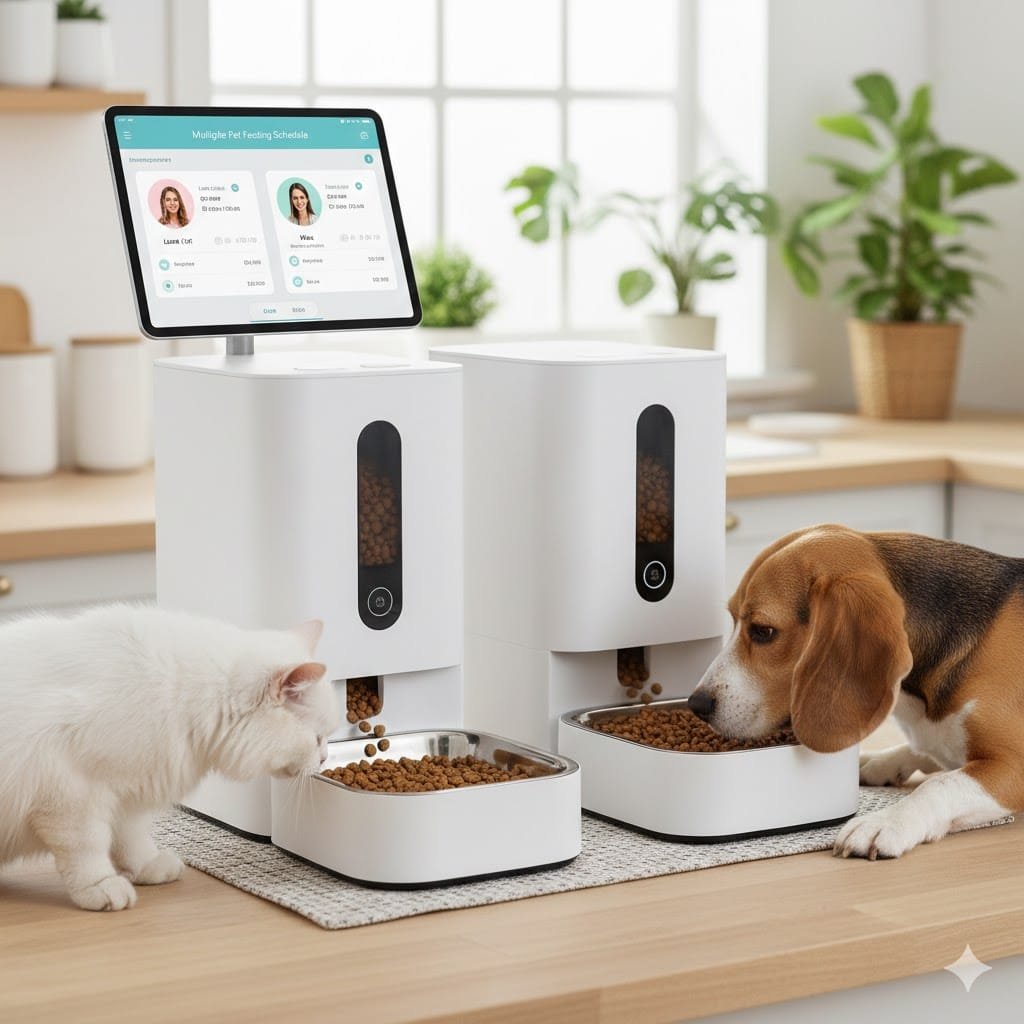
For pets that generally get along but just get over-excited, a “splitter” style feeder is a game-changer. These Multiple Pet Feeders dispense one portion into two or three separate bowls simultaneously. Why does this work? It removes the “who gets it first” anxiety. When the motor whirrs, everyone has a destination. It creates a “peaceful parallel” feeding experience. However, keep an eye on them—if you have a fast eater, they might finish their half and shove the other pet out of the way. If that happens, you need to scale up to individual units.
Top 3: Spatial Separation via Smart Scheduling
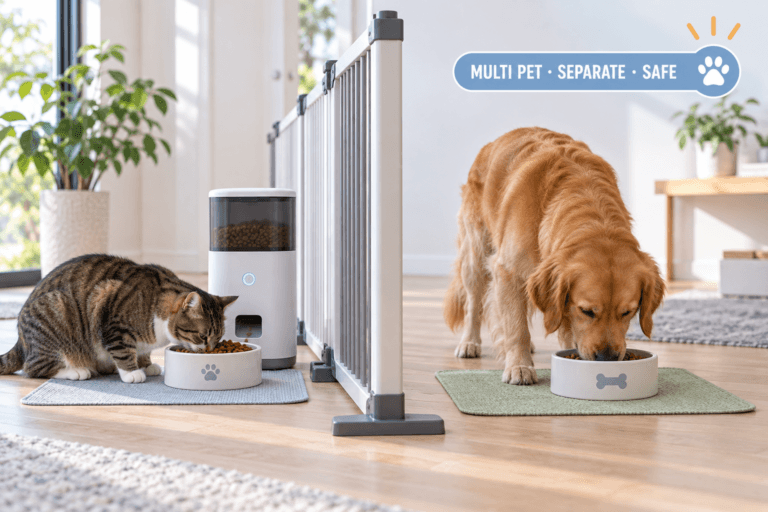
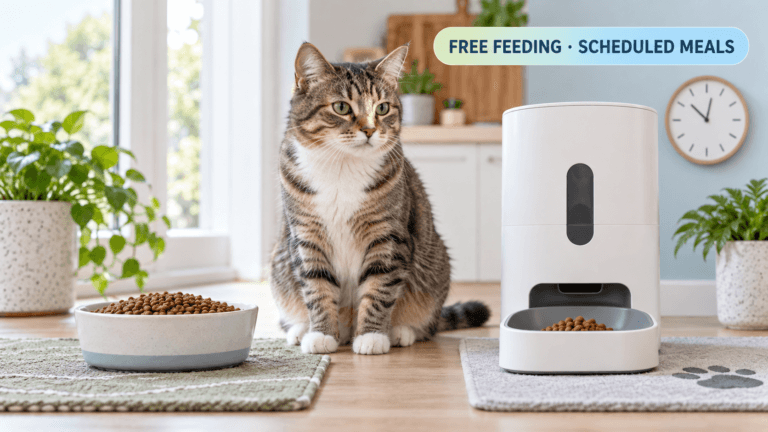
Sometimes the best Multiple Pet Feeders strategy isn’t a different machine, but a different room. You can use two Smart WiFi Feeders and set them to go off at the exact same second in opposite corners of the house. This forces a physical “territory” for each pet. The “Top 3” benefit here is data. By using the app, you can see if the cat in the laundry room ate his 10:00 AM snack while you were at work. If he didn’t, you know something is wrong before he even starts acting sick. This level of portion control is what prevents long-term liver and kidney issues.
Top 4: The Slow-Feed “Activity” Station
If your pets are aggressive because they are bored, you need to make them work for it. Some Multiple Pet Feeders are designed as puzzles or slow-feeders. This is especially vital for dogs. As noted by the experts at American Kennel Club (AKC), mental stimulation is as exhausting as a walk. By making the dominant pet take 15 minutes to fish out their kibble, you’re giving the slower pet plenty of time to eat in peace. It turns a “confrontation” into a “job.” It’s an emotional anchor that shifts their focus from “beating the other pet” to “solving the puzzle.”
Multi-Pet Feeding: The Quick “Sanity” FAQ
Should I feed my pets in the same room?
Only if they have zero aggression. If one pet stares at the other while eating, that’s “passive aggression,” and you need to separate their Multiple Pet Feeders immediately to avoid a fight.
What if my dog steals the cat’s food?
Cat food is too high in protein for dogs and can lead to pancreatitis. Use a cat feeder with a cover or place it on a high counter where the dog can’t reach.
Can I use one large feeder for three cats?
Rarely works. Even with a splitter, three cats around one machine usually leads to one cat getting bullied out of their meal.
Do automatic feeders help with food aggression?
Yes! They remove the “human dispenser” variable. Pets stop begging YOU and start waiting for the machine, which follows a predictable, non-negotiable schedule.
How many Multiple Pet Feeders do I really need?
The rule of thumb is N+1. If you have 2 pets, have 3 feeding locations. This ensures there is always a “free” station that isn’t being guarded.
How To Set Up Your Multi-Pet Peace Plan
1. Observe the Bully: Watch your pets from a distance during a manual feed. Why: You need to see if the aggression is physical (biting) or psychological (staring). This avoids picking the wrong type of feeder.
2. Measure the Gap: Calculate the exact calories each pet needs. Why: You’ll likely find the dominant pet is eating 150% of their needs. This prevents the “obesity creep” in your home.
3. Install the Tech: Place your SmartPetTools feeders at least 6 feet apart. Why: Physical distance reduces the “guarding” instinct and lowers cortisol levels.
4. App Syncing: Set all feeders to dispense at the same time. Why: If one goes off earlier, the bully will eat theirs and then run to steal the second one.
5. The Test Phase: Monitor the first 3 days via the built-in cameras. Why: You need to ensure no one has found a “hack” to steal food before you leave them alone with the machines.
Ending the food wars isn’t just about the kibble; it’s about the quality of life for everyone in the house—including you. Stop playing referee every evening. With the right Multiple Pet Feeders and a bit of smart scheduling, your kitchen can finally go from a combat zone to a cafe.
Ready to bring peace back to your home? Shop our Multiple Pet Feeder Collection and stop the stealing today!