
Daylight savings pet feeding creates more problems than many owners expect. A one-hour clock change looks small to humans, but cats and dogs do not read clocks. They follow light, sound, owner movement, food smell, and repetition. When meal time suddenly moves, pets can start begging early, waking the owner, eating too fast, or acting unsettled around the bowl.
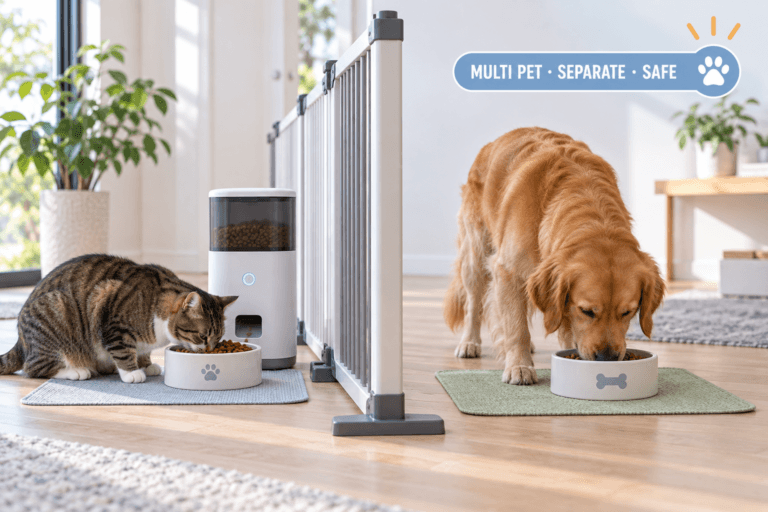
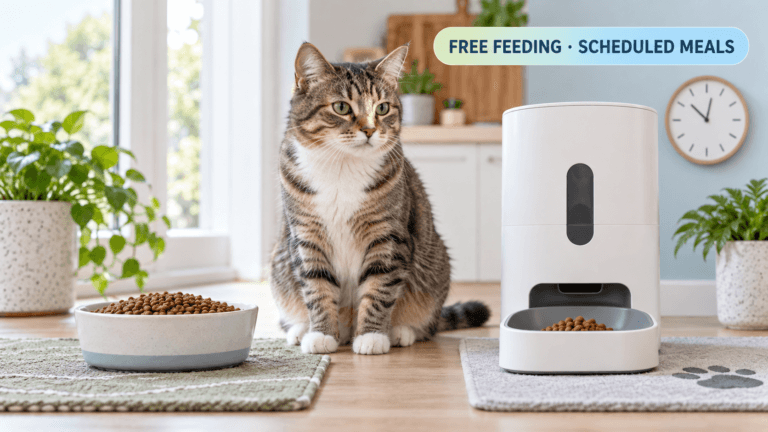
For homes that rely on dry-food timing, a smart automatic pet feeder with app control can make the reset cleaner. The feeder should not simply jump meals without a plan. It should help the owner move feeding time gradually while keeping portions controlled.
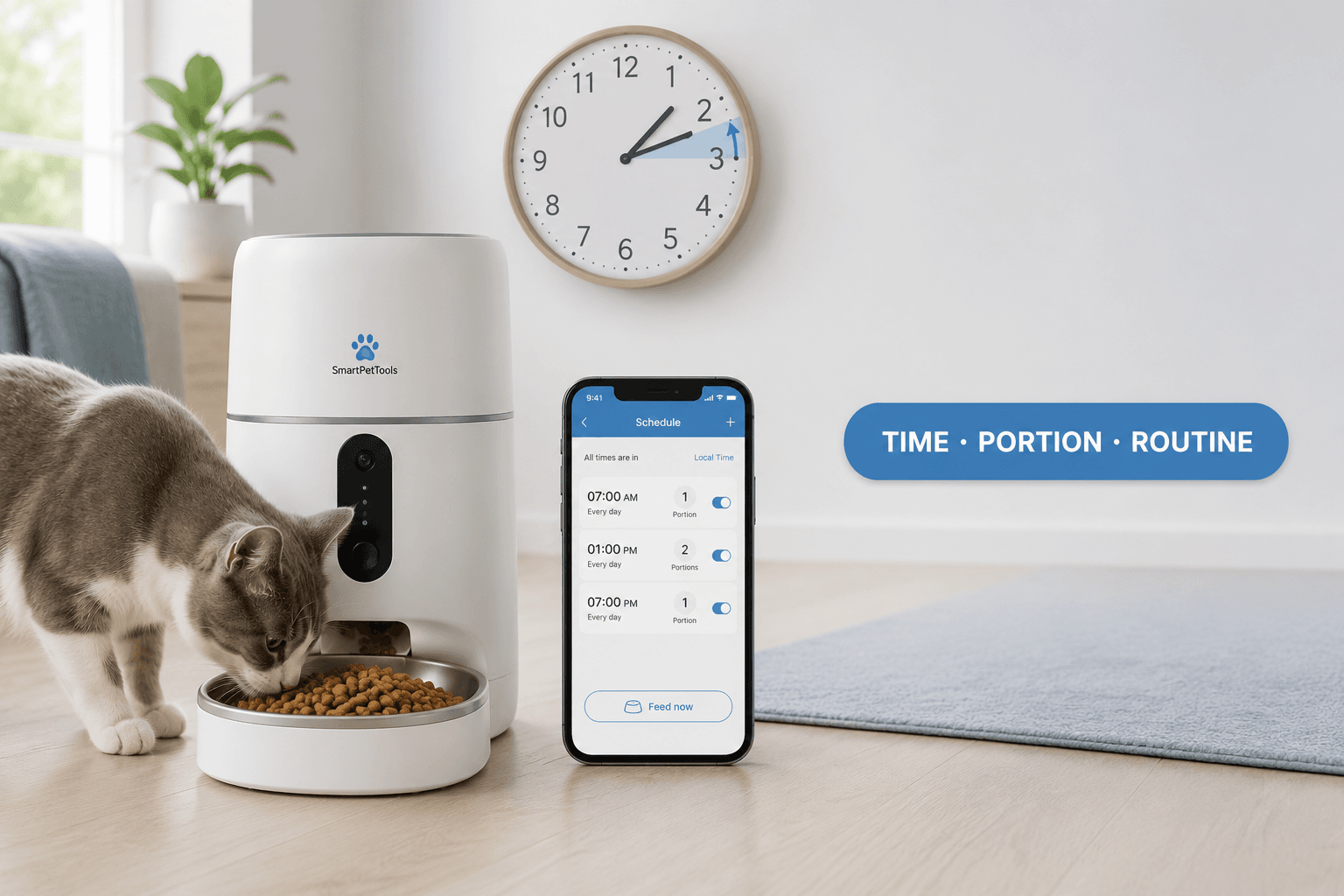
Direct Answer: Daylight Savings Pet Feeding
The best daylight savings pet feeding strategy is to shift meal times gradually by 10 to 15 minutes per day before and after the clock change, instead of moving the full hour at once. This protects the pet’s feeding rhythm, reduces begging, and prevents the owner from using extra food as a shortcut for schedule stress.
The mistake is treating the clock change as a human-only event. Pets experience the change through routine. If breakfast suddenly comes one hour later, a cat may wake the owner earlier. If dinner suddenly moves, a dog may pace before the bowl. A stable daylight savings pet feeding plan keeps the meal predictable while the household clock changes around it.
Why This Happens
Pets learn feeding through repeated cues. The alarm rings, lights turn on, the owner walks to the kitchen, the feeder runs, and the bowl fills. After enough repetition, the pet starts anticipating the meal before the food appears. That anticipation is normal. The problem starts when the owner changes the clock but expects the pet’s body rhythm to change instantly.
The AVMA pet nutrition guidance treats feeding as part of overall pet care, not just food selection. That matters during time changes because meal timing, portion control, and consistency all affect the home routine.
Strong daylight savings pet feeding reduces confusion by moving the routine in small steps. The pet still receives food reliably. The owner still controls portions. The feeder schedule becomes a bridge between old time and new time instead of a sudden disruption.
What To Do
Start three to seven days before the clock change. Move each meal by 10 to 15 minutes per day toward the new target time. Keep the portion the same. Do not add extra food because the pet complains. Use attention, play, brushing, walks, or quiet contact as support, but keep calories inside the plan.
A practical daylight savings pet feeding reset uses four controls: gradual timing, measured portions, stable water access, and consistent owner response. Timing handles the clock shift. Portion control prevents emotional overfeeding. Water supports comfort. Owner consistency stops begging from becoming the new schedule.
Use the scientific pet feeding schedule framework before changing app settings. Decide the final meal times first, then adjust the feeder schedule in small steps. For setup details, how to use a smart pet feeder explains how scheduled feeding should support routine instead of replacing observation.
Spring Forward Feeding Reset
During spring forward, the clock moves ahead. Pets often experience this as meals arriving earlier by the human clock, but the household’s waking and sleeping cues can feel compressed. The owner may rush breakfast, leave for work earlier, or change walking time without giving the pet enough transition.
For daylight savings pet feeding in spring, begin shifting meals earlier before the clock change. If breakfast is normally 7:00 a.m., move it to 6:45, then 6:30, then 6:15, then align with the new target. The exact pace should be steady. The point is not speed. The point is predictability.
For dogs, coordinate feeding with walks and bathroom timing. Do not move dinner earlier while leaving the evening walk late if that creates restlessness. For cats, protect morning meals carefully because cats often use early waking to pressure owners into feeding before the planned time.
Fall Back Feeding Reset
During fall back, the clock moves back. This is the harder version for many owners because pets often feel that the meal is late. A cat that expects food at 6:00 a.m. may begin yelling at the bedroom door when the clock now says 5:00 a.m. A dog may pace before dinner because the old body rhythm is still active.
The best daylight savings pet feeding plan for fall is to delay meals gradually. Move breakfast and dinner 10 to 15 minutes later each day before the change. After the clock change, continue small adjustments until the pet reaches the new schedule.
Do not solve fall-back begging with a bonus meal. That teaches the pet that early pressure works. If the pet wakes early, give calm non-food interaction or ignore food-demand behavior when safe. The feeder should run at the programmed time, not the loudest time.
The Feeding Loop Behind This Problem
The feeding loop starts when the pet notices the meal is not arriving at the expected body-clock time. The pet vocalizes, paws, barks, jumps, stares, or wakes the owner. The owner feels tired and gives food early. The pet learns that pressure moves the meal.
After one or two repetitions, the pet no longer waits for the feeder or the bowl routine. The pet tests the owner first. This is why one clock change can create several weeks of early waking or pre-dinner pacing. The issue is not only the time shift. The issue is the reward given during the shift.
A controlled daylight savings pet feeding reset breaks the loop. Food comes from the schedule. Begging does not move the meal. The owner offers calm routine support without adding unplanned calories. Within a stable system, the pet adapts faster because the rules stop changing.
The Emotional Trigger Owners Miss
The emotional trigger is guilt. Owners see a confused pet and feel responsible. The clock changed because humans changed it, so giving extra food feels fair. That reaction is understandable, but it weakens the routine.
Food should not become an apology for the clock change. A pet does not need extra calories to adjust to daylight saving time. The pet needs clear cues, steady feeding windows, water, rest, and owner consistency. If the owner gives food every time the pet complains, the pet learns a new feeding rule instead of adjusting to the old one.
Good daylight savings pet feeding separates comfort from calories. Use play, a short walk, a grooming session, or quiet contact to support the transition. Keep meals measured. For cats that already push for early food, timed cat feeder for early morning gives a stronger structure for morning-demand behavior.
The Addiction Mechanism
The addiction mechanism is unpredictable reward. If a pet sometimes receives food on schedule, sometimes early, sometimes after meowing, and sometimes after waking the owner, the pet keeps testing the system. This is the same reason inconsistent feeding creates persistent begging outside daylight saving time.
A weak reset turns the clock change into a slot machine. The pet tries more behaviors because one of them may work. The owner becomes more tired and more likely to give in. The result is louder behavior and weaker feeding control.
A reliable daylight savings pet feeding routine removes the gambling pattern. The feeder or owner provides food at the planned time. Treats are counted. Manual extras stop. The pet receives consistency instead of negotiation.
Using an Automatic Feeder for the Time Change
An automatic feeder is useful during daylight saving time because it removes the owner’s tired reaction from the base meal. The device runs the schedule even when the owner is asleep, busy, or adjusting to a new wake time. The owner still needs to program it correctly.
For daylight savings pet feeding, change feeder settings in small steps instead of jumping the clock by a full hour. If the feeder app uses local time, confirm the schedule after the clock change. If the feeder does not update automatically, adjust it manually before the next meal window.
For owners with irregular work hours, the automatic feeder for shift workers guide is useful because daylight saving time and shift work create the same core problem: pets need stable meals when human schedules move.
Common Failure Pattern
The common failure pattern is changing the clock and the feeding system on the same day. The owner updates the feeder, changes work timing, adjusts walks, sleeps differently, and adds treats because the pet complains. The pet receives too many new signals at once.
The second failure is ignoring water and bathroom timing. Dogs need feeding schedules that fit walks and elimination routines. Cats need stable food, water, and litter access. A time change should not move one part of the routine while leaving the rest chaotic.
The third failure is using free feeding as a shortcut. A full bowl seems to prevent hunger, but it hides intake and can increase grazing. For pets managing weight, automatic feeder for weight loss explains why measured feeding is stronger than all-day access.
Real-World Impact
The real-world impact of poor daylight savings pet feeding is early waking, pre-meal begging, fast eating, missed meals, owner frustration, and accidental overfeeding. The pet does not need to understand the clock for these problems to become real. The pet only needs to learn that pressure changes the meal.
Weight control is one hidden consequence. An extra scoop during the time change does not look important, but repeated “small” adjustments can become a new habit. The AVMA healthy pet weight guidance explains why body condition matters for long-term health, and feeding consistency is part of protecting that condition.
Hydration is another practical issue. Changing walk times, sleep times, and feeding windows can affect when pets drink. Use pet hydration tips to keep water access stable while meal timing shifts.
Can This Be Fixed?
Yes, daylight savings pet feeding problems can be fixed with a gradual reset and firm feeding boundaries. The owner should stop responding to demand behavior with food, move meals in small increments, and keep the total daily portion unchanged.
Run a seven-day reset. Pick the target meal times. Move each meal by 10 to 15 minutes per day. Keep food measured. Count treats. Keep water available. Avoid changing food brands during the reset. Watch appetite, stool, sleep, and begging behavior.
For device selection, start with the smart feeders collection if the home needs app control, timed meals, or portion tracking. Cat owners can compare the cat feeders collection, while dog owners can use the dog feeders collection when bowl size and portion volume matter.
Who Should Walk Away and Who Should Use This
Walk away from sudden one-hour meal jumps, early feeding after begging, free-feeding as a shortcut, and extra treats used as comfort during the time change. These choices make the pet’s behavior louder and the owner’s routine weaker.
Use a daylight savings pet feeding reset if your cat wakes early, your dog paces before dinner, your pet eats too fast after delayed meals, or your household uses an automatic feeder. It is also useful for shift workers, multi-pet homes, weight-control routines, and pets that react strongly to small schedule changes.
The goal is not to make the pet follow the clock perfectly on day one. The goal is to make the new routine clear enough that the pet stops testing it. A controlled reset protects sleep, food intake, behavior, and owner patience at the same time.
Mini FAQ
How should I handle daylight savings pet feeding?
Handle daylight savings pet feeding by shifting meals 10 to 15 minutes per day instead of changing the full hour at once. Keep portions measured, avoid extra food for begging, and keep water and sleep cues consistent.
Does daylight saving time affect cats?
Daylight saving time affects cats because they follow routines, not clocks. Cats can wake early, beg before meals, or resist the new schedule when feeding time changes suddenly. A timed feeder helps when the schedule moves gradually.
Does daylight saving time affect dogs?
Daylight saving time affects dogs when feeding, walks, bathroom breaks, and owner wake times shift. Dogs need meals coordinated with activity and rest. Move the full routine gradually, not only the food bowl.
Should I change my automatic feeder for daylight saving time?
Yes, check the automatic feeder schedule during daylight saving time. Confirm whether the app updates automatically or needs manual adjustment. Move meal times gradually when possible instead of making one sudden one-hour change.
Why is my pet begging after the time change?
Your pet is begging after the time change because the body routine still expects the old meal time. Do not reward begging with early food. Shift the schedule gradually and keep the total daily amount controlled.
Can I use treats to help my pet adjust?
Use treats only if they are counted inside the daily food plan. Do not use random treats to cover every complaint during daylight saving time. Use play, attention, walks, and calm routine cues instead.
A 2L smart pet feeder for regular feeding can keep meals steady while the household clock changes. The final rule is direct: daylight savings pet feeding works when the schedule moves gradually, the portion stays measured, and begging does not become the new clock.