
Going on vacation should be a time of relaxation, but for most cat owners, it is a period of high anxiety. “Will the sitter remember the portions?” “What if there is a power outage?” These are the questions that keep us scrolling through our phones instead of enjoying the beach. This is why a high-tech cat feeder for vacation is the single most important investment for a modern traveler.
A reliable cat feeder for vacation serves as your pet’s digital guardian, providing consistency that a human sitter might miss. In this guide, we will explore why dual power backup, high capacity, and app-monitoring are non-negotiable features for any cat feeder for vacation and how to ensure your cat stays on their scientific pet feeding schedule while you are miles away.
1. The Power of Reliability: Dual Power Backup
The number one fear when using a cat feeder for vacation is a power outage. If your home loses electricity, a standard plug-in feeder will stop working, leaving your cat hungry.
H2: Why Dual Power is Essential for a Cat Feeder for Vacation
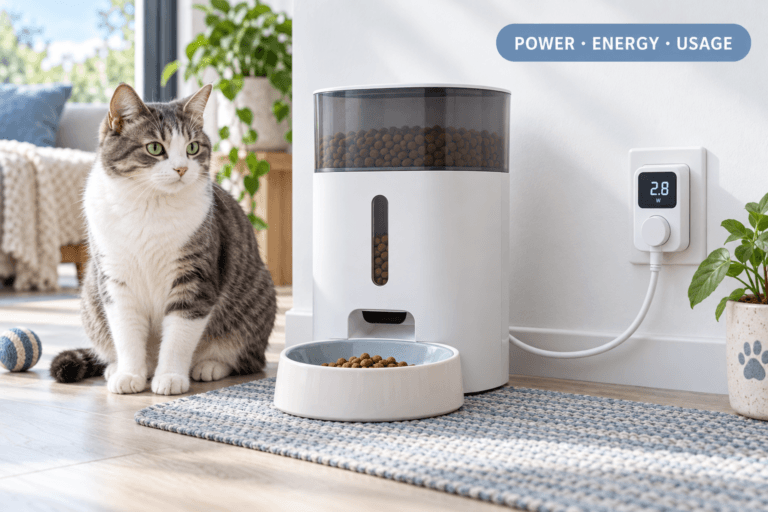
The best smart pet feeders feature a dual power supply system. They primarily run on a wall outlet but include a battery compartment (usually D-cell) as a failsafe. If the power goes out, the cat feeder for vacation instantly switches to battery power, keeping the internal clock and feeding schedule active. This ensures that even if the smart life pet feeder setup goes offline from the WiFi, the physical mechanism still dispenses food at the correct time.
2. User Scenario: The 48-Hour Business Trip
The Scene: Mark is heading out for a 2-day business trip. He doesn’t want to hire a sitter for such a short time, but his cat, Luna, is prone to cat food aggression if she misses a meal.
The Problem: Mark is worried that the local power grid is unstable during summer storms.
The Switch: Mark sets up a cat feeder for vacation with a 6L capacity and a fresh set of backup batteries.
The Result: A storm hits and the WiFi goes out. Mark can’t check the app, but because his cat feeder for vacation has dual power, it continues to dispense Luna’s feeding schedule for overweight indoor cats locally. Mark returns home to a happy, fed cat rather than a stressed one.
3. Comparison Table: Standard Feeders vs. Vacation-Ready Feeders
| Feature | Standard Daily Feeder | Professional Cat Feeder for Vacation |
| Power Source | Plug-in Only | Dual Power (Plug + Battery Backup) |
| Hopper Capacity | 2L – 3L | 5L – 8L (Long-term Capacity) |
| Camera/Audio | Optional | Built-in (For Visual Verification) |
| App Notifications | Basic | Real-time Status & Low Food Alerts |
| Tamper Resistance | Low | High (Twist-lock Lids/Weighted Base) |
4. Monitoring from Afar: The Camera and App Advantage
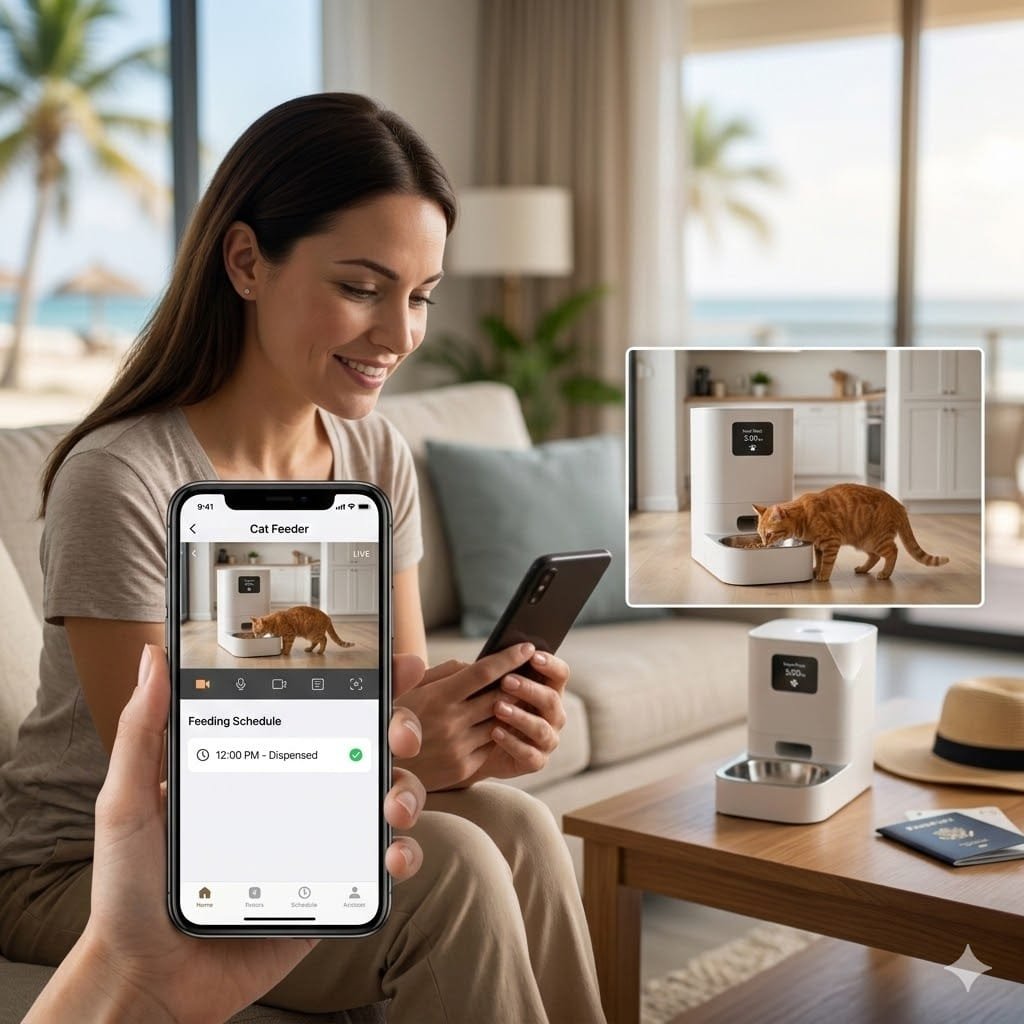
When choosing a cat feeder for vacation, visual verification provides peace of mind that no spreadsheet can match.
Real-Time Visuals
Modern cat feeders often come equipped with 1080p cameras. This allows you to log in and see your cat eating. You can check for signs of whisker fatigue or appetite changes, which are vital for tracking cat calorie intake for weight loss.
Two-Way Audio
A cat feeder for vacation with a speaker allows you to record a “dinner call” or even talk to your cat in real-time. This reduces separation anxiety and maintains the bond while you are away.
5. Pros & Cons of Automating Your Vacation Care
Pros:
Consistency: Eliminates the risk of a sitter being late or forgetting the proper pet hydration routine.
Portion Control: Prevents the “free-feeding” weight gain that often happens when sitters leave too much food. It’s the best way to keep your pet at a healthy weight.
Cost-Saving: Reduces the need for daily professional pet sitting for short trips.
Health Tracking: Essential for diabetic pet management.
Cons:
No Human Socialization: A feeder can’t provide the cuddles a cat needs during long trips (always have a friend check in every few days).
Refill Dependency: You must ensure the hopper is full before you leave.
6. How to Prepare Your Feeder for a 7-Day Trip
Success with a cat feeder for vacation requires a “test run” before you lock the front door.
Start 7 Days Early: Set up the cat feeder for vacation while you are still home. This allows you to verify that the portion sizes are accurate and the stainless steel bowl is clean.
Check the Batteries: Never rely on old batteries. Put in a fresh set of alkaline batteries before every major trip.
Clean the Sensors: Dust on the infrared sensors can cause a “jam” error. Wipe them down to ensure the cat feeder for vacation operates smoothly.
Multi-Pet Strategy: If you have more than one cat, ensure you use a microchip feeder for multiple cats or a multi-pet feeder to prevent one cat from stealing all the vacation rations.
7. FAQ: Using a Cat Feeder for Vacation Safely
Q: Is it safe to leave a cat alone for a week with only an automatic feeder?
A: No. While a cat feeder for vacation handles the food, you still need someone to check the water, clean the litter box, and ensure the cat isn’t sick. We recommend a “Feeder + Sitter” hybrid approach for trips longer than 3 days.
Q: What if the kibble gets jammed?
A: Choose a cat feeder for vacation with an anti-clogging motor. If a jam occurs, a high-quality smart life pet feeder will send an immediate notification to your phone.
Q: Can I use wet food for vacation?
A: Most cat feeder for vacation units are for dry food. If your cat needs wet food to prevent acid reflux, use a specialized ice-pack timed feeder for the first 24 hours of your trip.
Final Thoughts
A cat feeder for vacation is about more than just dispensing kibble; it is about providing a safety net for your family. By choosing a model with dual power backup, a high-capacity hopper, and remote monitoring capabilities, you ensure your pet remains healthy and happy while you are away. Vacation should be a break for everyone—including your cat, who deserves the peace of mind that comes with a perfectly timed meal.
(Note: For more safety tips regarding pet care during travel, consult the American Veterinary Medical Association (AVMA) guidelines.)