
French Bulldogs are among the most beloved breeds globally, but their unique “flat-faced” anatomy—known as Brachycephalic Syndrome—poses significant challenges during mealtimes. If your Frenchie sounds like a vacuum cleaner and then spends ten minutes gasping for air after eating, you are witnessing a dangerous habit. This is why finding the right slow feeder for french bulldogs is not just a convenience; it is a critical safety requirement for their respiratory health.
A specialized slow feeder for french bulldogs must address two core issues: feeding speed and neck posture. In this guide, we explore why an elevated (raised) design combined with a slow feeder for french bulldogs is the ultimate tool for preventing pet obesity and life-threatening digestive complications.
1. The Choking Hazard: Why Frenchies Inhale Their Food
Because of their shortened snouts and elongated soft palates, French Bulldogs struggle to breathe and eat at the same time. When they “inhale” their food, they also swallow massive amounts of air (aerophagia).
H2: How a Slow Feeder for French Bulldogs Saves Lives
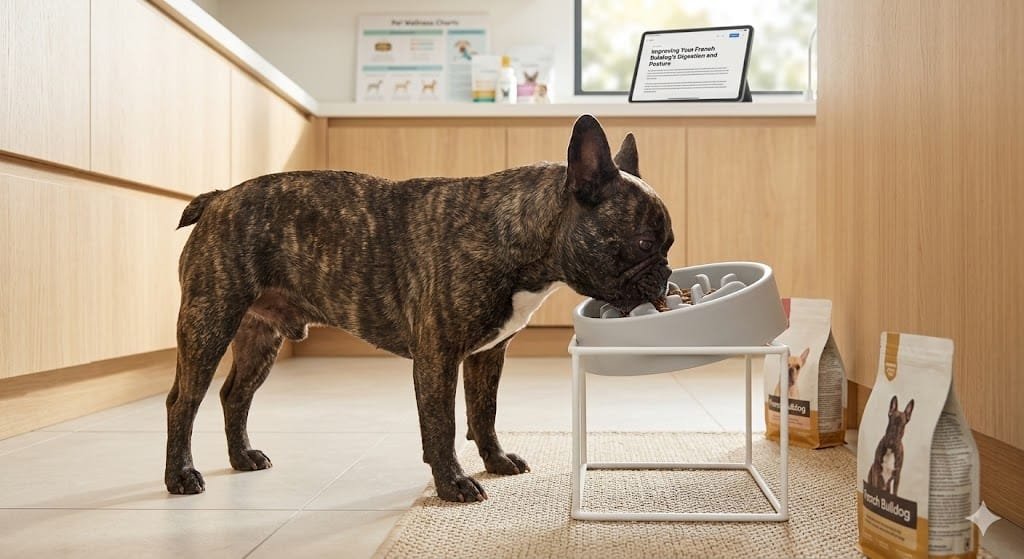
A slow feeder for french bulldogs creates physical obstacles that force your pet to use their tongue to navigate around kibble. This extends a 30-second meal to over 10 minutes. By slowing down, your Frenchie takes smaller, more manageable bites, significantly reducing the risk of choking and vomiting after meals. This is the most effective way regarding how to stop my dog from inhaling his food.
2. User Scenario: The “Gasping” Dinner Time
The Scene: Chloe has a 2-year-old Frenchie named Pierre. Pierre is highly food-motivated and eats from a standard floor bowl.
The Problem: Every time Pierre eats, he coughs, his eyes water, and he eventually regurgitates his entire dinner. He then tries to eat it again while wheezing.
The Switch: Chloe researches the best slow feeder for french bulldogs and upgrades to an elevated smart feeder with a slow-dispense function.
The Result: Pierre now eats with his head level, reducing the pressure on his airways. Because the slow feeder for french bulldogs dispenses kibble in small bursts, Pierre can breathe between bites. Chloe no longer worries about stinky dog paws or digestive distress, as Pierre is finally following a healthy weight plan.
3. Comparison Table: Flat Bowls vs. Elevated Slow Feeders
| Feature | Standard Floor Bowl | Elevated Slow Feeder for French Bulldogs |
| Eating Speed | Dangerously Fast | Controlled (Slow-Feed Mode) |
| Airway Pressure | High (Hunched Over) | Minimal (Raised/Natural Posture) |
| Gas/Bloat Risk | High | Low (Reduced Aerophagia) |
| Joint Comfort | Low | High (Supports Arthritis Health) |
| Acid Reflux Relief | None | Excellent (Gravity-Aided) |
4. Why “Elevated” is Non-Negotiable for Brachycephalic Breeds
While the “slow” part of a slow feeder for french bulldogs handles the speed, the “elevated” part handles the anatomy.
Reducing Stress on the Esophagus
When a flat-faced dog eats from the floor, their esophagus is compressed. An elevated slow feeder for french bulldogs allows gravity to move the food downward into the stomach, rather than forcing the dog to “fight” it down. This is particularly vital for dogs prone to acid reflux or arthritis pain.
5. Pros & Cons of Using a Slow Feeder for French Bulldogs
Pros:
Prevents Bloat: Slow eating reduces the intake of excess air, the leading cause of bloat.
Stable Metabolism: Helps the body process nutrients efficiently by following a scientific pet feeding schedule.
Cleaner Chin: High-quality stainless steel bowls reduce bacterial buildup that causes acne.
Consistent Weight: Easier to manage dog calorie intake when meals aren’t rushed.
Cons:
Training: Some Frenchies may get frustrated initially by the slower pace.
Cleaning: Maze-style inserts require more diligent scrubbing than basic feeders.
6. How to Implement the Perfect Frenchie Feeding Plan
A successful slow feeder for french bulldogs strategy should be part of a broader wellness routine.
Divide Meals: Instead of two large meals, use a smart life pet feeder setup to program 4–6 micro-meals.
Monitor Hydration: Frenchies can struggle to drink without gagging. Ensure your pet hydration tips include an elevated water fountain.
Post-Meal Rest: Keep your dog calm for 30 minutes after using their slow feeder for french bulldogs to allow digestion to settle.
Dental Checkups: Fast eating can sometimes mask dental pain. Check if their teeth health is stable during your regular grooming routine.
7. FAQ: Troubleshooting Your Slow Feeder for French Bulldogs
Q: Can a slow feeder cause my dog to stop eating?
A: Rarely. However, if your Frenchie seems frustrated, start with the most “generous” slow-feed setting on your automatic dog feeder and gradually increase the difficulty.
Q: Is it safe for puppies?
A: Yes! Training a puppy to eat slowly with a slow feeder for french bulldogs prevents lifelong habits of “inhaling” food.
Q: Does it work for multi-pet homes?
A: In multi-pet households, we recommend separate stations. Use a microchip feeder for multiple cats or dogs if one pet is prone to stealing the other’s food.
Final Thoughts
French Bulldogs bring joy to every home, but their health requires specialized care. A slow feeder for french bulldogs is the single most important tool for managing their unique digestive and respiratory needs. By choosing an elevated, slow-dispensing solution, you are protecting your pet from the silent dangers of rapid eating and ensuring they stay at a healthy weight for years to come.
(Note: For professional guidance on brachycephalic dog care, please refer to the American Veterinary Medical Association (AVMA) guidelines.)