

5 Surprising Reasons: Why Do Cats Groom and What Their Tail Language Means
A cat’s tail twitches slightly as it curls up on the sofa, followed by a rhythmic licking of its fur. To a casual observer, these are just typical feline habits. However, for a dedicated owner, understanding these actions is like decoding a secret language. One of the most common questions is: why do cats groom so frequently? Is it just about cleanliness, or is there a deeper psychological need?
In this 2026 guide, we explore the science of feline communication, from understanding what cat tail movements mean to uncovering the biological reasons behind grooming and territorial marking.
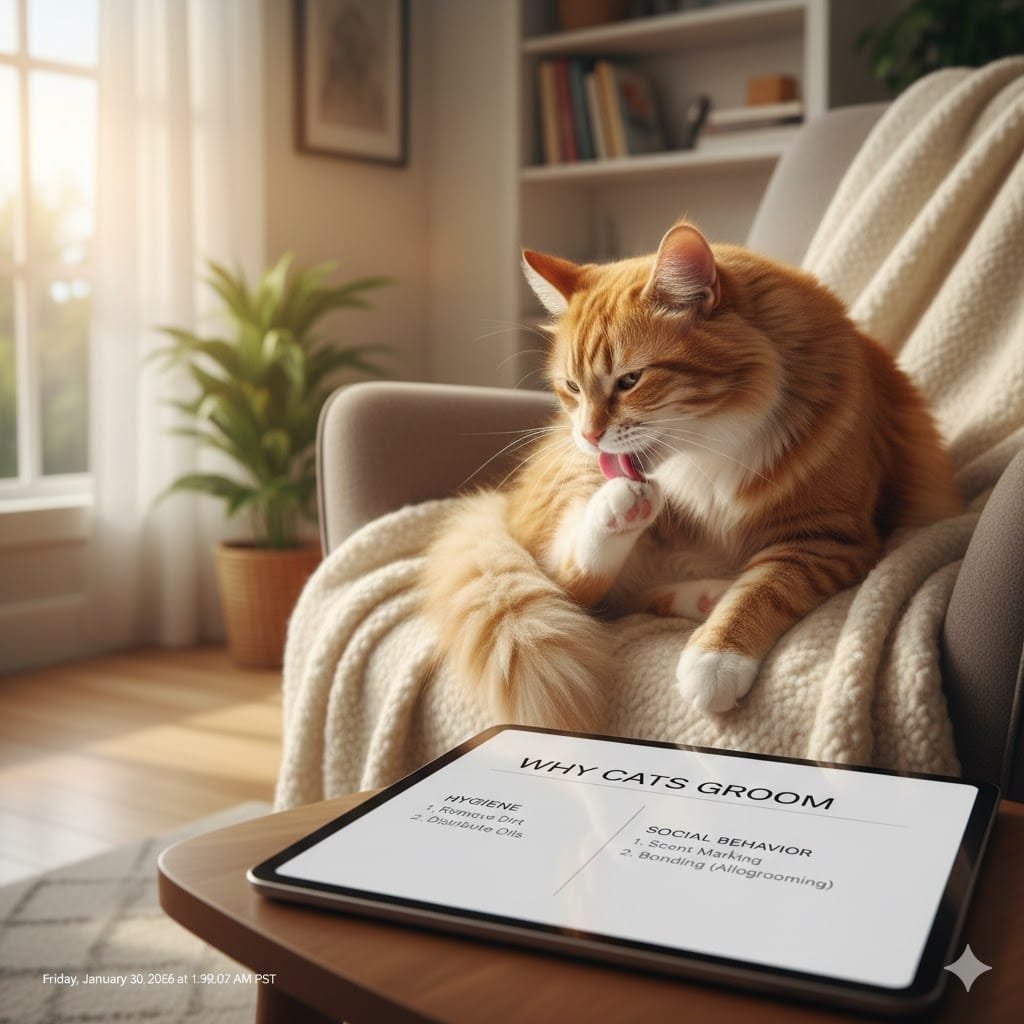
1. Hygiene and Beyond: Why Do Cats Groom?
Grooming is a cornerstone of feline life, occupying up to 50% of their waking hours. But why do cats groom with such intensity?
Temperature Regulation: Cats don’t sweat like humans. The evaporation of saliva from their fur provides a cooling effect during hot weather.
Social Bonding: In multi-cat homes, “allogrooming” (cats licking each other) reinforces social hierarchy and group scent.
Stress Relief: If you’re wondering why do cats groom after a stressful event (like an accidental fall), it’s because the action releases endorphins that soothe their nervous system.
Health Monitoring: While grooming, cats check for parasites. If your cat stops grooming, it may be following an improper scientific pet feeding schedule that lacks essential nutrients for coat health.
2. Deciphering Tail Language: How to Read Cat Tails
The tail is a feline barometer, consisting of 18–23 vertebrae and complex muscles. Learning how to read cat tails prevents misunderstandings:
The Question Mark: A high tail with a curved tip means your cat is friendly and ready to play.
The Thumping Tail: Rapid slapping against the floor indicates frustration or overstimulation. Stop petting immediately!
The Puffed Tail: This defensive mechanism makes them appear larger to threats. Understanding what does a cat’s tail mean in this state is crucial for avoiding scratches.
The Tucked Tail: Signifies fear or submission, often seen when multiple cat feeding stations are too close together, causing resource anxiety.
3. The Mystery of Spraying: Why Do Cats Spray?
Spraying is a complex marking behavior, distinct from normal urination. Many owners struggle with why do cats spray on furniture or walls.
Sexual Maturity: This is the primary answer to why do male cats spray. Urine contains pheromones that signal availability to mates. Neutering reduces this behavior in 70% of cases.
Territorial Anxiety: Cats spray on vertical surfaces at nose level to “claim” space. This often happens if they feel their resources are threatened.
Environmental Stress: New guests or changes in the home can trigger this. Always check if preventing pet obesity or other health routines are causing hidden stress.
4. Addressing Behavioral Issues Through Environment
If your cat is spraying or over-grooming, start with environmental modifications:
The “N+1” Rule: Ensure you have one more litter box than the number of cats.
Vertical Space: Install cat trees to help them avoid conflicts.
Safe Resources: Using an automatic pet feeder ensures each cat gets their meal without competition, which reduces the territorial stress that answers the question: why do cats spray?
5. Health and Wellness Management
Sometimes, the answer to why do cats groom excessively is a skin allergy or poor diet.
Nutritional Support: Ensure your cat is at a healthy weight to reach all areas of their body for grooming.
Smart Monitoring: Use a WiFi-enabled feeder to track if behavioral changes (like spraying) correlate with a drop in food intake.
Expert Advice: According to the International Society of Feline Medicine (ISFM), sudden changes in grooming or tail movement always warrant a veterinary check-up.
Conclusion: Empathy Through Observation
Every twitch of the tail and every grooming session is an attempt at communication. There are no “bad cats,” only unmet needs. By understanding why do cats groom and mastering their body language, you build a foundation of trust that lasts a lifetime.
Is your cat feeling anxious during mealtime? Check out our Feeders for Multiple Pets to eliminate resource guarding and reduce stress behavior!