

If you have ever noticed small black dots or “dirt” on your cat’s chin that won’t wash off, your pet is likely suffering from feline acne, commonly known as “Black Chin.” While many factors contribute to this skin condition, the most overlooked culprit is the material of their food bowl. Understanding the stainless steel cat feeder bowl benefits is the first step toward a clearer chin and a healthier pet.
Plastic bowls are porous and prone to microscopic scratches that trap bacteria, which then transfer to your cat’s skin during every meal. In this 2026 guide, we explore the dermatological stainless steel cat feeder bowl benefits and why upgrading to a smart feeder with a high-grade stainless steel liner is a medical necessity for modern cat care.
1. The Bacteria Battle: Why Stainless Steel is Superior
The primary reason to investigate stainless steel cat feeder bowl benefits is hygiene. Feline acne is essentially a localized infection of the hair follicles, often caused by the accumulation of bacteria and excess oil.
H2: How Stainless Steel Cat Feeder Bowl Benefits Combat Feline Acne
Unlike plastic, stainless steel is non-porous. Bacteria cannot penetrate the surface or hide in microscopic cracks. When you use a high-quality smart pet feeder, the stainless steel bowl acts as a sterile surface, significantly reducing the bacterial load that comes into contact with your cat’s chin. This is a critical component of a scientific pet feeding schedule, ensuring every meal is as clean as the first.
2. User Scenario: The Persistent “Black Chin” Mystery
The Scene: Chloe has a beautiful white Persian named Snowball. Despite cleaning her plastic bowls daily, Snowball’s chin is covered in painful black crusts and redness.
The Problem: The plastic bowl Chloe uses has developed tiny scratches from scrubbing. These scratches harbor Staphylococcus bacteria that even boiling water can’t fully remove.
The Switch: Chloe researches stainless steel cat feeder bowl benefits and buys an automatic feeder with a removable 304 stainless steel insert.
The Result: Within three weeks, Snowball’s skin is clear. The non-reactive surface of the stainless steel stopped the irritation, and Chloe can now easily monitor Snowball’s cat calorie intake for weight loss without worrying about skin infections.
3. Comparison Table: Plastic vs. Ceramic vs. Stainless Steel Bowls
| Feature | Plastic Bowls | Ceramic Bowls | Stainless Steel Cat Feeder Bowl Benefits |
| Bacterial Resistance | Very Low (Porous) | Medium (Glaze can crack) | High (Non-porous) |
| Durability | Low (Scratches easily) | Medium (Can chip/break) | Extreme (Unbreakable) |
| Feline Acne Prevention | Worst | Good | Best (Dermatologist-recommended) |
| Ease of Cleaning | Low | High | Highest (Dishwasher-safe) |
| Chemical Safety | Low (BPA/Phthalates) | High (If lead-free) | High (Inert/Non-toxic) |
4. Top 5 Stainless Steel Cat Feeder Bowl Benefits
1. Non-Porous Surface
As mentioned, the lack of pores means bacteria simply have nowhere to grow. This is the #1 benefit for cats prone to acid reflux or skin sensitivities.
2. Elimination of Plastic Allergies
Some cats are actually allergic to the dyes or chemicals used in plastic (BPA). One of the major stainless steel cat feeder bowl benefits is that it is chemically inert, meaning it won’t react with your cat’s skin or food.
3. Durability and Longevity
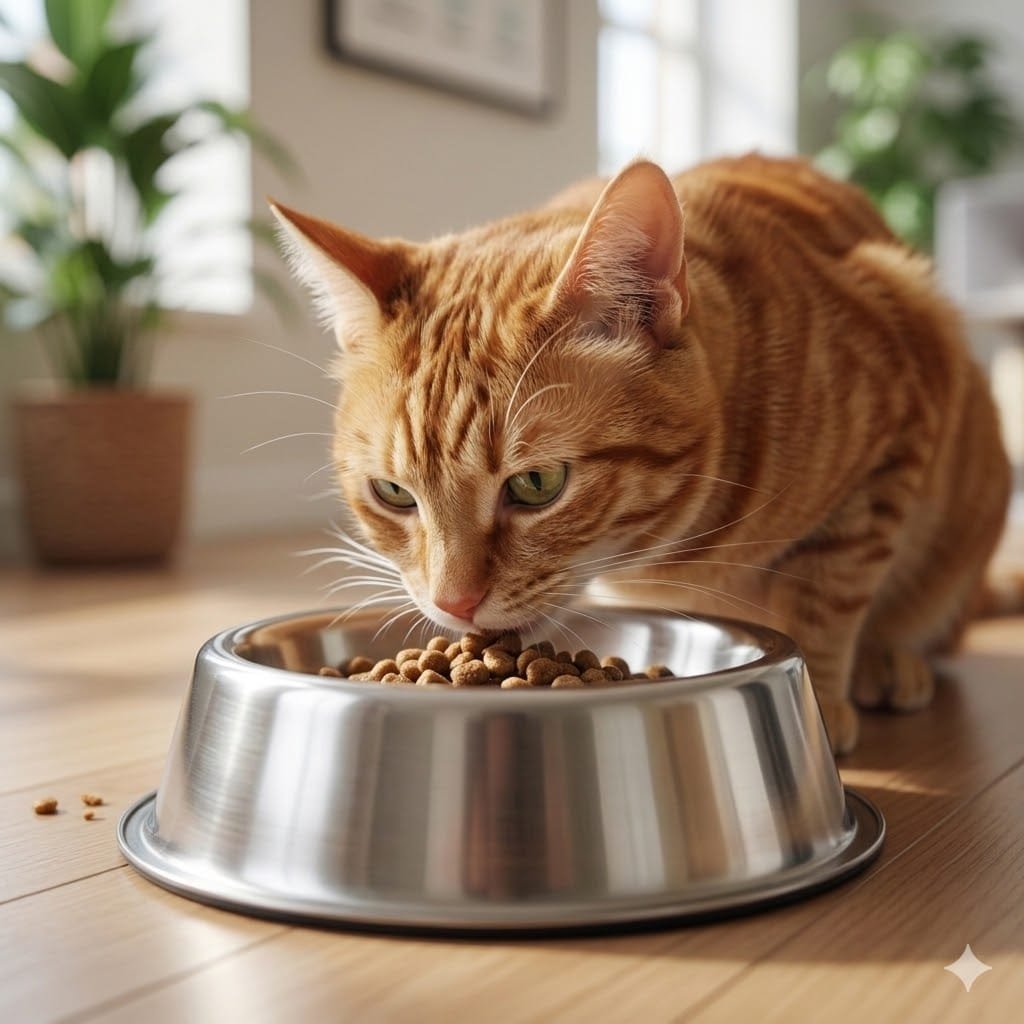
4. Effortless Deep Cleaning
You can toss a stainless steel liner into a high-temperature dishwasher without fear of melting or warping. This ensures a level of sterilization that plastic simply cannot achieve.
5. Reduces “Chin Acne” Maintenance
When you utilize the stainless steel cat feeder bowl benefits, you spend less money on medicated wipes and vet visits for chin infections. It is a proactive health investment.
5. Pros & Cons of Stainless Steel in Smart Feeders
Pros:
Promotes Skin Health: Essential for preventing and treating feline acne.
Odor-Free: Doesn’t absorb the smell of old fish or meat like plastic does.
Safe for Multi-Pet Homes: Reduces the spread of skin bacteria in a multi-chip feeder for multiple cats setup.
Cons:
Noise: Kibble hitting a metal bowl can be louder than plastic (though many owners find the “dinner bell” sound helpful).
Initial Cost: Feeders with stainless inserts are slightly more expensive but pay for themselves in durability.
6. How to Maximize the Benefits for Your Cat
To fully realize the stainless steel cat feeder bowl benefits, follow this maintenance routine:
Daily Rinse: Even though it’s anti-bacterial, food oils can still sit on the surface.
Weekly Sterilization: Put the bowl in the dishwasher or wash with hot soapy water.
Monitor Your Pet: Combine a clean bowl with a strict feeding schedule for overweight indoor cats to maintain overall health.
Hydration Matters: Ensure your cat’s water source is also stainless steel or ceramic to support proper pet hydration without irritating the skin.
7. FAQ: Stainless Steel Cat Feeder Bowl Benefits
Q: Can I just buy a cheap stainless steel bowl?
A: Not all stainless steel is equal. Look for “304 Food Grade” or “18/8 Stainless Steel.” Low-quality metals can rust or contain impurities that negate the stainless steel cat feeder bowl benefits.
Q: Is ceramic just as good as stainless steel for cat acne?
A: Ceramic is better than plastic, but it can develop “crazing” (tiny cracks in the glaze) over time where bacteria can hide. Stainless steel remains the most hygienic choice.
Q: My cat is scared of the reflection in the metal bowl. What should I do?
A: Some cats are wary at first. Try placing a small amount of high-value treats in the bowl to create a positive association with the new surface.
Final Thoughts
The stainless steel cat feeder bowl benefits extend far beyond simple durability. For many owners, switching to a stainless steel automatic feeder is the “magic cure” for recurring feline acne and skin irritation. By providing a non-toxic, non-porous, and easy-to-sanitize dining surface, you are protecting your cat’s health with every bite.
(Note: If your cat’s skin appears bloody, severely swollen, or has open sores, consult the American Veterinary Medical Association (AVMA) for immediate medical treatment.)