
When it comes to comprehensive pet care, pet hydration is often overlooked, yet it is just as vital for your furry friends as it is for you. Water isn’t just a thirst quencher; it is a biological powerhouse that facilitates digestion, regulates body temperature, and ensures smooth joint lubrication. Without adequate moisture, your pet risks falling into a state of dehydration, which can lead to severe organ stress or even emergency vet visits.
In this 2026 guide, we will dive deep into why maintaining optimal pet hydration is a non-negotiable part of pet ownership. We will also explore the subtle signs of dehydration and provide practical, tech-forward tips to keep your pet’s water intake at peak levels.
Why Is Pet Hydration So Important?
Just like humans, a significant portion of a pet’s body—roughly 60% to 70%—is composed of water. Even a minor 5% drop in these levels can cause noticeable health declines. Understanding the science behind pet hydration helps you realize its impact:
Nutrient Absorption: Water is the primary solvent that breaks down kibble and transports vitamins throughout the bloodstream.
Detoxification: Healthy pet hydration levels allow the kidneys to flush out metabolic waste and toxins effectively.
Temperature Control: Since dogs and cats don’t sweat like humans, they rely on moisture for panting and thermoregulation.
According to the American Veterinary Medical Association (AVMA), access to clean water is the most basic yet critical requirement for animal welfare.
How to Spot the Warning Signs of Dehydration
Before we jump into our pet hydration tips, you must know when your pet is in the “danger zone.” Dehydration can escalate quickly, especially in summer months.
Sticky or Dry Gums: Healthy gums should feel moist and pink. If they are tacky to the touch, your pet needs water immediately.
Loss of Skin Elasticity: Gently pinch the skin on the back of the neck. If it stays “tented” and doesn’t snap back, dehydration is likely.
Lethargy: A sudden drop in energy or a “sunken” appearance in the eyes are red flags for systemic fluid loss.
7 Practical Pet Hydration Tips for Every Owner
To prevent the risks mentioned above, follow these proven strategies to encourage your pet to drink more:
1. Maintain Multiple Watering Stations
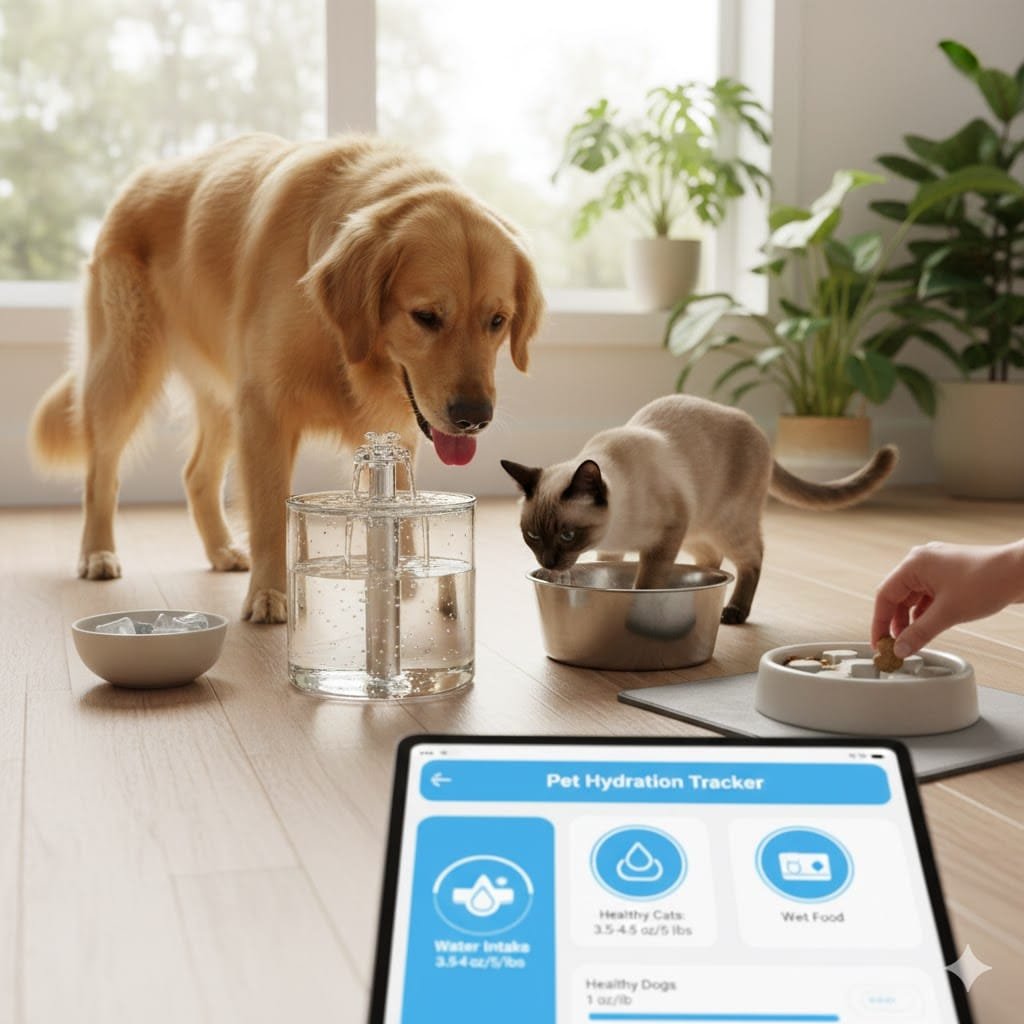
Don’t limit your pet to one bowl in the kitchen. If you live in a multi-story home, place water stations in various high-traffic areas. This reduces the “effort” your pet needs to make to stay hydrated.
2. Prioritize Freshness and Cleanliness
Stagnant water can quickly collect bacteria and biofilm. A key pet hydration rule is to wash bowls daily and provide fresh, cool water at least twice a day.
3. Switch to a Pet Water Fountain
Many pets, especially cats, are biologically programmed to prefer running water over still water. A fountain aerates the water and mimics a natural stream, making it significantly more enticing.
4. Mix Wet Food into the Diet
If your pet is a “stubborn drinker,” consider adding wet food to their meal plan. Wet food can contain up to 75% water, providing a massive boost to their daily pet hydration needs.
5. Monitor Intake with Smart Tools
How much did your pet drink today? Most owners don’t know the answer. Using a Smart Pet Feeder and upcoming smart water tools can help you track precise consumption data.
6. Add Flavor to the Bowl
For pets that ignore plain water, try adding a splash of low-sodium chicken broth or tuna juice. This is a highly effective pet hydration hack for picky eaters.
7. Hydration on the Go
During walks or travel, always carry a portable water bottle. As discussed in our Cat and Dog Exercise Guide, increased activity requires immediate fluid replacement.
The Future of Wellness: Smart Water Solutions
At SmartPetTools, we believe that data-driven care is the best care. We are currently developing an innovative Smart Water Fountain designed to integrate with our ecosystem. This device will feature:
Double-Layer Filtration: To remove hair, debris, and heavy metals.
App Tracking: Real-time alerts to your phone if your pet’s water intake drops below healthy levels.
Automated Flow: Energy-efficient sensors that activate when your pet approaches.
Conclusion: Make Hydration a Daily Priority
Ensuring optimal pet hydration is a simple yet powerful way to extend your pet’s lifespan and prevent costly medical issues like kidney stones or urinary tract infections. By combining fresh water access with innovative tools, you can give your furry friend the best quality of life.
Want to stay ahead of the curve in pet health? Explore our latest Smart Feeding Solutions and join our newsletter for exclusive updates on the Smart Water Fountain!