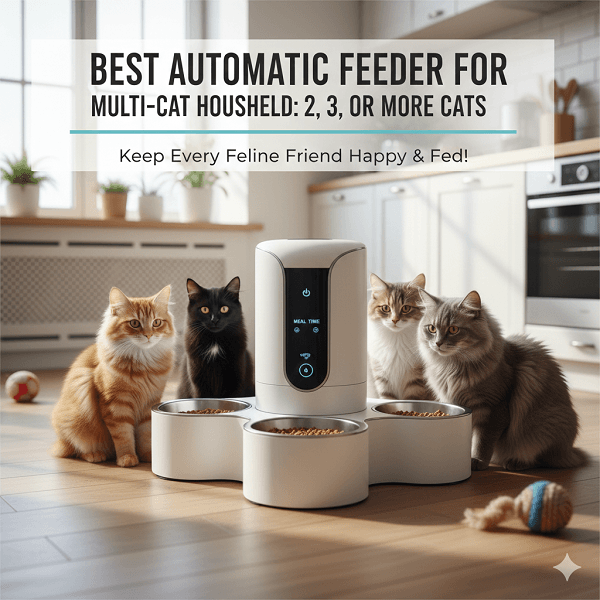

Managing a multi-cat household often feels like a constant battle against food theft, especially when pets have vastly different nutritional needs. If you have a senior cat on a kidney diet and a greedy kitten, a standard bowl simply won’t suffice. This is where a microchip feeder for multiple cats becomes the most effective investment for your home.
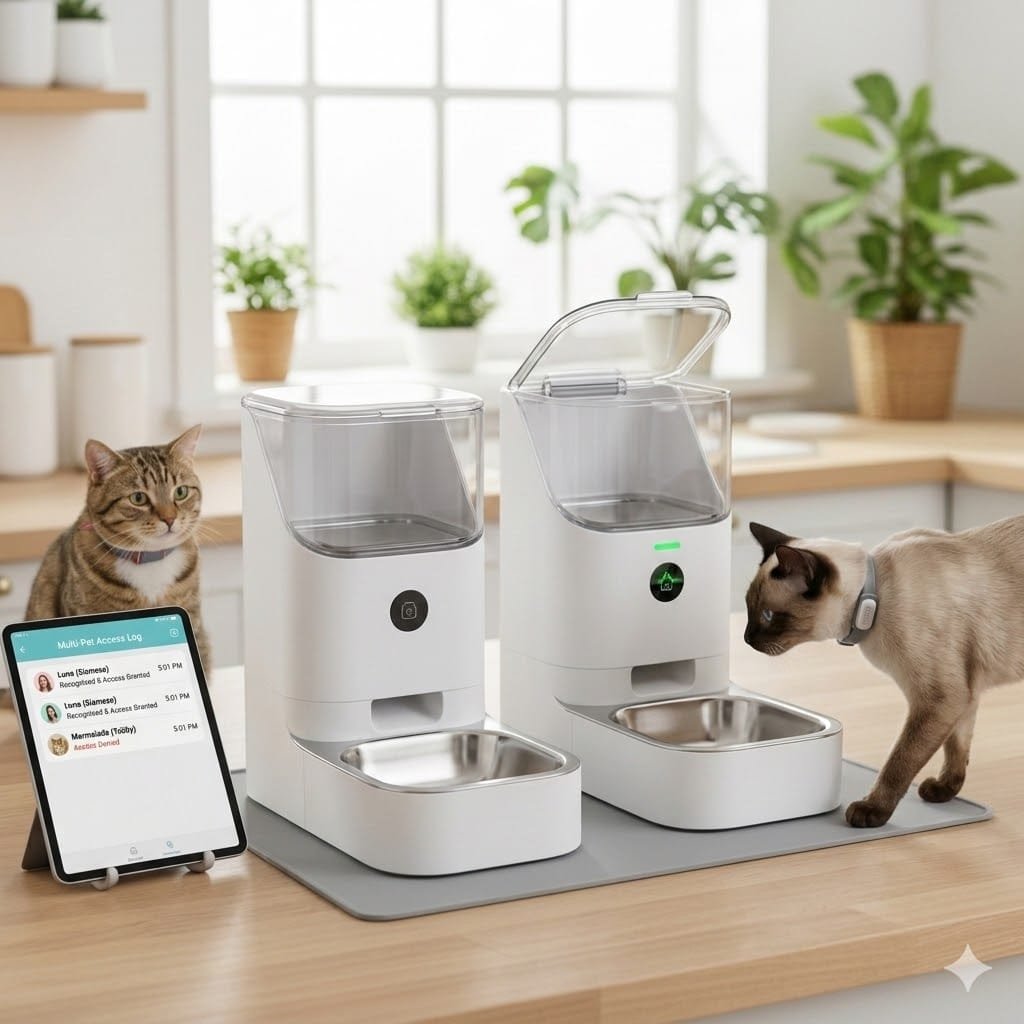
Unlike basic timed units, a microchip feeder for multiple cats uses medical-grade identification technology to ensure only the “authorized” pet can access the kibble. In this guide, we’ll dive into the RFID principles that power these high-end devices and why a microchip feeder for multiple cats is the ultimate solution for complex feeding dynamics.
1. Deep Dive: The RFID Science Behind Microchip Feeder for Multiple Cats
To understand why a microchip feeder for multiple cats is a premium solution, we must look at the technology inside: Radio Frequency Identification (RFID).
How it Works:
The Tag/Chip: Every cat has a unique ID, either via an implanted vet microchip or an RFID collar tag.
The Scanner: The microchip feeder for multiple cats features a high-sensitivity scanning arch.
The Handshake: When your cat approaches, the feeder emits a low-frequency radio signal. The chip captures this energy and transmits its unique ID back to the feeder.
The Action: If the ID matches the “authorized user” list, the lid opens instantly.
This level of precision is why a microchip feeder for multiple cats is essential for preventing cat food aggression in competitive environments.
2. User Scenario: The “Prescription Diet” Crisis
The Scene:
You have Cooper (who needs expensive prescription renal food) and Sophie (who is overweight and on a strict diet).
The Problem:
Cooper is a “grazer” who likes to eat small bits throughout the day. Sophie, a “scarfer,” quickly finishes her food and then sprints to Cooper’s bowl to eat his high-calorie renal diet.
The Solution:
By implementing a microchip feeder for multiple cats, Cooper’s food remains sealed and physically inaccessible to Sophie. This setup allows Cooper to maintain his scientific pet feeding schedule without the stress of being bullied.
3. Comparison Table: RFID Feeders vs. Standard Automatic Feeders
| Feature | Standard Auto Feeder | Microchip Feeder for Multiple Cats |
| Identification | None | Individual RFID/Microchip |
| Theft Prevention | Low | Absolute (Locked Lid) |
| Prescription Diet Support | No | Yes (100% Secure) |
| Wet Food Support | Rare | Common (Sealed Compartments) |
| Health Tracking | Basic | Advanced (Intake Monitoring) |
4. Why High-Value Owners Choose Microchip Feeder for Multiple Cats
For households managing chronic illnesses or obesity, the cost of a microchip feeder for multiple cats is offset by the savings in veterinary bills and medication.
Preventing Obesity: It ensures your overweight cat follows a strict feeding schedule for overweight indoor cats without stealing extra calories.
Managing Feline Diabetes: Stable glucose levels require consistent, individual intake, which is impossible without the selective access of a microchip feeder for multiple cats.
Reducing Anxiety: Submissive cats can eat at their own pace, significantly reducing acid reflux symptoms caused by mealtime stress.
5. Pros & Cons of Investing in RFID Feeding Technology
H2: The Real-World Impact of Microchip Feeder for Multiple Cats
Before upgrading, it is important to weigh the specialized benefits against the technical requirements.
Pros:
Preserves Food Freshness: The sealed lid prevents wet food from drying out and blocks flies.
Accurate Health Data: Many microchip feeder for multiple cats models connect to apps, alerting you if a cat’s appetite decreases—an early sign of illness.
Peace of Mind: You no longer need to physically supervise every meal to stop cats from eating each other’s food.
Cons:
Battery Dependent: Requires high-quality batteries or a constant power source to stay active.
Training Period: Some cats need 1–2 weeks to become comfortable with the moving lid.
6. How to Transition Your Tribe to a Microchip Feeder
Implementing a microchip feeder for multiple cats requires a structured introduction to ensure success:
The “Lid-Open” Phase: Place the feeder in its permanent spot but keep the lid permanently open. Let your cats eat from it for 3–4 days.
The “Scan” Phase: Enable the RFID scanner but keep the lid open. This helps the cats get used to the “clicking” sound of the identification process.
The “Training” Phase: Use the gradual closure settings available on most WiFi-enabled smart feeders. The lid will close halfway, then fully, over several days.
Monitor Hydration: Always ensure a water source is nearby to support proper pet hydration.
7. FAQ: Common Concerns About Microchip Feeder for Multiple Cats
Q: Can I use one microchip feeder for multiple cats if they share a diet?
A: You can register multiple IDs to one feeder, but if the goal is to track individual health or prevent bullying, separate units are highly recommended.
Q: What if my cat isn’t microchipped?
A: Most microchip feeder for multiple cats brands provide RFID collar tags that perform the same function as an internal chip.
Q: How do I know if my cat’s chip is compatible?
A: Most modern feeders support FDX-B (15-digit) chips. According to International Cat Care, this is the global standard for pet identification.
Final Thoughts
A microchip feeder for multiple cats is the gold standard for modern feline management. By leveraging RFID technology to create a personalized, secure dining experience, you solve the most difficult aspects of multi-cat care: food theft, medication errors, and obesity management. While it is a premium investment, the result is a healthier, more harmonious home where every cat gets exactly what they need.
(Note: For professional guidance on feline weight management, refer to the American Veterinary Medical Association (AVMA) guidelines.)