

7 Proven Tips: How to Train Your Dog to Stop Biting Through Reward-Based Feeding
Dog biting is a stressful challenge for many owners, but it is a behavior that can be corrected. Research indicates that early socialization and positive reinforcement can reduce aggressive incidents by over 75%. Training is not just about suppression; it’s about guiding your pet toward appropriate social interactions.
Understanding how to train your dog not to bite effectively begins with empathy and scientific techniques. In this 2026 guide, we explore why dogs nip and provide a professional blueprint on how to train your dog to stop biting while building a bond of trust.
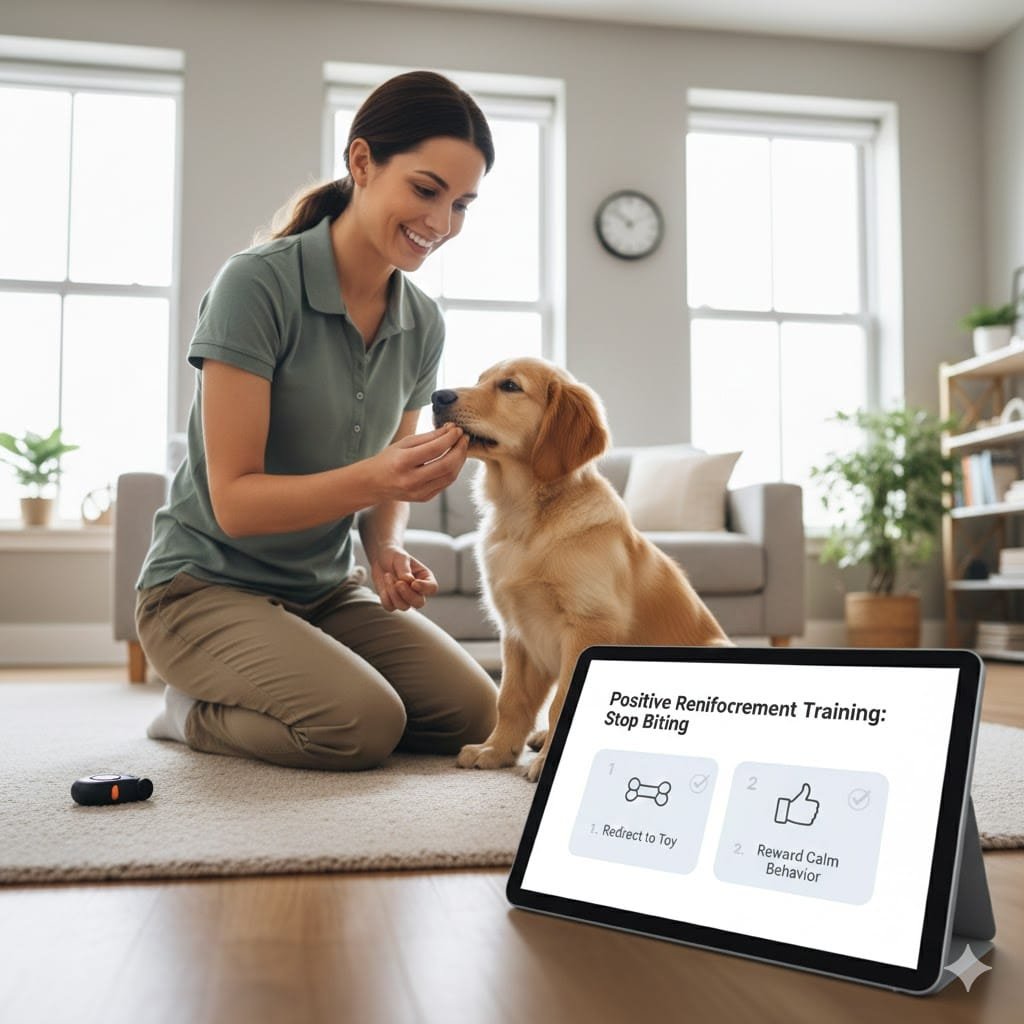
1. Analyze the Root Causes of Biting
Before you can master how to train your dog to stop biting, you must identify the trigger.
Territorial Instinct: Dogs may guard their space or their favorite smart feeder.
Fear and Pain: Reflexive biting often occurs if a dog is startled or in pain from conditions like dog arthritis.
Teething Discomfort: Puppies aged 2–6 months explore the world with their mouths to relieve itchy gums. This is the ideal window to learn how to get a puppy to stop biting.
2. Implement Bite Inhibition Training
This is a cornerstone technique in how to train your dog to stop biting.
The “Ouch” Method: If your dog nips your hand, give a firm “No!” and immediately stop the interaction for 15 seconds. This mimics the social feedback puppies give each other—if you bite too hard, the game ends.
Redirection: Always keep a durable chew toy nearby. When the dog tries to bite you, offer the toy instead. This is central to understanding how to make your dog stop nipping.
3. Reward-Based Feeding and “Swap Games”
Food is the ultimate motivator in how to train your dog to stop biting.
Positive Reinforcement: According to the American Kennel Club (AKC), rewarding good behavior within 3 seconds is 40% more effective than punishment.
Swap Games: If your dog guards resources, trade their toy for a high-value treat. This teaches them that human proximity equals a reward, not a loss. Ensure they are on a scientific pet feeding schedule so they stay motivated during training.
4. Use Smart Feeders for Training Safety
Many owners get nipped when delivering treats by hand. A Smart Pet Feeder or training dispenser is a valuable tool:
Distance Training: You can reward calm behavior from across the room using a smartphone app.
Consistency: Automated mealtimes reduce the food-related anxiety that often leads to guarding.
Weight Control: Reward-based training involves many treats. Use a WiFi-enabled smart feeder to adjust their main meals, preventing pet obesity from those extra training calories.
5. Graded Socialization Programs
Socialization is the “vaccine” for aggression.
The Golden Window: Between 3 and 6 months, expose your puppy to diverse environments.
Controlled Exposure: Gradually introduce them to strangers and other dogs. This is a critical step in how to train your dog to stop biting out of fear or overstimulation.
6. Avoid Common Training Misconceptions
Failure in how to train your dog to stop biting often stems from these mistakes:
Physical Punishment: Hitting or scolding a dog increases adrenaline and fear, often triggering a “fight or flight” response that worsens aggression.
Late Corrections: Correcting a dog minutes after a bite is useless. They won’t associate the punishment with the act.
Inconsistent Rules: If one family member allows nipping and another doesn’t, the dog becomes confused and stressed. Ensure everyone follows the same healthy behavior plan.
7. When to Seek Professional Help
If you are struggling with how do i train my dog not to bite in severe cases involving injury, seek a certified animal behaviorist. In multi-pet homes, aggression often centers around food competition. Installing feeders for multiple pets can eliminate mealtime stress and reduce biting incidents by over 70%.
Conclusion: Patience is the Path to a Gentle Pet
Training a dog to be gentle is a journey of communication. By adopting a “toy + reward” model and using smart tools to manage their environment, you can fundamentally change your dog’s aggressive tendencies. Remember, mastering how to train your dog to stop biting isn’t about control—it’s about building a lifetime of trust.
Ready to start your training journey? Shop our Smart Pet Feeders today and make reward-based training easier and safer!