

That “chubby” Bichon Frise might look cute, but even a few extra kilograms can be a silent killer. Statistics show that nearly 50% of dogs and cats are currently overweight. As living standards improve, we often express love through extra treats, yet this leads to a dangerous cycle. Knowing how to keep your pet at a healthy weight is the single most effective way to ensure they live a long, pain-free life.
In this 2026 guide, we explore the science of animal metabolism and provide actionable strategies on how to keep your pet at a healthy weight while avoiding common dietary pitfalls.
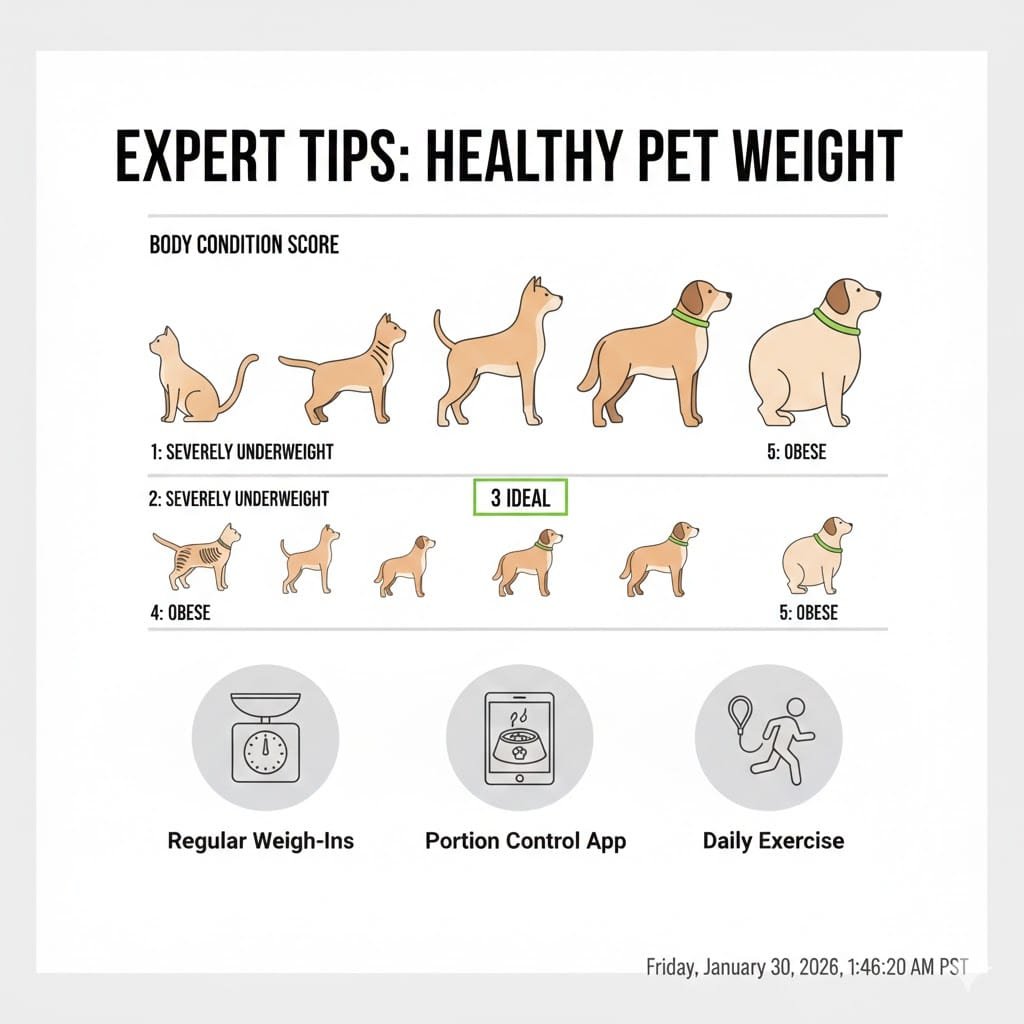
1. Identify the Ideal Weight for Your Pet
Before learning how to keep your pet at a healthy weight, you must understand what “healthy” actually looks like. Many owners fall into the “fat gap,” not knowing what is overweight for a cat or the ideal weight for a cat.
The BCS System: Use the 9-point Body Condition Score chart. You should be able to feel your pet’s ribs but not see them.
Know the Benchmarks: For example, knowing how much should a female cat weigh (typically 3.5–4.5kg for most breeds) helps you set realistic goals.
The “Average” Myth: Don’t just ask what does the average cat weigh, as breed and bone structure vary. Instead, focus on body shape and waist definition.
2. Calculate Precise Daily Energy Requirements
A core pillar of how to keep your pet at a healthy weight is the math behind the meals. Stop “eyeballing” portions and use the scientific formula: DER (Daily Energy Requirement) = RER × Activity Factor.
By calculating their exact caloric needs, you prevent the accidental overfeeding that leads to pet obesity. This is especially critical for sterilized pets, whose energy needs drop significantly.
3. Implement Scientific Nutritional Management
Dietary control is your primary defense. If you want to know how to keep your pet at a healthy weight, focus on these three rules:
High Protein, Low Carb: Diets with >40% protein help maintain muscle while burning fat.
The 10% Treat Rule: Treats should never exceed 10% of total calories.
Smart Tools: Using an automatic pet feeder with app control allows you to automate portion sizes down to the gram, which is the most reliable way regarding how to keep your pet at a healthy weight.
4. Prioritize Interval Exercise and Activity
You cannot master how to keep your pet at a healthy weight without movement. According to the Association for Pet Obesity Prevention (APOP), consistent activity reduces inflammatory factors that attack joints.
For Dogs: Try three 10-minute brisk walks instead of one long stroll to increase fat burning by 35%.
For Cats: Use laser pointers or vertical climbing frames.
Joint Safety: If your pet is already obese, start with low-impact movements to avoid dog arthritis flare-ups.
5. Leverage Technology and Monitoring
Modern technology has made the journey of how to keep your pet at a healthy weight much easier.
Data-Driven Feeding: A WiFi-enabled smart feeder records feeding frequency and duration, helping you spot appetite changes.
Multi-Pet Solutions: In homes with several animals, use feeders for multiple pets to prevent the “food thief” from becoming obese.
Regular Check-ups: Visit your vet every six months to monitor their scientific pet feeding schedule and adjust as they age.
Conclusion: Consistency is the Greatest Act of Love
Maintaining a healthy weight is not about deprivation; it is about providing the “shackles-free” life your pet deserves. By mastering how to keep your pet at a healthy weight, you reduce the risk of diabetes by 3x and joint disease by 4x.
Is your pet ready for a healthier lifestyle? Invest in a Smart Pet Feeder today and automate their journey to a perfect weight!