

5 Proven Tips: How to Feed Your Dog for a Healthy and Long Life
The neighbor’s Corgi, “Chubby,” used to ignore its kibble until the rustle of a treat bag sent it running. While this scene is common, it’s often a sign of irregular eating habits. Statistics show that over 30% of dogs suffer from inconsistent feeding, contributing to a 15% rise in obesity over the last five years. Learning how to feed your dog scientifically isn’t just about filling a bowl; it’s the foundation of their long-term wellness.
In this 2026 guide, we will explore the math of canine nutrition and explain how to feed your dog using modern tools like smart feeders to ensure they stay fit and full of energy.
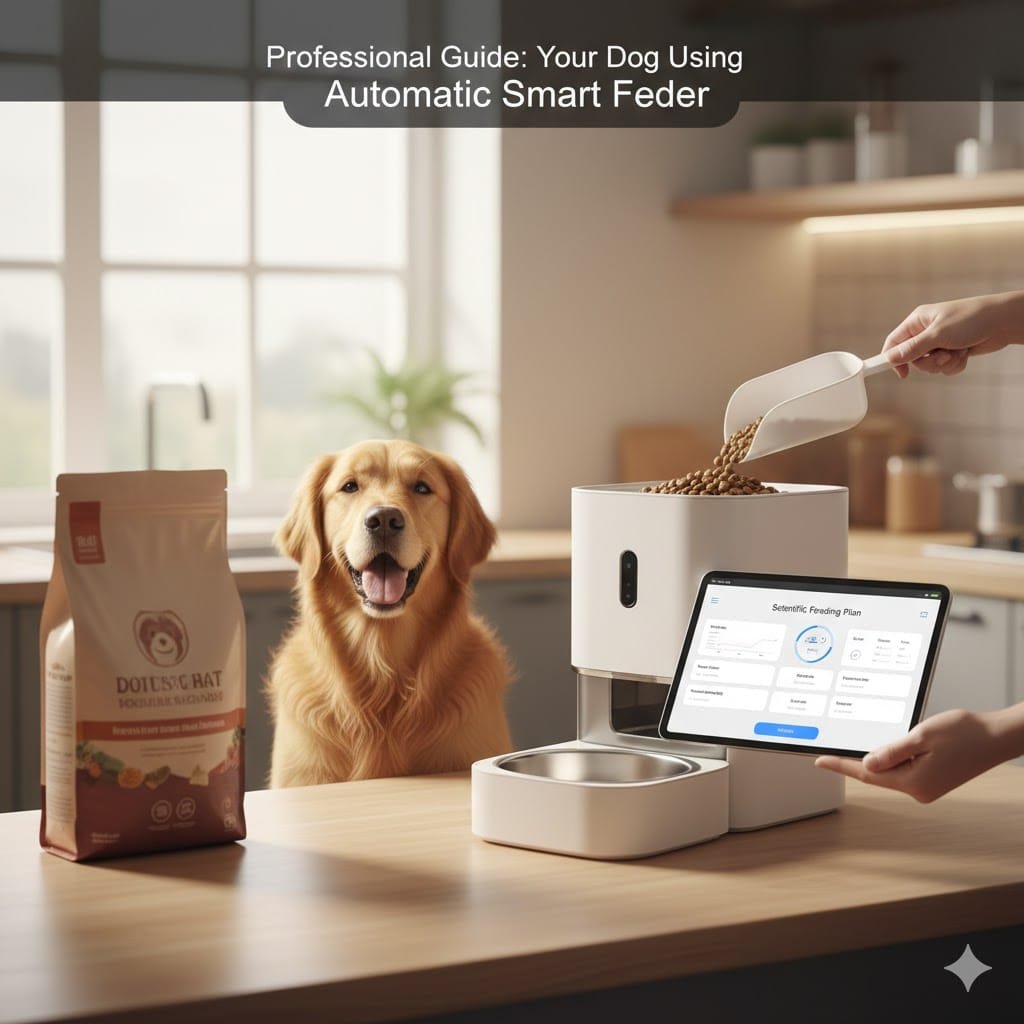
1. Calculate Precise Portions Using the RER Formula
The first step in how to feed your dog is moving away from “guessing.” Every dog has a unique Resting Energy Requirement (RER).
The Formula: $RER = 70 \times (body weight\ in\ kg)^{0.75}$.
Adjust for Activity: Adult dogs generally need $1.6 \times RER$ if neutered, while active working dogs may need up to $4 \times RER$.
Understanding these numbers is a core part of learning how to feed a dog correctly. For more details on maintaining an ideal physique, check our guide on how to keep your pet at a healthy weight.
2. Master Feeding Frequency with Smart Technology
Age dictates how often you should put food in the bowl. Puppies need 3-4 meals, while adults thrive on two. If you’re wondering how to feed your dog consistently while working late, a Smart Pet Feeder is the solution.
Timed Dispensing: Supports multiple daily schedules to stabilize blood sugar.
App Control: Adjust portions on the go to ensure your pet never misses a meal.
Anti-Clog Design: Ensures smooth delivery of kibble, which is vital for preventing pet obesity caused by “makeup meals.”
3. Implement the 10% Treat Rule
Excessive treats are the leading cause of picky eating and joint stress. When considering how to feed your dog, treats should never exceed 10% of their total daily calories.
Reward Strategies: Use small bits of high-protein chicken jerky during training.
Avoid Picky Eating: If your dog skips meals, reduce treats immediately. Constant snacking can lead to dog arthritis due to the extra weight carried on their joints.
4. Avoid Dangerous Feeding Mistakes
Many owners fail at how to feed your dog because of these common errors:
The 7-Day Transition: Never switch brands abruptly; it causes gastrointestinal distress.
No Human Food: High salt and sugar levels in human leftovers are toxic to canine kidneys.
The “Water Gap”: Dry kibble lacks moisture. Always pair scheduled meals with essential pet hydration strategies.
5. Monitor Stool Quality and Body Score
The final tip on how to feed your dog involves observation. According to the World Small Animal Veterinary Association (WSAVA), your dog’s stool and body shape are the best indicators of nutritional success.
Soft Stool: Often means you are overfeeding.
Hard Stool: May indicate a need for more fiber or water.
Body Check: You should easily feel their ribs. If you can’t, it’s time to adjust the settings on your WiFi-enabled smart feeder.
Conclusion: A Healthy Dog Starts with You
Scientific feeding is simple: fixed schedules, balanced portions, and high-quality ingredients. By mastering how to feed your dog, you aren’t just giving them a meal; you are giving them more years of life.
In multi-pet homes, ensuring the right dog gets the right portion is even easier with feeders for multiple pets, which prevent “food theft” and social stress.
Ready to automate your dog’s health?
Shop our Smart Pet Feeders today and take the guesswork out of how to feed your dog!