

Is your pet becoming a “couch potato”? Feline and canine obesity has reached an all-time high, with over 50% of North American pets classified as overweight. As pet parents, we often focus on food, but movement is the other half of the longevity puzzle.
This Cat and Dog Exercise Guide provides 10 proven strategies to keep your furry friends active, mentally stimulated, and at their ideal weight. Whether you have a high-energy puppy or a lazy senior cat, mastering the balance between calories and cardio is the secret to a long, happy life.
💡 Quick Summary: The Exercise-Feeding Balance
For Dogs: Focus on outdoor exploration and interactive play.
For Cats: Utilize their natural hunting instincts with vertical climbing and laser toys.
The Pro Tip: Exercise only works if you control the calories. Use a Smart Pet Feeder to ensure their “refuel” is precise to the gram.
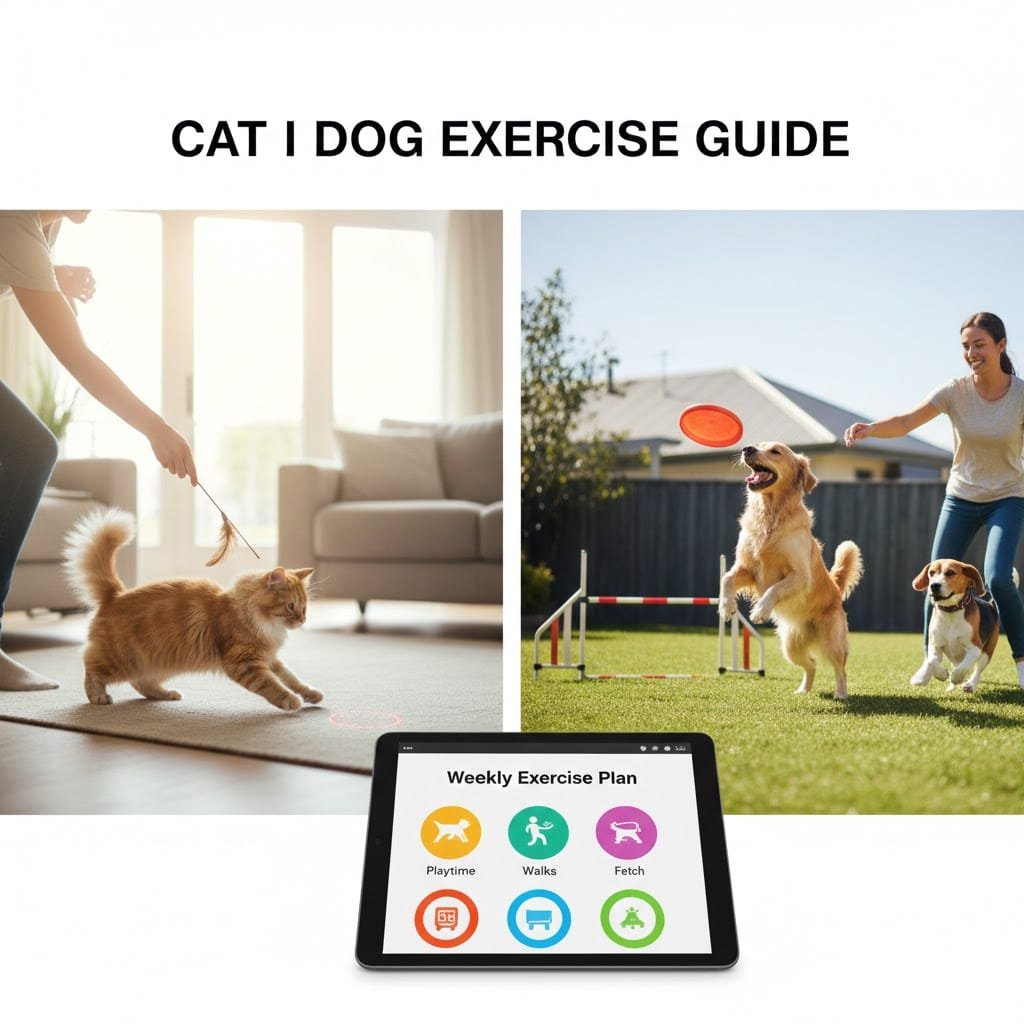
1. Why Every Pet Needs an Exercise Routine
In this Cat and Dog Exercise Guide, we must first understand that exercise isn’t just about weight—it’s about mental health. Boredom leads to destructive behaviors like furniture scratching or excessive barking.
According to the Association for Pet Obesity Prevention (APOP), regular physical activity reduces the risk of diabetes, heart disease, and joint pain. By following a structured Cat and Dog Exercise Guide, you can effectively extend your cat’s lifespan or dog’s lifepan by up to 2.5 years.
2. Top 5 Exercise Tips for Dogs
Dogs are social athletes who thrive on variety. Use these tips to spice up their routine:
Interval Walking: Instead of a steady pace, try 30 seconds of jogging followed by 1 minute of walking.
Fetch with a Twist: Use hills to increase the difficulty of a standard game of fetch.
Scent Work: Hide low-calorie treats around the yard to engage their nose and brain.
Agility Training: Set up a simple obstacle course using household items.
Swimming: A fantastic low-impact exercise for dogs with joint pain.
3. Top 5 Exercise Tips for Cats
Cats are “sprinters.” This Cat and Dog Exercise Guide recommends short, intense bursts of play (5-10 minutes) several times a day.
Vertical Climbing: Install cat shelves or tall trees to encourage jumping.
The “Lizard” Chase: Use feather wands to mimic the movement of prey.
Laser Pointers: Great for cardio, but always end with a physical toy they can “catch” to prevent frustration.
Food Puzzles: Stop using a bowl! Make them “hunt” for their kibble using interactive pet toys.
Cat Wheels: For high-energy breeds like Bengals, an indoor exercise wheel is a lifesaver.
4. The Link Between Exercise and Portion Control
A common mistake highlighted in this Cat and Dog Exercise Guide is over-rewarding activity. If you give a handful of treats after a walk, you’ve likely canceled out the calories burned.
How to sync feeding with exercise:
Timed Feeding: Use a WiFi Pet Feeder to schedule a small meal immediately after an exercise session. This rewards the activity without overfeeding.
Precision Measurement: Stop using a measuring cup for pet food, which can be off by 152%. Use the digital precision of a smart feeder to support your pet’s new fitness plan.
5. Sample Exercise & Feeding Schedule
| Time | Pet Type | Activity | Feeding Connection |
| 07:00 AM | Dog/Cat | Morning Play/Walk | Smart Feeder dispenses Breakfast |
| 12:00 PM | Cat | Window Watching/Laser | Mid-day “Micro-meal” |
| 05:00 PM | Dog | High-energy Fetch | Post-workout Dinner |
| 09:00 PM | Dog/Cat | Gentle Stretching/Cuddles | Small “Midnight Snack” via App |
FAQ: Cat and Dog Exercise Guide
Q: How much exercise does my pet really need?
Most dogs need 30-60 minutes of active movement daily, while cats benefit from three 10-minute play sessions.
Q: My dog inhales food after exercise, what should I do?
This is dangerous and can lead to bloat. Follow our guide on how to stop my dog from inhaling his food to ensure safe post-workout recovery.
Q: Can I use this Cat and Dog Exercise Guide for senior pets?
Absolutely. For seniors, focus on low-impact movement like swimming or slow walks, and ensure they are on a weight-loss feeding plan to reduce joint stress.
Conclusion: Consistency is Key
The most important takeaway from this Cat and Dog Exercise Guide is consistency. A weekend hike doesn’t make up for a week on the sofa. By combining daily movement with the precise portion control of a Smart Pet Feeder, you are giving your pet the best chance at a long, vibrant life.
Ready to start your pet’s fitness journey?
👉 Shop Our Smart Feeders to Perfect Your Pet’s Portion Control Today!