
If your cat is overweight and always begging for food, simply feeding less isn’t always the answer. The real key to healthy weight loss is portion control and consistent feeding schedules.
That’s why many pet owners are turning to the best cat feeder for weight loss — not to starve their cats, but to feed them smarter.
How Many Calories Should My Cat Eat to Lose Weight? Feeding Chart & Guide
In this guide, you’ll learn how automatic feeders help cats lose weight safely, when they work best, and what features actually matter for portion control. You can also explore different types of automatic cat feeders designed specifically for controlled feeding routines.
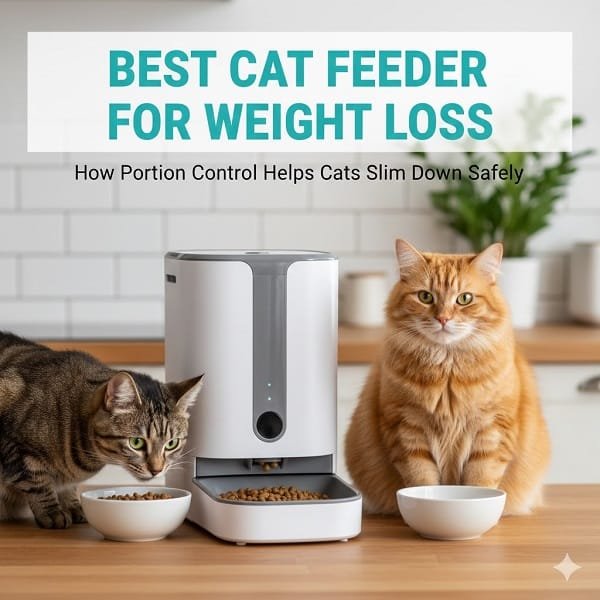
Can Automatic Feeders Really Help Cats Lose Weight?
Yes — automatic feeders can help with cat obesity, but only when used correctly.
They work because they:
Deliver precise, repeatable portions
Prevent random snacking and free feeding
Support multiple small meals per day instead of 1–2 large ones
Overfeeding often happens unintentionally. Scoops vary, treats add up, and “just a little extra” becomes a habit. An automatic feeder removes guesswork and creates structure — which is essential for weight loss.
According to veterinary nutrition guidelines published by the Association for Pet Obesity Prevention, portion accuracy and feeding consistency are two of the most important factors in feline weight management.
Why Portion Control Is the Key to Cat Weight Loss
Most overweight cats don’t gain weight because they eat “too much at once” — they gain weight because they eat too often or too inconsistently.
Common problems include:
Free feeding dry food all day
Multiple family members feeding the cat
Inaccurate scoops and eyeballing portions
Portion control solves this by:
Limiting total daily calories
Spacing meals evenly
Preventing binge eating in cats who eat too fast
For greedy cats, controlled portions are far more effective than switching food brands alone. If you’re trying to maintain long-term results, combining portion control with a scientific pet feeding schedule can significantly improve success.
Feeding Schedule for Overweight Indoor Cats: A Simple Portion Control Plan
Benefits of Micro-Meals for Overweight Cats
One of the biggest advantages of using an automatic feeder is the ability to serve micro-meals — small portions spread throughout the day.
Why micro-meals work:
Reduce hunger spikes
Improve digestion
Help stabilize blood sugar
Prevent vomiting and bloat after eating
Instead of 2 large meals, many overweight cats do better with 4–6 small meals per day, especially when weight loss is the goal. This approach also supports better overall activity levels, which is discussed further in our cat and dog exercise guide.
Can a Cat Lose Weight With Dry Food Only?
Yes, a cat can lose weight on dry food alone — if portions are controlled properly.
Dry food is calorie-dense, which makes portion accuracy critical. That’s where automatic feeders are especially helpful, particularly smart feeders that allow precise scheduling and portion adjustments.
To succeed with dry food:
Use a feeder that dispenses small, consistent portions
Avoid “top-offs” between meals
Choose kibble with moderate calorie density
Pair dry food with scheduled feeding times
Without portion control, dry food makes weight loss much harder.
What to Look for in the Best Cat Feeder for Weight Loss
Not all feeders are designed for weight management. These features matter most:
Small Portion Size Control
Look for feeders that can dispense very small portions per meal. Smaller increments allow precise calorie reduction without drastic cuts.
Multiple Meals Per Day Scheduling
Weight loss works best when meals are evenly spaced. A good feeder should support multiple meals daily to prevent hunger-driven begging.
Accurate Dispensing (Anti-Jam Design)
Inconsistent dispensing leads to accidental overfeeding. Choose feeders designed for reliable portion accuracy, especially when using dry kibble.
Quiet Operation
Nervous or food-obsessed cats can become stressed by loud motors, which may lead to pacing or food anxiety. Quiet feeders promote calmer eating behavior.
You can see examples of feeders built with these features in our smart pet feeder collection.
Common Feeding Mistakes That Prevent Weight Loss
❌ Free feeding “just until they slim down”
❌ Reducing portions too aggressively
❌ Feeding treats outside the feeder
❌ Inconsistent feeding times
✅ Gradual calorie reduction
✅ Fixed daily portions
✅ Scheduled meals only
✅ Consistency over weeks, not days
Sustainable weight loss is slow. Sudden changes often backfire and may even lead to metabolic issues.
Sample Feeding Schedule for Cat Weight Loss
Example only — always adjust based on vet guidance
Morning: Small portion (20–25% of daily intake)
Midday: Small portion
Afternoon: Small portion
Evening: Slightly larger portion
Optional late-night micro-meal for food-motivated cats
Spreading food throughout the day keeps hunger manageable while still reducing total calories. This approach also supports maintaining a healthy pet weight over the long term.
When Automatic Feeders May Not Be the Best Option
Automatic feeders are powerful tools, but they aren’t perfect for every situation.
Avoid relying on a feeder alone if:
Your cat has severe medical conditions requiring vet supervision
You have multiple cats without feeding separation
Your cat is extremely obese and needs a medical weight-loss plan
In these cases, feeders should be part of a broader strategy, not the only solution.
FAQ: Automatic Feeders & Cat Weight Loss
Do automatic feeders help with cat obesity?
Yes. They improve portion control and feeding consistency, which are critical for safe weight loss.
How many times a day should I feed my cat for weight loss?
Most overweight cats do best with 4–6 small meals per day.
Is portion control better than switching cat food?
In many cases, yes. Portion control addresses the root cause of weight gain.
Are smart feeders better than gravity feeders for weight loss?
Yes. Gravity feeders allow uncontrolled eating, while smart feeders enforce limits.
Final Thoughts
The best cat feeder for weight loss isn’t about feeding less — it’s about feeding better.
With precise portion control, consistent schedules, and micro-meals, automatic feeders can play a major role in helping overweight cats slim down safely and sustainably.
If weight management is your goal, structure always beats guesswork — especially when supported by the right feeding tools and habits.