

If your dog often wakes up in the middle of the night smacking their lips, or if you frequently find yellow bile on the carpet in the morning, your pet is likely suffering from gastroesophageal reflux. Many owners don’t realize that managing this condition is less about the brand of kibble and more about posture and frequency. This is why choosing a specialized automatic feeder for dogs with acid reflux is a critical health decision.
An automatic feeder for dogs with acid reflux that features an elevated (raised) design and a Slow Feed function can fundamentally change your dog’s digestive health. By leveraging gravity and preventing “scarf and barf” habits, these smart devices address the root causes of acid irritation. In this guide, we’ll explore the science of canine digestion and how to build a scientific pet feeding schedule to keep the acid where it belongs—in the stomach.
1. The Science of Silence: Why Posture and Timing Matter
Acid reflux in dogs, or “silent reflux,” happens when stomach acid or bile flows backward into the esophagus. This is often triggered by two main factors: an empty stomach for too long or eating in a hunched-over position.
H2: The Role of Gravity in an Automatic Feeder for Dogs With Acid Reflux
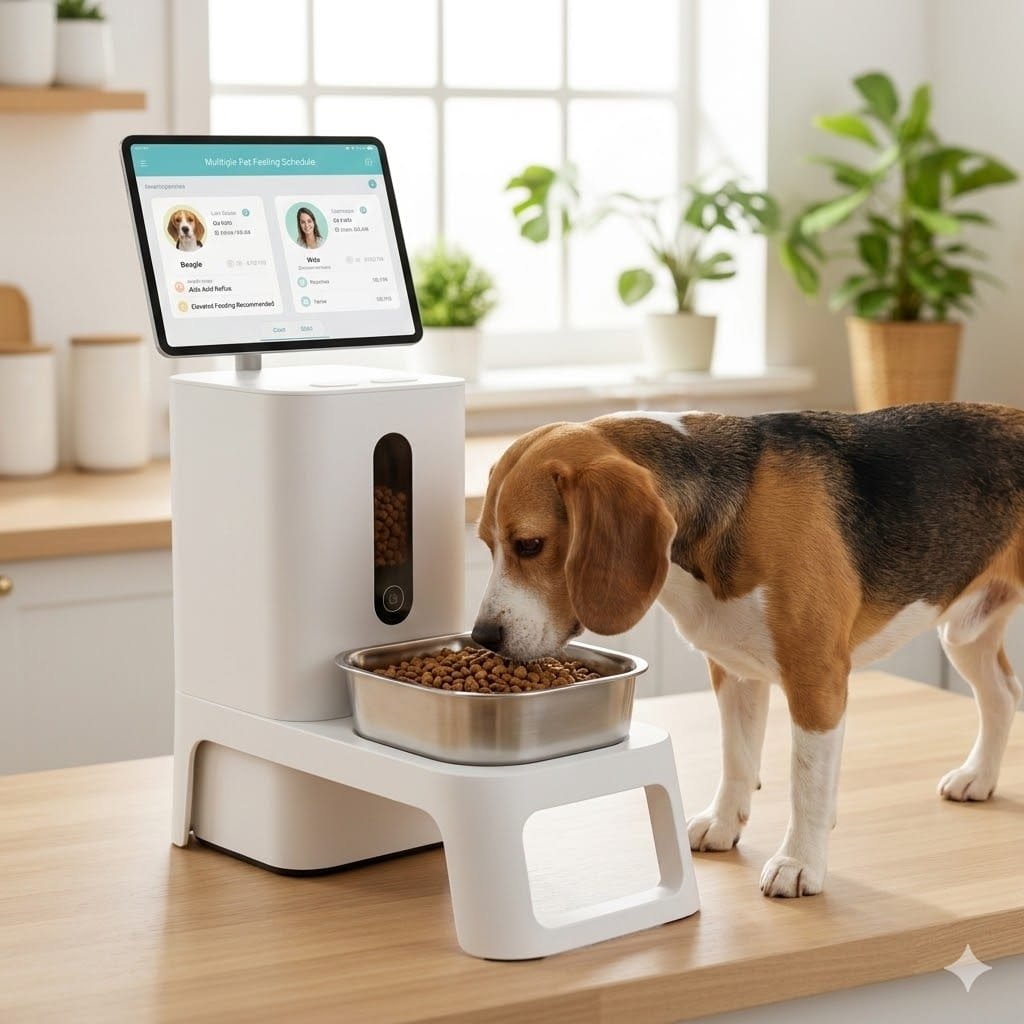
When a dog eats from a bowl on the floor, their esophagus is tilted downward, allowing stomach acid to slide back up easily. An automatic feeder for dogs with acid reflux that is elevated ensures the dog eats with their neck extended and their stomach below the esophagus. Gravity then acts as a natural barrier, keeping acid down during and after the meal.
H3: Preventing “Empty Stomach Syndrome”
Early morning vomiting is often caused by the stomach being empty for 10+ hours. An automatic feeder for dogs with acid reflux allows you to schedule a “midnight snack” or a 5:00 AM micro-meal, neutralizing acid buildup before it leads to irritation. This is a far more effective strategy than how to stop my dog from inhaling his food alone.
2. User Scenario: The Midnight Bile Struggle
The Scene: Max, a 7-year-old Boxer, eats a large dinner at 6:00 PM. By 4:00 AM, his stomach is completely empty. He begins pacing, licking the floor, and eventually vomits yellow bile.
The Intervention: His owner switches to an automatic feeder for dogs with acid reflux. They program a small 50g meal for 11:00 PM and another at 4:30 AM.
The Result: Max stops vomiting immediately. Because the automatic feeder for dogs with acid reflux is elevated, Max no longer gulps air while eating, reducing the gas that often forces acid upward. This proactive management is essential for senior pet wellness.
3. Comparison Table: Floor Bowls vs. Elevated Automatic Feeders
| Feature | Standard Floor Bowl | Elevated Automatic Feeder for Dogs With Acid Reflux |
| Digestive Angle | Poor (Hunched) | Optimal (Raised/Gravity-Aided) |
| Feeding Pacing | None | Slow-Feed Mode (Prevents Gulping) |
| Acid Neutralization | Difficult (Gaps too long) | Perfect (Scheduled Micro-Meals) |
| Air Intake (Aerophagia) | High | Low (Slower, Level Eating) |
| Vomiting Risk | High | Significant Reduction |
4. Key Features to Look for: Elevated + Slow Feed
When shopping for an automatic feeder for dogs with acid reflux, two features are non-negotiable:
1. Elevated Stand
A raised feeder reduces the strain on the lower esophageal sphincter (LES). According to veterinary experts at VCA Animal Hospitals, maintaining an upright posture during and after eating is the primary non-surgical treatment for reflux.
2. Slow Feed Function
Dogs with reflux often eat frantically, swallowing large amounts of air. This air creates pressure that pushes acid up. A high-quality automatic feeder for dogs with acid reflux will dispense kibble slowly over 10–15 minutes, ensuring the dog chews properly and avoids the “rebound” reflux caused by a sudden, heavy stomach load. !
5. Pros & Cons of Automatic Reflux Management
Pros:
Prevents Morning Bile: Scheduled meals keep the stomach busy 24/7.
Reduces Joint Pain: Raised feeders are also great for dogs with arthritis symptoms, as they don’t have to stoop.
Portion Precision: Helps maintain a healthy weight, which is vital because obesity increases abdominal pressure and reflux.
Less Stress: Consistent routines lower the anxiety often seen in overweight indoor cats and dogs alike.
Cons:
Initial Setup: Requires time to find the perfect “elevation height” for your specific dog.
Maintenance: Elevated stands need to be wiped down regularly to prevent food debris buildup.
6. Building the Perfect Reflux Feeding Schedule
Implementing an automatic feeder for dogs with acid reflux requires a shift from “twice-a-day” to “multiple-small-meals” logic.
Divide the Total: Take your dog’s daily calorie count from our dog calorie guide and divide it into 4–6 micro-meals.
The Late-Night Bridge: Schedule a small feeding 1 hour before bed.
The Early Bird: Set the automatic feeder for dogs with acid reflux to trigger 1–2 hours before your dog usually vomits bile.
Monitor Hydration: Ensure the water bowl is also slightly raised to support proper pet hydration without causing the dog to stoop.
7. FAQ: Troubleshooting Reflux with Automatic Feeders
Q: Can a raised feeder cause bloat?
A: This is a debated topic. However, for dogs with confirmed acid reflux or megaesophagus, the benefits of elevation for the esophagus usually outweigh the risks. Always use the “Slow Feed” feature on your automatic feeder for dogs with acid reflux to minimize air intake, which is the real trigger for bloat.
Q: My dog still vomits after drinking water. What should I do?
A: Just like with the automatic feeder for dogs with acid reflux, your water station should be elevated. Drinking from the floor can cause “water reflux” just as easily as food reflux.
Q: Is wet food or dry food better for an automatic reflux feeder?
A: Most automatic feeder for dogs with acid reflux units are designed for dry kibble. Dry food is generally better for dental health, but if your dog needs moisture, look for a “fresh-seal” smart feeder that can handle semi-moist diets.
Final Thoughts
Managing a dog with a sensitive stomach is a journey of consistency. An automatic feeder for dogs with acid reflux provides the three things a reflux-prone dog needs most: an upright posture, small portions, and a predictable schedule. By taking the pressure off the esophagus and the guesswork out of mealtimes, you aren’t just feeding your pet—you’re providing daily medical relief.
(Note: While an automatic feeder for dogs with acid reflux helps manage symptoms, always consult the American Veterinary Medical Association (AVMA) if your pet shows signs of severe lethargy or refusal to eat.)