

Feline obesity is often called a “silent epidemic.” Recent data from the Association for Pet Obesity Prevention (APOP) suggests that over 60% of indoor cats are overweight. While owners often express love through food, an overweight cat faces significant risks of diabetes, joint pain, and reduced lifespan. This is why investing in an automatic cat feeder for weight loss is no longer a luxury—it is a medical necessity.
An automatic cat feeder for weight loss removes the “human variable” from feeding. No more “pity scoops” or late-night begging success; instead, your cat receives precise, timed, and calorie-controlled portions. In this guide, we’ll explore the science of feline metabolism and why a specialized automatic cat feeder for weight loss is the ultimate tool for a healthier, leaner pet.
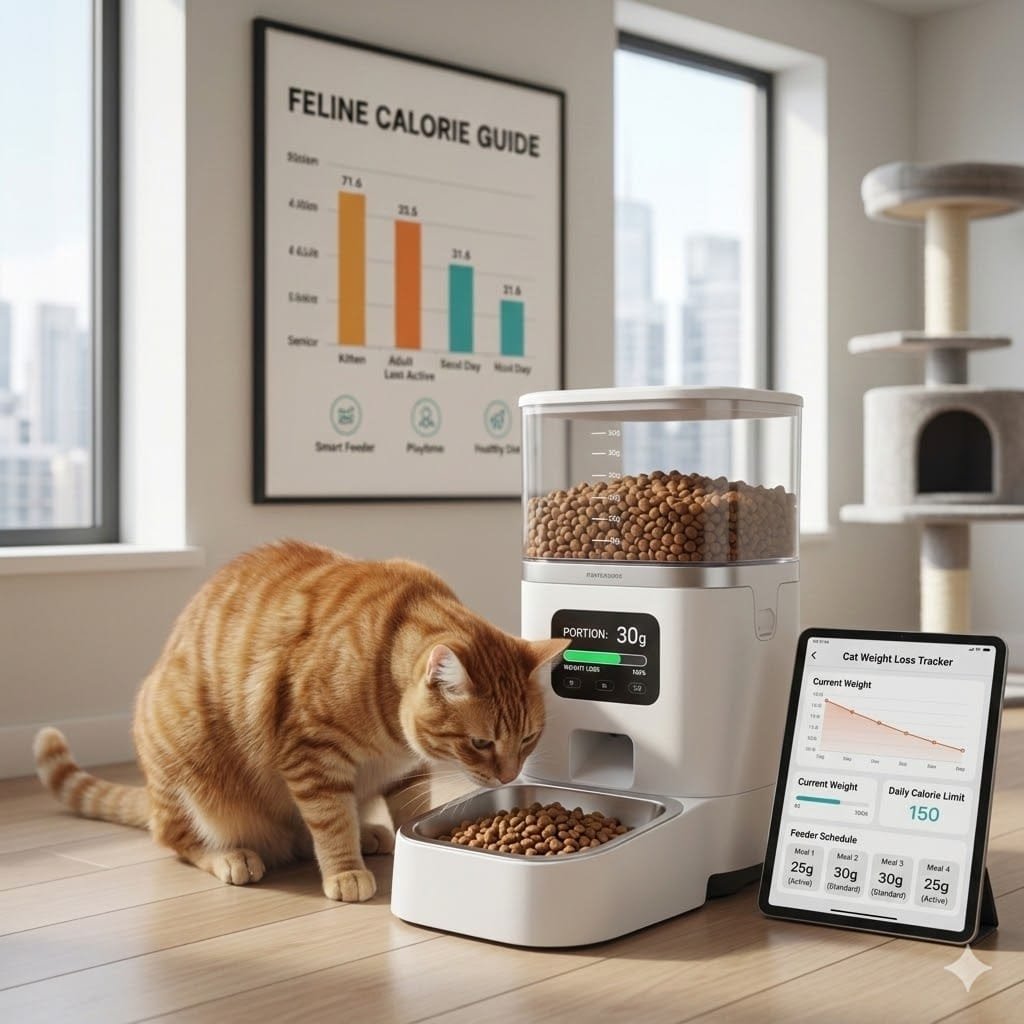
1. The Science of Satiety: Why “Micro-Meals” Are the Key
Cats are biologically designed to eat several small meals throughout the day rather than one or two large ones. When a cat is on a diet, long gaps between meals lead to a spike in cortisol and intense begging.
H2: How an Automatic Cat Feeder for Weight Loss Mimics Natural Hunting
By using an automatic cat feeder for weight loss, you can implement a “micro-meal” strategy. Instead of two 40g meals, you can program 8 portions of 10g. This keeps the cat’s blood sugar stable and prevents the “starvation mode” that slows down metabolism. This consistent delivery is a core part of a scientific pet feeding schedule.
2. User Scenario: The “3 AM Alarm Clock” Struggle
The Scene: Sarah has an 18lb Maine Coon named Barnaby. Every morning at 3:00 AM, Barnaby begins knocking things off the nightstand, begging for food. Sarah, desperate for sleep, gives him a handful of kibble.
The Problem: These “extra” calories are why Barnaby isn’t losing weight. Sarah is accidentally rewarding begging behavior.
The Solution: Sarah installs an automatic cat feeder for weight loss. She programs a 4:00 AM micro-meal.
The Result: Barnaby now waits by the feeder instead of waking Sarah. His total daily intake is strictly managed, and he finally begins to follow his feeding schedule for overweight indoor cats.
3. Comparison Table: Manual Feeding vs. Automatic Cat Feeder for Weight Loss
| Feature | Traditional Manual Feeding | Automatic Cat Feeder for Weight Loss |
| Portion Precision | Low (Human error/guessing) | High (Gram-level accuracy) |
| Meal Frequency | Limited to owner’s schedule | Unlimited (Ideal for micro-meals) |
| Begging Management | Difficult (Owner is the target) | Effective (Feeder is the target) |
| Weight Tracking | Manual logs (Often forgotten) | App-based history and alerts |
| Multi-Cat Support | Very difficult | High (With RFID or splitter options) |
4. Key Features for a Weight Loss Setup
When choosing an automatic cat feeder for weight loss, focus on these technical specifications:
A. Portion Increments
The best automatic cat feeder for weight loss should allow for tiny increments (e.g., 5g or 1/24 cup). This precision is vital for following a strict cat calorie guide for weight loss.
B. Anti-Tamper Design
Overweight cats are often highly motivated “engineers.” They will try to stick paws up the chute or knock the lid off. A secure, locking lid is a mandatory feature for any automatic cat feeder for weight loss.
C. Slow-Feed Mode
For cats that “scarf and barf,” a slow-feed function dispenses the meal over 10-15 minutes. This reduces the risk of acid reflux and helps the cat feel full before the meal is finished.
5. Pros & Cons of Automating Your Cat’s Diet
Pros:
Removes Emotional Guilt: The “feeder” is the bad guy, not you.
Stable Metabolism: Prevents the insulin spikes associated with large, infrequent meals.
Data Tracking: WiFi models allow you to monitor intake trends, which is essential for keeping your pet at a healthy weight.
Cons:
Technical Setup: Requires a 2.4GHz WiFi connection for most smart features.
Cleaning: Hoppers and bowls need regular deep-cleaning to prevent bacterial growth that causes stinky dog paws or feline chin acne.
6. Managing Multi-Cat Households: The Diet Thief
The biggest challenge in using an automatic cat feeder for weight loss is preventing the non-dieting cat from stealing the dieter’s food.
The Splitter Solution: If both cats eat the same food but different amounts, a Double-bowl Feeder with a customized splitter can help.
The RFID Solution: For high-value management, a microchip feeder for multiple cats ensures that only the authorized cat can access their specific calorie-controlled bowl.
7. FAQ: Troubleshooting Your Automatic Cat Feeder for Weight Loss
Q: My cat is still begging despite the new schedule. What should I do?
A: This is common in the first 2 weeks. Increase meal frequency but not total calories. Dividing the daily total into 6–8 micro-meals via your automatic cat feeder for weight loss is the best way to handle this transition.
Q: Is dry food okay for weight loss?
A: Yes, as long as the calories are strictly managed. Many high-protein, low-carb dry foods work perfectly with an automatic cat feeder for weight loss. Always ensure proper pet hydration by providing a water fountain nearby.
Q: Can a smart feeder help with joint pain?
A: Indirectly, yes. By managing weight, you reduce the stress on joints, which is the primary treatment for pet arthritis.
Final Thoughts
An automatic cat feeder for weight loss is more than a convenience gadget; it is a life-saving medical device. By providing consistency, portion precision, and the ability to feed micro-meals, you are giving your cat the best possible chance at a long, lean, and healthy life. Consistency is the language of cats—and a smart feeder speaks it perfectly.
(Note: For professional guidance on calculating feline caloric needs, refer to the WSAVA Nutrition Guidelines).