
How to stop cats from eating each other’s food is not really a bowl problem. It is a control problem. In most multi-cat homes, one cat eats too fast, one cat eats too slowly, and the human tries to solve it with hope instead of structure. That is why the same mess repeats every day.
If you need a tool that makes mealtimes more controlled and less emotional, this smart cat feeder for portion control and routine stability can help create a cleaner feeding boundary. Not because it solves every multi-cat problem alone. Because it reduces improvisation.
Direct Answer: How to stop cats from eating each other’s food comes down to separation, portion control, timing, and consistency. If cats can freely access each other’s bowls, the dominant cat usually keeps winning. The fix is to remove open access, create controlled feeding zones, and stop treating food stealing like a cute personality trait.
Why This Happens
Food stealing happens because the environment allows it. One cat finishes first. Another cat grazes. The fast cat learns there is always a second meal available. The slow cat learns mealtime is unsafe. The owner watches the same pattern and keeps hoping it will somehow correct itself.
It usually does not. Cats are efficient. If extra food is reachable, the more confident or faster cat takes it. That is not mysterious. That is basic resource competition inside a badly managed feeding setup.
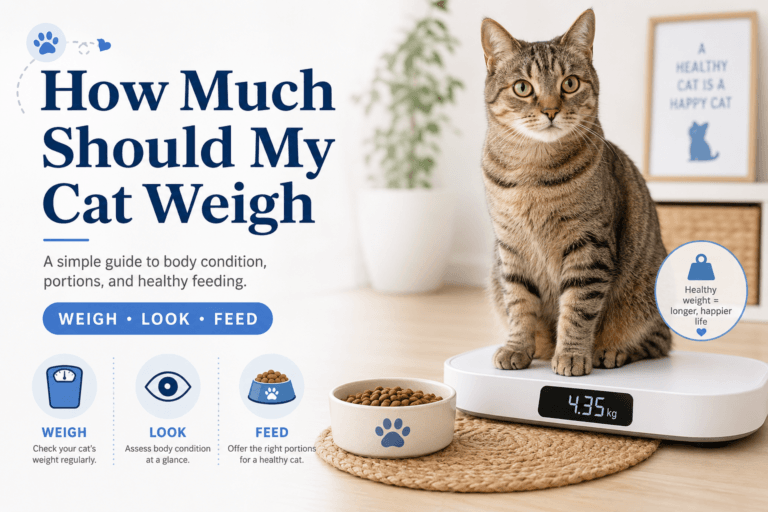
If you want a stronger feeding structure, a proper cat weight reduction plan also reinforces the same principle: measured intake matters, and uncontrolled access creates problems fast.
The Behavior Cycle That Keeps Food Stealing Alive
The cycle is simple:
one cat eats fast
the other cat leaves food behind
the fast cat approaches the second bowl
the owner reacts too late or not at all
the fast cat repeats the behavior tomorrow
Once this happens for a few days, the pattern becomes normal. The stealing cat expects bonus food. The slower cat gets anxious and may start eating faster, eating less, or leaving meals unfinished. That creates even more instability.
This is why how to stop cats from eating each other’s food is not about one correction. It is about breaking a repeated loop.
The Emotional Source Behind the Problem
Many owners do not stop the pattern because they dislike conflict. They feel bad separating the cats. They do not want to hear protesting. They want feeding to feel natural and peaceful. So they tolerate chaos longer than they should.
That softness is what keeps the stealing alive. Food stealing is often treated like a mild annoyance instead of what it really is: repeated access to the wrong calories, the wrong portions, and the wrong feeding outcome.
In homes with special diets, weight problems, or different calorie needs, this is not a cute quirk. It is a management failure.
The Reinforcement Mechanism
The stealing cat keeps doing it because it works. The reward is immediate. Extra food appears with almost no effort. The slower cat keeps losing because the environment does not protect its portion.
Humans reinforce the pattern too. They may laugh, delay intervention, or offer extra food later to the cat that missed its meal. That means both cats are now learning from a disorganized system.
One learns to steal. One learns to lose. Neither learns calm feeding boundaries.
Why It Keeps Repeating
It repeats because many homes still rely on shared access. Multiple bowls in one open area look organized, but if the cats have different eating speeds, appetites, or confidence levels, open access usually favors the pushier cat.
Some cats are not even especially aggressive. They are just opportunistic. If there is food left behind, they take it. That is enough to create long-term weight imbalance and feeding stress.
If you need broader healthy pet weight guidance, the same logic applies in multi-cat homes: calorie control fails when intake is not protected.
The Real-World Impact
When cats eat each other’s food, the damage is bigger than most owners admit. One cat may gain weight. One cat may lose access to the calories it actually needs. Prescription diets become unreliable. Medication mixed into meals can go to the wrong cat. Mealtimes become tense and rushed.
The emotional effect matters too. Slow eaters become defensive. Nervous cats start eating in a hurry. Dominant cats become even more entitled around bowls. The feeding area turns into a small daily conflict zone.
That is why letting cats “figure it out” is usually lazy management, not harmony.
Can This Be Fixed?
Yes, but only if you stop prioritizing convenience over control. The solution is not to keep the same setup and shout “no” more often. The solution is to design the environment so stealing becomes difficult or impossible.
A real solution usually includes:
separate feeding locations
measured portions instead of open grazing
scheduled mealtimes
removing bowls after meals
watching the first few minutes of each feeding
using tools that reduce open access
The more different your cats are in speed, diet, or size, the less workable shared bowl freedom becomes.
What Actually Works Better Than Hope
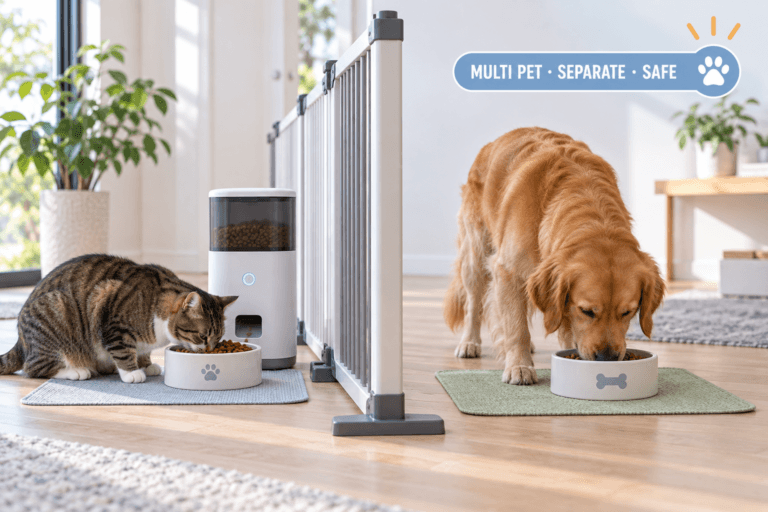
The best approach is controlled separation. Feed cats in different rooms if possible. If that is not practical, create distance and physical barriers. Do not leave leftover food out for the faster cat to discover later. Pick up bowls when the meal window ends.
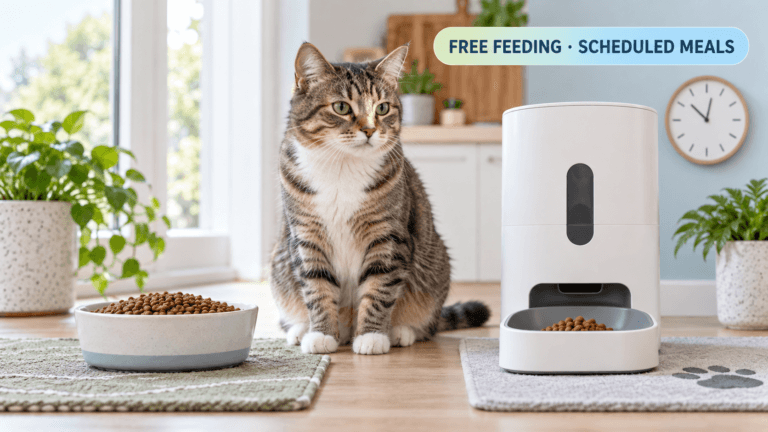
Timed feeding also helps because it reduces all-day access. Food stealing gets easier when meals are vague and bowls are always around. It gets harder when meals happen on purpose.
If one cat constantly raids the other’s food, structure matters more than fairness feelings. You are not being cruel by separating them. You are finally managing them.
Who Should Stop Pretending
Some owners need a hard filter. Shared feeding is usually not for you if one cat is overweight, one cat is on a prescription diet, one cat is a slow grazer, or one cat is noticeably more dominant. In those homes, open access is not “simple.” It is sloppy.
If you keep saying, “They usually work it out,” while one cat keeps losing food, then no, they are not working it out. One cat is just getting away with it.
Mini FAQ
Why does one cat always eat the other cat’s food?
Because the faster or more confident cat has learned the second bowl is accessible and rewarding. The fix is to remove open access and protect each cat’s portion with separation and timing.
Should I leave food out all day for the slower cat?
Usually no, because leftover food becomes an easy target for the other cat. The fix is to create a protected meal space or a timed routine instead of relying on open grazing.
Will feeding the cats side by side help them learn boundaries?
Usually not, because side-by-side feeding still allows visual pressure and quick bowl switching. The fix is distance, separate rooms, or a setup that physically limits access.
Can an automatic feeder help stop cats from eating each other’s food?
Yes, sometimes, because scheduled feeding and portion control reduce random access and make the routine more structured. The fix is to use the feeder as part of a controlled setup, not as a substitute for separation when separation is clearly needed.
What is the biggest mistake in multi-cat feeding?
The biggest mistake is assuming equal bowl placement creates equal access. It does not. The fix is to manage feeding based on behavior, speed, and diet differences rather than wishful symmetry.
The blunt truth is this: how to stop cats from eating each other’s food is not solved by hoping they become polite. It is solved by control. If you want a cleaner routine with stronger meal boundaries, this automatic cat feeder for controlled meals and calmer routine building can support that structure. Not as a miracle. As a system.