
Managing a diabetic pet is perhaps one of the most demanding responsibilities a pet owner can face. Unlike other chronic conditions, diabetes requires a rigid, unbreakable cycle of testing, feeding, and insulin administration. Even a 30-minute delay in mealtime can throw off a dog’s blood glucose levels, leading to dangerous hypoglycemic or hyperglycemic episodes. This is why a timed dog feeder bowl for diabetic pets has transitioned from a convenience gadget to a life-saving medical necessity.
A high-precision timed dog feeder bowl for diabetic dogs ensures that the “food-to-insulin” ratio remains stable throughout the day and night. In this guide, we’ll explore the science of glycemic control and why app-integrated smart technology is the gold standard for modern diabetic pet care.
1. The Critical Link Between Timing and Insulin
Diabetes management in dogs relies on the synchronization of energy intake and insulin peak activity. When you use a timed dog feeder bowl for diabetic pets, you are eliminating the human error that often leads to glucose instability.
H2: Why Precision Matters in a Timed Dog Feeder Bowl for Diabetic Pets
Most insulin types used in veterinary medicine, such as Vetsulin or NPH, have specific “peak” times. If your pet eats too early, their blood sugar spikes before the insulin can act. If they eat too late, they risk a “sugar crash.” A timed dog feeder bowl for diabetic dogs ensures the meal is delivered at the exact minute required to match the insulin’s curve.
According to the American Veterinary Medical Association (AVMA), consistency in mealtimes is the single most important factor in achieving clinical remission or stability in diabetic pets.
2. User Scenario: The “Working Professional” Crisis
The Scene: Mark’s dog, Daisy, requires a strict 12-hour insulin and feeding schedule (8:00 AM and 8:00 PM). Mark gets stuck in an unexpected meeting and won’t be home until 9:30 PM.
The Problem: Daisy’s blood sugar is dropping. If Mark feeds her 90 minutes late, the insulin he administers afterward won’t be as effective, and Daisy will spend the night with dangerously high glucose levels.
The Solution: Mark uses a timed dog feeder bowl for diabetic pets.
The Result: At exactly 8:00 PM, the feeder dispenses Daisy’s measured meal. Mark receives an App Notification on his phone confirming the feeding was successful. Daisy eats on time, and Mark can administer her insulin as soon as he walks through the door, keeping her glucose levels perfectly regulated.
3. Comparison Table: Manual Feeding vs. Timed Smart Feeders
| Feature | Manual Bowl Feeding | Timed Dog Feeder Bowl for Diabetic |
| Timing Accuracy | Variable (Human schedule) | Perfect (Down to the second) |
| Portion Precision | Low (Estimated scoops) | High (Gram-level accuracy) |
| Remote Monitoring | No | Yes (App-based notifications) |
| Glucose Stability | Fluctuating | Stable (Consistent intervals) |
| Peace of Mind | Low (Constant worry) | High (Verified feeding alerts) |
4. Key Features for Diabetic Management: Accuracy & Alerts
When selecting a timed dog feeder bowl for diabetic pets, focus on these two medical-grade features:
A. App-Driven Reminders and Confirmations
The most advanced timed dog feeder bowl for diabetic dogs connects to your smartphone. You shouldn’t just schedule the meal; you should receive an alert when the bowl is accessed. This allows you to coordinate your insulin injection perfectly with the confirmed meal.
B. Micro-Meal Support for Brittle Diabetics
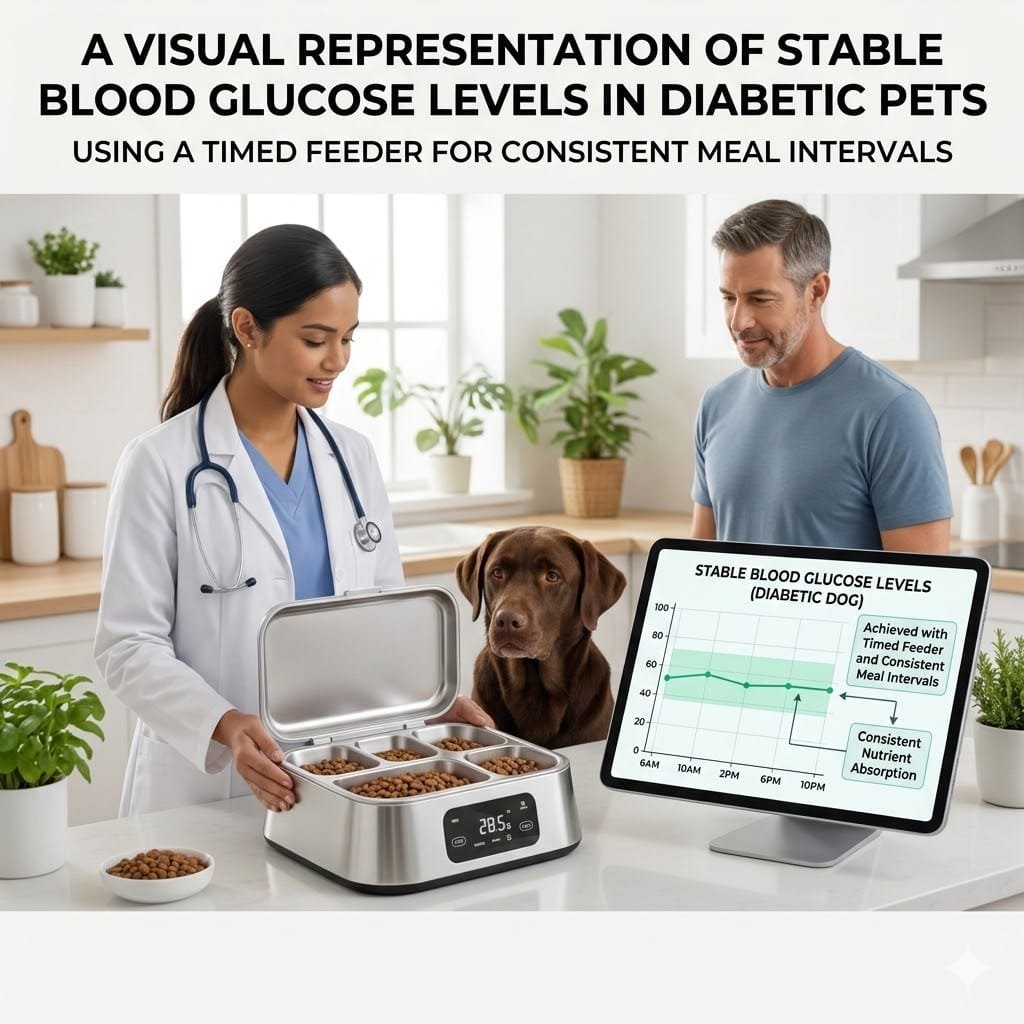
Some pets suffer from “brittle diabetes,” where their sugar is extremely hard to control. Veterinarians often recommend frequent micro-meals to avoid large glucose spikes. A timed dog feeder bowl for diabetic pets can be programmed for 4–6 small meals, maintaining a flat glucose curve throughout the day.
5. Pros & Cons of Automating Diabetic Feeding
Pros:
Prevents Hypoglycemia: Ensures the stomach is never empty for too long.
Reduces Owner Stress: No more rushing home or worrying during work hours.
Portion Control: Vital for preventing pet obesity, as excess weight increases insulin resistance.
Supports Healthy Metabolism: Essential for following a scientific pet feeding schedule.
Cons:
Internet Dependence: WiFi-enabled feeders require a stable connection (though most have internal memory for offline schedules).
Battery Backup Requirement: A timed dog feeder bowl for diabetic pets MUST have a battery backup to ensure mealtimes aren’t missed during a power outage.
6. How to Coordinate Your Timed Feeder with Insulin Injections
Using a timed dog feeder bowl for diabetic dogs requires a slight adjustment to your routine:
Sync the Clocks: Ensure your smartphone and the feeder are perfectly synced.
Verify the Meal: Wait for the app notification that the timed dog feeder bowl for diabetic pet has dispensed.
The 15-Minute Rule: Most vets recommend administering insulin within 15–30 minutes after a confirmed meal to ensure the pet doesn’t vomit the food, which would lead to an insulin overdose.
Monitor Health: Use the feeder’s data to track if your pet’s appetite is decreasing—a key metric discussed in our guide on how to keep your pet at a healthy weight.
7. FAQ: Using a Timed Dog Feeder Bowl for Diabetic Pets
Q: What if the feeder jams?
A: High-quality timed dog feeder bowl for diabetic models feature anti-jam technology and infrared sensors. If a jam occurs, the app should send an immediate emergency notification to your phone.
Q: Can I use wet food in a timed feeder for a diabetic dog?
A: Many diabetic dogs prefer wet food for proper pet hydration. You will need a “sealed-top” timed feeder with ice packs to keep wet food fresh for scheduled intervals.
Q: Does weight loss help with diabetes?
A: Absolutely. In many cats and some dogs, weight loss can lead to partial or full remission. Following a feeding schedule for overweight indoor cats or dogs is a critical part of diabetic care.
Final Thoughts
A timed dog feeder bowl for diabetic pets is the most reliable way to manage the complex interplay between nutrition and insulin. By removing the stress of manual timing and providing the data you need to make informed medical decisions, you are giving your pet the best chance at a long, stable, and happy life. Precision isn’t just a feature; in diabetic care, it is the cure.
(Note: For clinical guidance on canine diabetes, please refer to the AAHA Diabetes Management Guidelines).