

5 Best Tips: How to Build a Feeding Schedule for Overweight Indoor Cats
A structured feeding schedule for overweight indoor cats is one of the most effective tools for safe and sustainable weight loss. Without a plan, even perfectly measured calories can fail due to inconsistent timing, persistent begging behavior, and accidental overfeeding.
In this 2026 guide, you’ll learn exactly how to build a feeding schedule for overweight indoor cats, how many meals per day work best, and how to transition away from free feeding without stressing your cat. If you’re new to automation, you may also find our guide on how to use a smart pet feeder helpful.
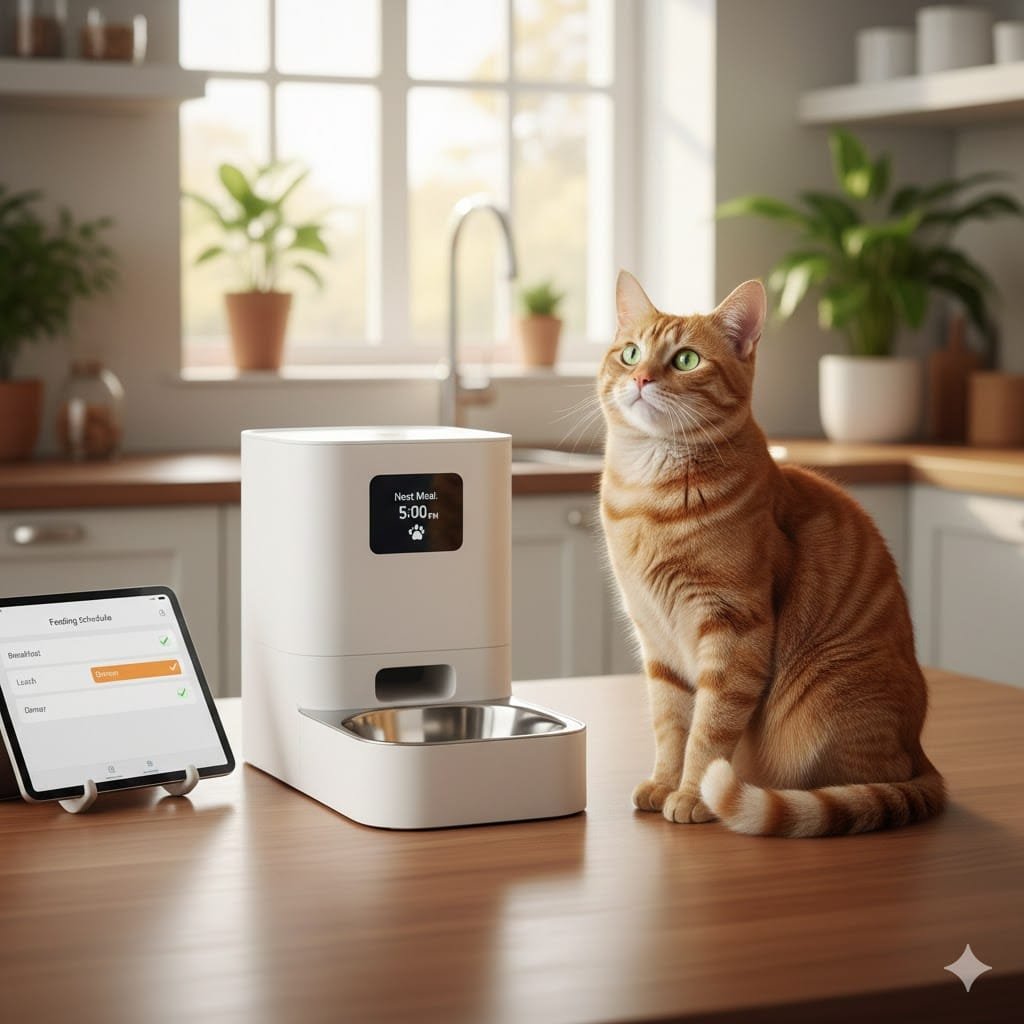
1. Why Indoor Cats Need a Strict Feeding Schedule
Indoor cats burn significantly fewer calories than outdoor cats. This makes when they eat just as important as how much they eat. Without a proper feeding schedule for overweight indoor cats, you will likely face:
Constant Snacking: Graze-feeding leads to insulin spikes.
Persistent Begging: Lack of routine makes cats feel “unsure” of their next meal.
Hidden Weight Gain: Even small extra portions lead to pet obesity.
According to the Association for Pet Obesity Prevention (APOP), a consistent routine is the #1 factor in long-term feline weight management.
2. Ideal Meal Frequency: 4–6 Small Portions
For most feline weight loss plans, a feeding schedule for overweight indoor cats that includes 4–6 small meals per day works best.
Prevents Hunger Spikes: Frequent meals reduce food obsession and begging.
Stabilizes Metabolism: Smaller, spread-out calories are easier for the body to process.
Prevents Vomiting: Many cats “scarf and barf” when they only eat twice a day.
Using an Automatic Cat Feeder makes this high-frequency schedule much easier for busy owners to maintain.
3. Sample Feeding Schedule for Overweight Indoor Cats
While you should always consult your vet, here is a balanced template for a feeding schedule for overweight indoor cats:
| Time | Portion Size | Notes |
| 7:00 AM | Small Portion | Breakfast to start the day |
| 1:00 PM | Small Portion | Mid-day metabolism boost |
| 7:00 PM | Moderate Portion | Main evening meal |
| 11:00 PM | Micro-Meal | Prevents 3 AM “begging” |
This structure works best when paired with an automatic pet feeder with timed portions, ensuring consistency even when you’re away.
4. Transitioning: From Free Feeding to Scheduled Meals
Transitioning too fast can cause stress. To successfully move your cat to a feeding schedule for overweight indoor cats:
Measure Current Intake: Know how much they actually eat now.
Phase Out the Bowl: Gradually reduce the “all-day” food while adding the scheduled meals over 7–10 days.
Use a Calorie Guide: Check our Cat Calorie Guide for Weight Loss to find their target daily total.
Stay Consistent: Routine builds trust and reduces anxiety.
5. Managing Multi-Cat Households and Special Cases
In multi-pet homes, a feeding schedule for overweight indoor cats often fails because the “diet cat” steals from others.
Separation: Use feeders for multiple pets to ensure the correct cat gets the correct portion.
Medical Needs: For cats with diabetes, a structured routine is essential for aligning food with insulin injections. Learn more about how to keep your pet at a healthy weight to avoid these metabolic complications.
Conclusion: Routine is Better Than Willpower
Implementing a feeding schedule for overweight indoor cats creates the structure needed for healthy weight loss. When paired with essential pet hydration and accurate portions, your cat will live a more active, pain-free life.