
How to Deal With Stinky Dog Feet

The “popcorn-like” odor emitted by a dog’s paw pads is actually a normal phenomenon, but if it becomes a pungent, sour, or rotten smell, it may indicate a health issue. Many owners wonder, why do my dogs paws stink? This is not just a smell issue but may also signal potential health risks. Statistics show that approximately 65% of pet foot infections stem from improper daily cleaning.

Dog foot odor should not be ignored, as it not only affects the home environment but may also indicate underlying health issues. To address this problem, we need to thoroughly understand the causes and implement comprehensive measures.

01 Common causes of foot odor

The primary cause of dog foot odor is sweat gland secretion. A dog’s sweat glands are primarily concentrated on the paw pads, and they sweat profusely after exercise. The sweat, combined with evaporation and friction, can produce an acidic odor if not cleaned promptly, which can also foster bacterial growth. This is often why do dogs feet smell like fritos – a distinct corn chip scent caused by natural bacteria and yeast on the skin mixing with sweat.

Interdigital dermatitis is another common cause. Bacterial infections can cause the paw pads to emit an unpleasant odor. If paw pads are injured by foreign objects and not promptly treated, it can also lead to interdigital dermatitis and foot odor.

Fungal infections can also cause foot odor. If a dog’s living environment is damp or its paws are not dried promptly after washing, it can easily lead to fungal infections. After infection, pimple-like lesions may appear, containing pus or blood, ultimately producing an acidic odor.

Stepping on dirty substances while outdoors is another common cause. Dogs walking barefoot are prone to stepping on their own excrement or other contaminants. If the owner fails to clean them promptly, a foul odor may develop over time.

Certain dog breeds are more prone to foot odor issues. Dogs with dense hair between their toes, such as Maltese, Shih Tzu, Dachshund, and Cocker Spaniel, as well as short-haired breeds like Shar-Pei, Pug, French Bulldog, and English Bulldog, are considered high-risk groups.

02 Daily Cleaning and Care Methods

Daily cleaning is key to controlling foot odor and learning how to get rid of stinky dog paws. After each walk, use a damp cloth to wipe the dog’s feet to reduce odor. Avoid using a wet cloth, as this can allow bacteria brought in from outside to survive more easily.

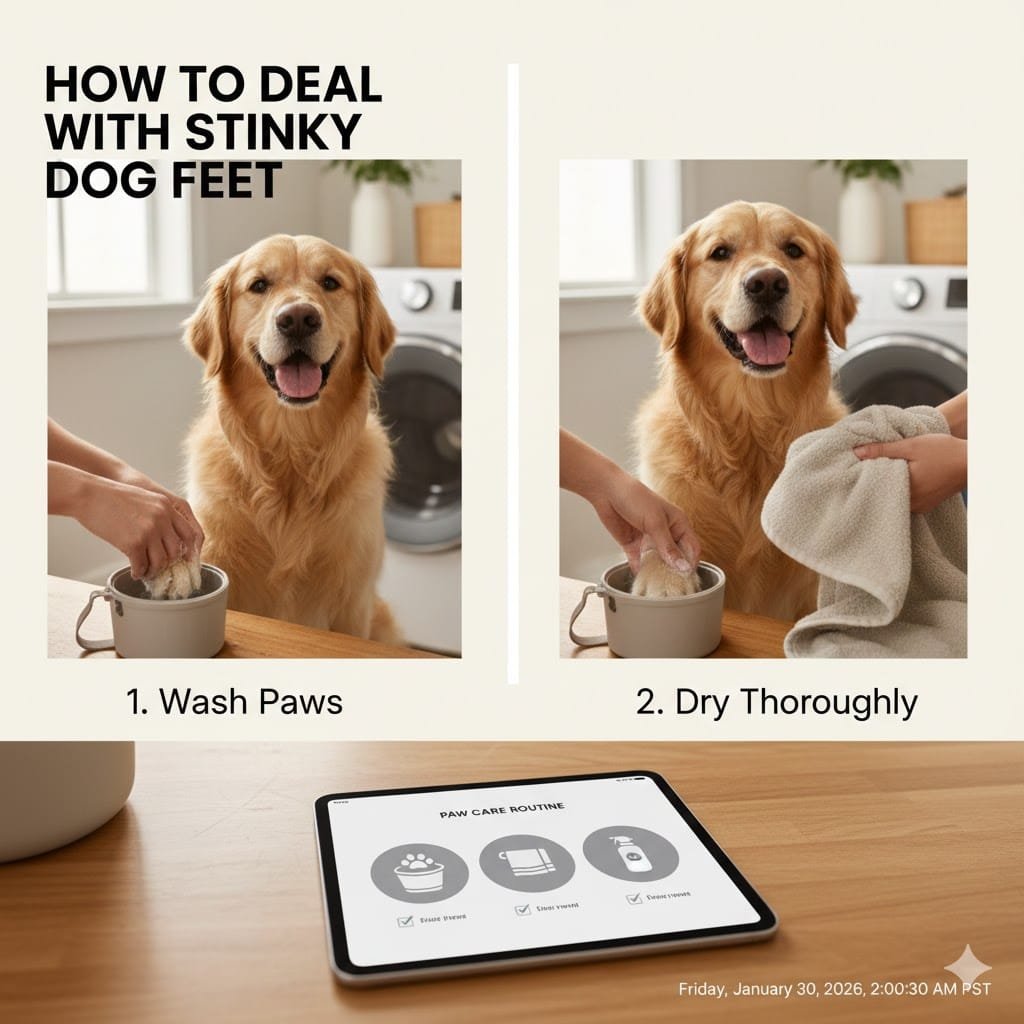
The correct foot-washing method involves first soaking the feet in warm water, then gently massaging them with a pet-specific foot wash. Pay special attention to cleaning between the toes and the pads, then thoroughly dry with a dry towel.

Cleaning frequency should be appropriate. Professional institutions recommend washing a Teddy’s paws 1-2 times daily, as over-cleaning can increase the risk of skin sensitivity. Use a dog-specific paw wash with a pH value of 5.5-7.0, as this acidity level is most suitable for canine skin.

Regular trimming of the hair on the soles of the feet is important. Dogs have soft hair on their soles, and since the soles tend to sweat, failure to trim them for an extended period can lead to matting. Excess hair on the soles can also easily pick up dirt during walks.

When trimming, gently spread the dog’s toes with your fingers to expose the hair on the soles, then carefully remove the excess hair. Never let the blade tip pierce the pad. If the dog resists, stop trimming temporarily.

03 Foot Health Check Procedure

A thorough inspection should be conducted during each cleaning. Carefully examine the pads and between the toes for foreign objects, cuts, punctures, hair loss, inflammation, redness, swelling, or ulcers.

Pay attention to early symptoms of interdigital dermatitis. Bacterial infections may cause redness and swelling between the toes, with the formation of pus-filled blisters. Initially, these may resemble small pimples, but as the condition worsens, they may contain pus or blood and become increasingly swollen.

Be vigilant for signs of fungal infection. Fungal infection of the paw pads may present as pimple-like lesions containing pus or blood, eventually emitting a foul odor. The skin surface may become inflamed, red, and itchy, with possible symptoms including red patches, pus-filled blisters, ulcers, and hair loss.

Check for dry, cracked paw pads. The paw pads of adult dogs should be plump and firm. If the pads are dry and cracked, it may be due to malnutrition. Healthy puppies have soft and tender pads, but hard pads may be an early sign of distemper.

Pay attention to abnormal behavior in dogs. If a dog constantly licks its feet or walks with a limp, it may indicate that interdigital dermatitis has worsened to the point of forming pus-filled blisters, causing the dog to avoid placing its feet on the ground due to pain.

04 Professional Treatment and Home Care

If a foot infection is detected, it should be treated promptly. For interdigital dermatitis, apply an antibacterial and anti-inflammatory ointment to the affected area or use an external antifungal spray. If symptoms are severe, take the dog to a veterinary clinic for treatment.

For interdigital cysts, in the early stages, soak the affected paw in warm salt water for about 10 minutes. Then gently pat dry with a clean towel and apply ichthammol ointment or antibiotic ointment. Do not allow the dog to lick the affected area.

Vitamin B complex has an auxiliary role in treating interdigital cysts. Administer four times the recommended dosage three times daily according to the instructions.

During treatment, the dog should wear an Elizabethan collar to prevent licking and spreading of the infection. This not only prevents further damage to the foot but also prevents the medication from being licked off.

Maintaining a dry and clean environment is crucial. Regularly clean the pet bedding, toys, and living environment with diluted bleach. Sunlight exposure can kill fungal spores.

05 Preventive Measures and Long-Term Management

Keeping the feet dry is the key to prevention. Fungi thrive in moist environments, so it is essential to thoroughly dry the paws after each foot wash or bath.

Regular nail trimming is important. If nails are too long, they may pierce the paw pads, causing pain when walking, leading to a hunched posture, or even reluctance to walk. In severe cases, this can result in inflammation of the paw pads.

Pay attention to dietary adjustments. Sometimes foot odor issues are related to diet. If pets consume excessive amounts of greasy or spicy foods, it can cause body heat, increasing the risk of foot odor.

Avoid keeping dogs in cages for extended periods. The metal bars of cages can cause friction between the toes, leading to skin abrasions and inflammation, which can allow bacteria to invade and cause interdigital dermatitis.

Post-outdoor exercise care is essential. After walking the dog, rinse its paws with clean water and dry them thoroughly. This not only removes dirt but also reduces the opportunity for bacterial growth.

06 Special Situation Management

Winter requires special protection. When taking the dog out in winter, apply some moisturizing oil to its paws to prevent skin cracking. After washing the paws, apply Vaseline to protect the paw pads.

In summer, focus on preventing interdigital dermatitis and use an antibacterial spray. Avoid walking your dog on hot surfaces, as the ground can become extremely hot under direct sunlight, potentially burning your dog’s paws.

For dogs that refuse to have their feet washed, use positive reinforcement. Approximately 60% of Pomeranians resist having their feet washed, so it is recommended to reward them with a treat after washing. Establishing a fixed foot-washing routine can help dogs form a conditioned reflex.

If a dog licks its feet due to anxiety, address the emotional issue. If a dog is in a state of anxiety or excessive stress, it may lead to excessive gland secretion, causing foot odor. Ensure the pet’s living environment is stable and comfortable.

Regular veterinary check-ups are necessary. If the pet’s foot odor issue persists without improvement, it is recommended to take the pet to the vet promptly to check for skin conditions or infections.

Every time you return from a walk and see the dog voluntarily lifting its paw to be cleaned, the trusting gaze is touching. A friend who owns a Golden Retriever told me that he carefully inspects the dog’s paw pads after washing its feet every night, and in seven years, his beloved dog has never developed any foot-related illnesses.

Prevention is always better than cure. Regular check-ups, proper cleaning, and prompt treatment of minor wounds can help your dog avoid foot odor issues. Healthy paw pads mean enjoyable walks and are an important indicator of your dog’s overall health.

When you gently stroke your dog’s clean, fresh paw pads at night and feel its steady breathing, you will know that all this careful care is worthwhile.

Leave a Reply

Your email address will not be published. Required fields are marked *